

Acupuncture for Sports Performance: How to Test Its Value
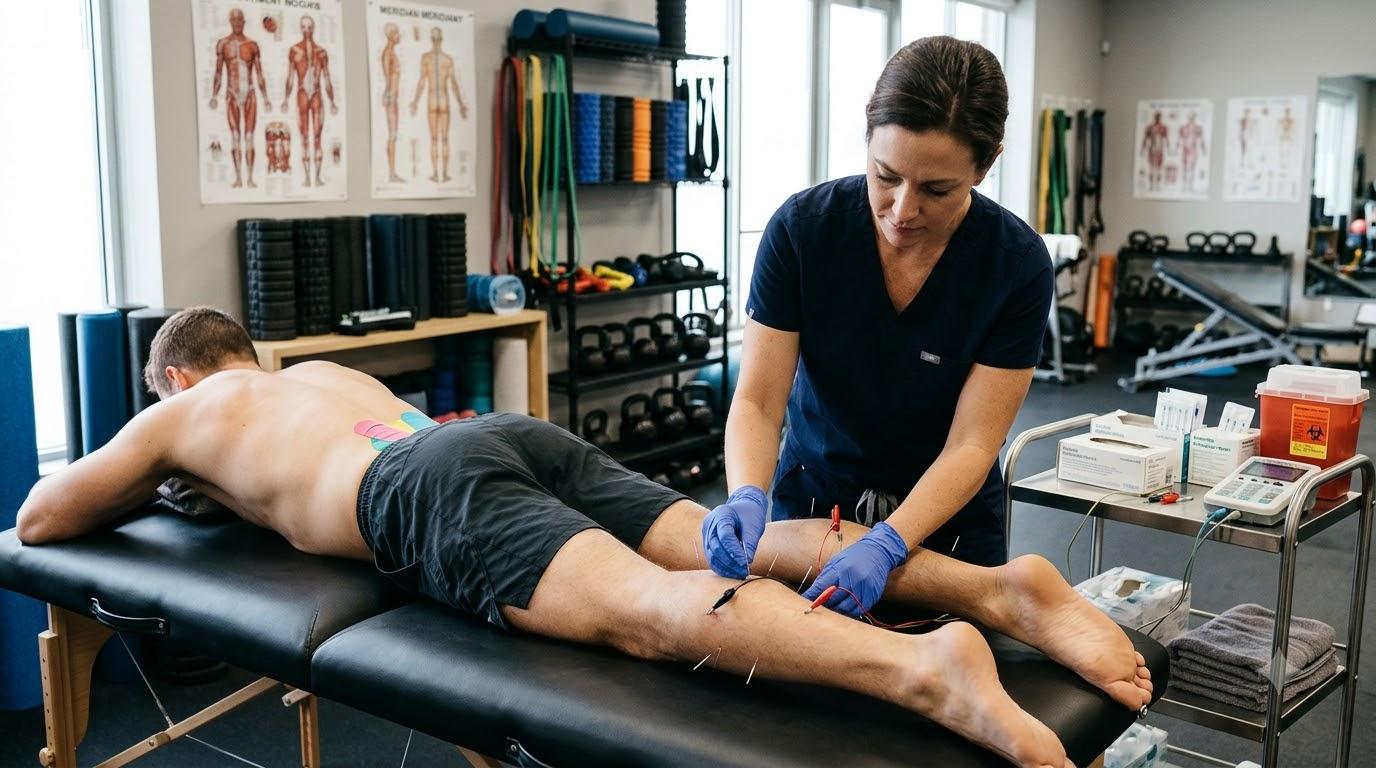
Acupuncture for Sports Performance: How to Tell Whether a Recovery Treatment Is Actually Worth It
Athletes frequently encounter claims about recovery methods that promise better performance, reduced fatigue and faster progress. Some treatments are popular because professional athletes use them, while others become trends through social media. When exploring acupuncture for sports performance as an optional recovery intervention, the challenge is determining whether the treatment addresses a genuine need or simply adds another expense.
Acupuncture may help selected pain symptoms, but scientific evidence has not consistently established direct improvements in strength, speed or endurance.
A useful evaluation framework should therefore distinguish personal comfort, recovery experiences and measurable athletic performance.
Step 1: Identify the Actual Performance Limitation
Before choosing any recovery intervention, define the problem.
Are you struggling with persistent pain, inadequate sleep, fatigue or declining training quality?
These issues may appear similar but require different responses.
An athlete with shoulder pain may need injury assessment and rehabilitation.
A runner experiencing fatigue after a sudden mileage increase may need training adjustments.
Someone with persistent unexplained exhaustion may require medical evaluation.
Acupuncture should not be selected before understanding which problem it is intended to address.
Step 2: Separate Performance Goals From Comfort Goals
Performance improvement and symptom relief are not the same outcome.
A person may feel relaxed after treatment without running faster or lifting more weight.
Likewise, reduced discomfort does not automatically mean an athlete has gained strength.
When evaluating acupuncture for sports performance, define whether the goal is personal comfort or a measurable athletic result.
Comfort-related outcomes may include reduced pain interference or improved ability to complete ordinary activities.
Performance outcomes might involve sport-specific measures such as running times or appropriate strength testing.
The distinction prevents unsupported conclusions.
Step 3: Establish a Baseline
A baseline describes the athlete's condition before adding a treatment.
Without one, it becomes difficult to evaluate changes.
Useful measures may include training consistency, pain interference, sleep quality and relevant performance indicators.
However, athletes should avoid excessive tracking.
Choose a small number of measures that relate directly to the problem.
For example, a runner with recurring discomfort may track training tolerance rather than attempting to measure every possible recovery variable.
Step 4: Review Other Factors That Influence Results
Performance changes can occur for many reasons.
Training progression, sleep, nutrition, illness, motivation and natural variation can all affect outcomes.
An athlete may begin acupuncture while also improving sleep and changing training intensity.
If performance improves, it would be difficult to determine which factor caused the change.
This does not mean personal observations are useless.
It means conclusions should remain cautious.
A single positive experience cannot establish that acupuncture directly enhances athletic performance.
Step 5: Evaluate Cost and Convenience
Recovery treatments require time and money.
Some athletes may find appointments worthwhile because they provide comfort.
Others may discover that travel, cost or scheduling creates additional pressure.
Before committing to a package, ask about fees, appointment frequency and cancellation policies.
Consider whether the treatment addresses a clearly defined need.
An optional intervention should not interfere with essential training, rehabilitation or medical care.
Performance Evaluation Table
|
Evaluation factor |
Question to ask |
Useful measure |
Common mistake |
|
Training consistency |
Can I complete appropriate sessions? |
Session participation |
Ignoring excessive workload |
|
Pain interference |
Is discomfort affecting activity? |
Functional tolerance |
Confusing relief with healing |
|
Sleep |
Am I getting adequate rest? |
Sleep consistency |
Expecting treatment to replace sleep |
|
Strength |
Is my training producing progress? |
Appropriate strength measures |
Attributing gains to one intervention |
|
Endurance |
Is conditioning improving? |
Comparable sport-specific testing |
Ignoring training changes |
|
Treatment value |
Is the benefit worth the cost? |
Personal review |
Continuing without reassessment |
A Six-Step Treatment Evaluation Process
-
Define one primary goal. Avoid trying to measure every possible benefit simultaneously.
-
Record a reasonable baseline. Choose relevant symptoms or performance measures.
-
Review foundational recovery factors. Address sleep, nutrition and training demands first.
-
Discuss treatment suitability. Seek professional guidance when pain or injury is involved.
-
Monitor meaningful changes. Review patterns rather than judging a single session.
-
Decide whether to continue. Consider benefits, limitations, costs and convenience.
This framework supports more informed decisions without pretending that informal tracking proves causation.
Example 1: A Cyclist Seeking Better Endurance
A recreational cyclist wants to improve endurance.
The athlete considers acupuncture after hearing that it may enhance recovery.
However, the cyclist has not followed a consistent training program.
Before adding treatment, the cyclist develops a structured conditioning plan and reviews sleep and nutrition.
If persistent pain develops, appropriate assessment is arranged.
Acupuncture may be considered for selected discomfort, but endurance improvements are evaluated primarily through training.
Example 2: A Weightlifter With Training Discomfort
A strength athlete experiences recurring neck discomfort during demanding workouts.
The athlete considers acupuncture to make training more comfortable.
After medical assessment, the athlete follows appropriate exercise modifications.
Acupuncture is discussed as an optional symptom-management approach.
The athlete tracks whether discomfort interferes less with suitable training.
Any strength gains are interpreted cautiously because they may reflect the training program rather than acupuncture.
Illustrative Case Study: Testing the Value of Complementary Recovery Care
This is a hypothetical example and does not represent a documented clinical or athletic outcome.
A 32-year-old recreational triathlete is preparing for an upcoming event.
The athlete feels increasingly tired and begins exploring acupuncture for sports performance.
Online claims suggest that treatment may improve endurance and speed.
Instead of assuming those benefits, the athlete identifies the main problem: declining recovery between demanding sessions.
A review of training reveals limited rest and inconsistent sleep.
The athlete adjusts the schedule and discusses persistent discomfort with a healthcare professional.
Acupuncture is considered only as an optional approach to selected pain symptoms.
The athlete tracks training consistency, comfort and recovery habits.
The expected outcome is a better-informed decision about treatment value, not guaranteed performance improvement.
The lesson is that evaluation should focus on the actual problem rather than promotional promises.
How to Interpret Positive Results
Suppose an athlete feels better after several appointments.
That experience may be personally meaningful.
However, several explanations are possible.
Symptoms may improve naturally over time.
Training adjustments may reduce physical demands.
Other treatments may also contribute.
Therefore, improvement should not automatically be attributed to acupuncture.
The same principle applies when results are disappointing.
A lack of improvement does not mean the athlete failed to attend enough sessions.
Choosing a Practitioner
A qualified practitioner should ask about medical history, symptoms and training demands.
Professional credentials and appropriate safety procedures are essential.
Athletes reviewing Swiss Acupuncture can examine its service information and discuss whether complementary treatment is suitable.
Avoid practitioners who guarantee improvements in strength, endurance or competitive results.
A useful consultation should establish realistic expectations and explain possible adverse effects.
When Is Acupuncture Not Worth Continuing?
Optional treatment should be reconsidered when it provides no meaningful benefit or creates excessive expense.
It should also be reviewed if symptoms worsen or medical circumstances change.
Acupuncture can cause temporary soreness, bruising or lightheadedness.
Rare serious complications are possible when treatment is performed improperly.
Persistent pain, weakness or unexplained fatigue should be evaluated appropriately.
Building a Better Long-Term Performance Strategy
The strongest performance plans focus on consistent training and appropriate recovery.
Strength development requires suitable resistance training.
Endurance improvement requires structured conditioning.
Recovery depends on sleep, nutrition, training-load management and general health.
Complementary treatment may have a role when it addresses a specific symptom-management need.
However, acupuncture for sports performance should not be treated as a shortcut to physical adaptation.
The most useful interventions are those that support sustainable participation without distracting from essential training principles.
Conclusion
Evaluating recovery treatments requires clear goals, realistic expectations and attention to the factors that actually influence athletic performance.
Acupuncture may provide complementary relief for selected pain conditions, but it has not been consistently shown to improve strength, speed or endurance.
Before choosing acupuncture for sports performance, identify the problem, establish meaningful measures and review whether the treatment provides worthwhile benefits.
A disciplined evaluation process helps athletes make better decisions without relying on exaggerated performance claims.
Frequently Asked Questions
How can athletes measure whether acupuncture is helping?
Track relevant symptoms and functional outcomes. Improvements in performance should be interpreted cautiously because many factors influence results.
Can acupuncture directly improve endurance?
There is insufficient consistent evidence that acupuncture directly improves aerobic endurance.
Does acupuncture increase muscle strength?
Acupuncture has not been established as a reliable strength-enhancing intervention. Progressive resistance training remains central.
Is acupuncture useful for athletes without pain?
There is limited evidence supporting routine acupuncture solely for performance enhancement in otherwise healthy athletes.
How many sessions are needed to evaluate treatment?
There is no universal number. The decision should reflect individual goals, professional advice and whether meaningful benefits occur.
When should an athlete stop acupuncture?
Reassess treatment when it offers no worthwhile benefit, causes adverse effects or interferes with necessary medical care.

 English
 Arabic
 French
 Spanish
 Portuguese
 Deutsch
 Dutch
 Italiano
 Russian
 Romaian
 Portuguese (Brazil)
 Greek
