

Why You Should Get Glass Pipes Made by a Named Artist
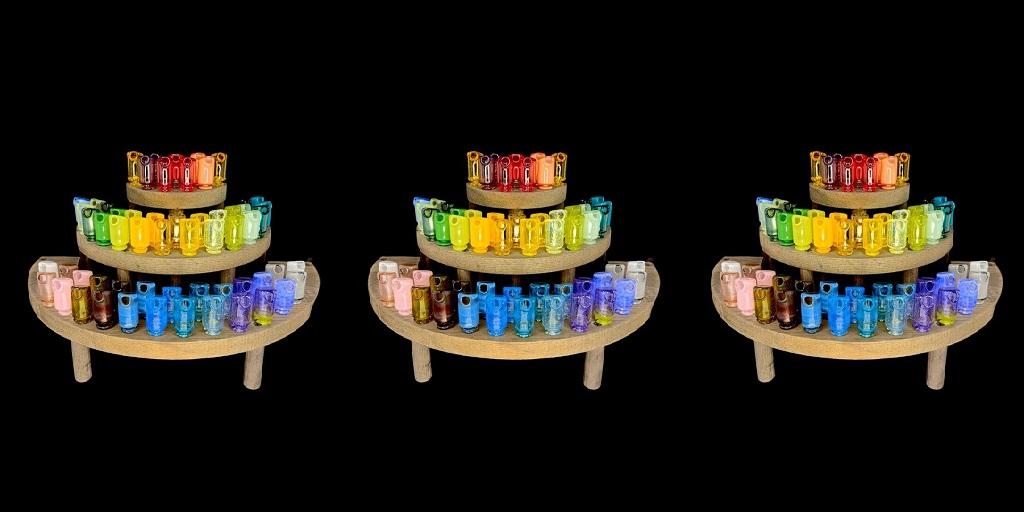
It is easy to think all glass pipes break easily when the $20 one keeps cracking at the bowl or chipping at the mouthpiece. Paying more can look like paying for a nicer design. A pipe from a named artist costs more because the maker controls the glass, the cooling process, the wall thickness, and the signature. Here is what to check before you buy.
Confirm Your Glass Pipes Use Borosilicate
The type of glass decides how well a pipe handles temperature changes. Borosilicate barely expands when it warms, so one part of the piece heating faster than another does not strain the glass. The grade most artists use for glass pipes, borosilicate 3.3, expands about a third as much as the soda lime glass in windows and bottles. That is why it handles sudden temperature changes without cracking. Look for "borosilicate" or "boro" in the product details. If a listing does not name the material, skip it.
Ask Whether the Maker Kiln Annealed Your Glass Pipes
Annealing is the slow, controlled cooling that keeps a pipe from cracking later. Shaping glass in a torch leaves stress trapped inside it. A kiln holds the piece at a steady heat so that stress can settle before the glass cools. Artists anneal borosilicate at about 1,040°F, and glass pipes that skip this step can crack weeks after you buy them, often at the bowl. Good glass pipe craftsmanship includes annealing every piece, so ask the seller if they do it. A vague answer is a red flag.
Compare Wall Thickness Before You Buy
Thicker walls hold up better to everyday bumps. More glass spreads out the force of a knock, so tapping the pipe on a sink is less likely to chip it. Scientific glass brands list wall thickness in millimeters, and beaker water pipes often come in 5 mm, 7 mm, or 9 mm. No thickness makes a pipe drop proof, and borosilicate will still break on a tile floor. Ask the seller how thick the walls are on hand pipes and rigs, or look at photos of the mouthpiece edge to judge it yourself.
Check for the Artist's Signature
A signature tells you who made the piece. Named artists engrave or etch their name into the glass, and their reputation depends on every piece they sell. Collab pieces, like the Robertson x Banjo High Vision Giraffe Puffco Peak Topper at $2,250, list each artist who worked on it, and the signatures should match those names. Unsigned copies of popular designs sell online for much less than the real thing. Before you buy any piece over a few hundred dollars, ask for a close photo of the signature.
Buy From Shops That Name Their Artists
Buy from shops that tell you exactly who made each piece. When a shop names the artist, you can look up their other work and compare prices before you buy. Sellers of artistic glass pipes who use vague labels like "heady piece" do not give you that option. WNC is one example of a shop that does this well, listing Karma, Robertson, Scoz, JDZ, and Anthony Roe on its glass page and saying it works with those artists directly. Check the artist's past work before checkout to make sure the piece matches their style.
Start With a Simple Shape for Your First Piece
Make your first artist piece a simple, practical shape. Simple shapes make glass pipe cleaning easier, since 91% isopropyl alcohol and coarse salt can reach every part of an open bowl and straight stem. Named artist work starts at $40 to $60 for Kizmit Pivot Toppers, which fit the Puffco Pivot, and runs around $450 for Anthony Roe's sculpted hand pipes. Pick a shape you would reach for most often, like a simple hand pipe or a topper that fits a device you already own. One good piece will outlast several cheap ones.
Glass pipes from a named artist last longer because the maker controls the glass, the annealing, the wall thickness, and the signature. You can check all four on any listing, at any price.
For more information about THCa Diamonds and Budget THCa Flower Please visit: WNC CBD.
———————————————————————————
Disclaimer: This content is provided for general educational information only. It is not intended to instruct or encourage the use or processing of any product in violation of applicable law. Hemp and cannabinoid laws vary by jurisdiction and are changing.

 English
 Arabic
 French
 Spanish
 Portuguese
 Deutsch
 Turkish
 Dutch
 Italiano
 Russian
 Romaian
 Portuguese (Brazil)
