

QP Release and Batch Certification in Clinical Trials: Meeting EU GMP Standards with Qualified Person Oversight
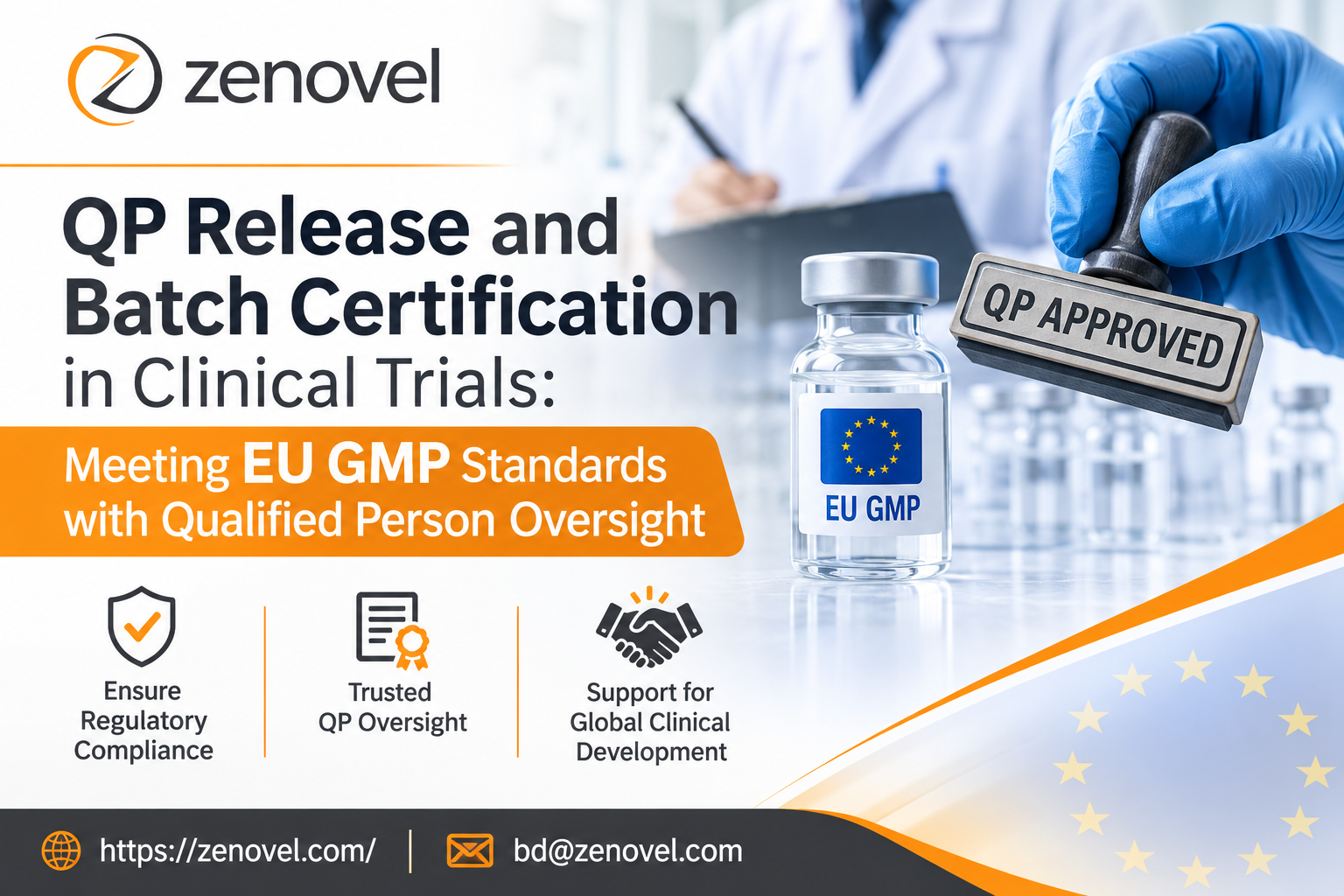
In the complex lifecycle of pharmaceutical development, ensuring that patients receive safe, effective, and high-quality medication is paramount. This responsibility becomes even more critical—and tightly regulated—during clinical trials. For investigational medicinal products (IMPs) entering or circulating within the European Union (EU) and European Economic Area (EEA), a critical checkpoint stands between manufacturing and patient administration: QP Batch Certification and Release.
Under EU Good Manufacturing Practice (EU GMP) standards, the Qualified Person (QP) holds the ultimate legal and professional responsibility for certifying every single batch of product.
The Core Role of the Qualified Person (QP) in Clinical Trials
The Qualified Person is not just a quality assurance manager; they are a legally mandated entity defined by EU directives. Their primary duty is to ensure that each batch of an IMP has been manufactured in accordance with its Marketing Authorization (MA) or clinical trial application (CTA) dossier, and adheres strictly to EU GMP principles.
While commercial batch release follows established routine parameters, clinical trial batch certification requires balancing stringent regulatory compliance with the inherent flexibility of early-phase clinical research. Key responsibilities include:
Verifying Manufacturing Compliance: Ensuring that manufacturing and testing sites hold valid authorizations and operate under GMP guidelines.
Reviewing Batch Documentation: Meticulously checking batch manufacturing records (BMRs), analytical testing results, packaging details, and supply chain logs.
Managing Deviations and CAPAs: Assessing any deviations, out-of-specification (OOS) results, or process anomalies that occurred during production, ensuring effective Corrective and Preventive Actions (CAPAs) are enacted.
Ensuring Supply Chain Integrity: Overseeing global supply networks—particularly when IMPs are imported from third (non-EU) countries—to guarantee that cold-chain maintenance, transport conditions, and chain-of-custody remain unbroken.
Regulatory Framework: EU GMP Annex 13 and Annex 16
Two key annexes of the EU GMP Guide govern the intricacies of clinical trial supply and certification:
Annex 13 (Manufacture of Investigational Medicinal Products): Tailored specifically to clinical trials, this guideline addresses the unique complexities of IMPs, such as blinded trial packaging, comparator sourcing, rapidly evolving early-phase formulations, and dynamic labeling requirements.
Annex 16 (Certification by a QP and Batch Release): Details the precise duties of the QP during the certification of finished product batches, outlining what must be verified before a batch can be released into the supply chain or across member states.
Major Challenges in Clinical Trial QP Oversight
Executing seamless QP release for clinical trials presents distinct hurdles for pharmaceutical sponsors and manufacturers:
Globalized Supply Chains: Clinical trials are increasingly multi-regional. IMPs are often manufactured globally, requiring close cooperation between importing QPs, contract manufacturing organizations (CMOs), and local depots.
Evolving Formulations: Early-phase trials (Phase I/II) frequently see formulation updates, process shifts, or scale-ups. The QP must evaluate whether these changes impact product safety and quality consistency.
Strict Timelines: Delays in QP certification directly translate to delayed clinical trial site activation, potentially jeopardizing trial milestones and increasing operational costs.
Streamlining Compliance with Expert Partnership
Navigating the web of EU GMP standards requires deep regulatory fluency, meticulous documentation control, and robust quality management systems (QMS). Organizations often collaborate with specialized regulatory and GxP compliance partners—such as Zenovel—to bridge local and international gaps.
Expert support typically spans across:
Comprehensive batch record and deviation reviews.
Coordination with local EU QPs to expedite importation and certification.
Audit readiness assessments, vendor qualification, and lifecycle quality assurance.
Conclusion
QP release and batch certification are much more than administrative check-boxes; they are the ultimate safeguard for clinical trial participants and the bedrock of regulatory confidence. By maintaining rigorous adherence to EU GMP standards, leveraging robust oversight, and anticipating supply chain vulnerabilities, life sciences organizations can accelerate their development journeys safely and successfully.

 English
 Arabic
 French
 Portuguese
 Deutsch
 Turkish
 Dutch
 Italiano
 Russian
 Romaian
 Portuguese (Brazil)
 Greek
