

Can Multispecialty Hospitals Use Modular IVF Lab Installation Services?
Introduction
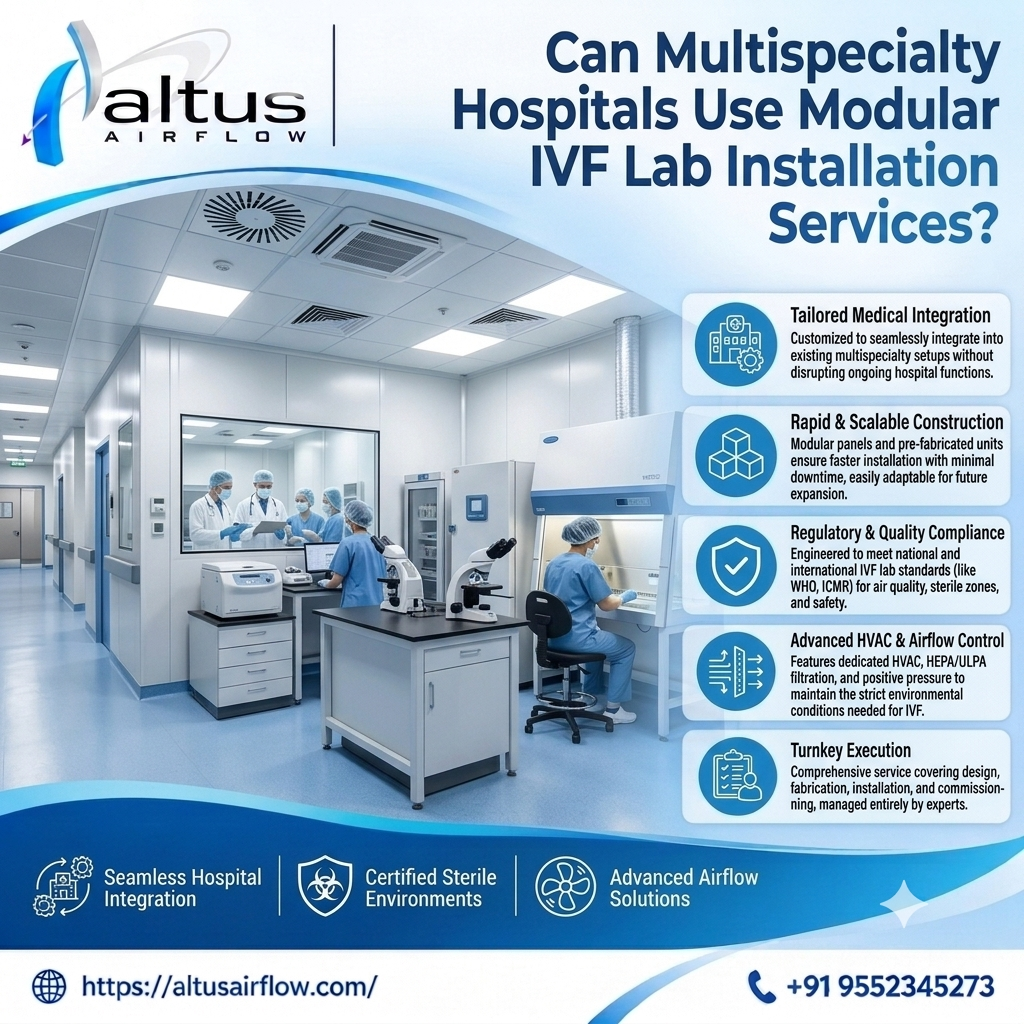
Altus Airflow supports modern healthcare infrastructure by developing specialised laboratory environments that meet the changing requirements of reproductive medicine. Modular IVF Lab Installation Services allow multispecialty hospitals to establish dedicated fertility laboratories with planned layouts, controlled environmental conditions, advanced equipment, and efficient workflows. These installations help hospitals expand their reproductive healthcare capabilities without compromising the organisation of their existing medical facilities. With appropriate planning, modular construction, and technical integration, hospitals can develop functional IVF laboratories that support embryology procedures, diagnostic activities, and modern fertility treatment requirements.
As demand for fertility services continues to grow, multispecialty hospitals are increasingly considering dedicated IVF facilities. Modular laboratory infrastructure provides a practical approach to creating specialised spaces while allowing hospitals to plan future expansion and technological upgrades.
1. Understanding Modular IVF Laboratories in Multispecialty Hospitals
A modular IVF laboratory is a specialised facility developed using coordinated construction components, laboratory infrastructure, and environmental control systems. Unlike conventional room arrangements, modular laboratories are planned around the specific requirements of embryology, reproductive medicine, and assisted reproductive technology.
Multispecialty hospitals can use these laboratories to establish dedicated fertility departments within their existing healthcare infrastructure.
A modular IVF facility may include:
-
Embryology laboratories.
-
Andrology laboratories.
-
Oocyte retrieval support areas.
-
Embryo transfer preparation areas.
-
Cryopreservation facilities.
-
Laboratory storage spaces.
-
Supporting equipment and utility areas.
The exact layout depends on the hospital's clinical services, available space, treatment capacity, and applicable healthcare requirements.
A carefully planned modular facility allows hospitals to organise these spaces while maintaining appropriate separation between different laboratory activities.
2. Why Multispecialty Hospitals Need Dedicated IVF Infrastructure
Multispecialty hospitals provide a wide range of medical services, including gynaecology, urology, endocrinology, surgery, diagnostics, and reproductive healthcare.
Establishing a dedicated IVF laboratory can help hospitals bring fertility-related services together within one healthcare facility.
Some important benefits include:
Integrated patient care: Patients can access consultations, diagnostic services, and fertility treatment coordination within the same hospital.
Specialised laboratory facilities: Dedicated embryology and andrology spaces support reproductive laboratory procedures.
Better departmental coordination: Fertility specialists, embryologists, nurses, and diagnostic teams can coordinate their activities more efficiently.
Improved infrastructure utilisation: Hospitals can use available building space to introduce specialised fertility services.
Future service expansion: A planned modular facility can accommodate additional equipment and laboratory requirements as services develop.
A dedicated IVF department also allows hospitals to establish operational procedures specifically suited to assisted reproductive technology.
3. Efficient Space Planning and Laboratory Layout
Space planning is one of the most important aspects of establishing an IVF laboratory. Different laboratory activities require appropriate working areas, equipment placement, storage, and supporting utilities.
A modular approach allows hospitals to plan these requirements before installation begins.
Important layout considerations include:
-
Embryology workstations.
-
Andrology laboratory areas.
-
Cryopreservation and storage arrangements.
-
Equipment installation spaces.
-
Staff movement pathways.
-
Sample handling areas.
-
Cleaning and utility access.
The layout should support an organised workflow while minimising unnecessary movement between different laboratory activities.
For example, embryology workstations should be arranged according to the sequence of procedures and the location of essential equipment.
Similarly, storage facilities should be positioned to provide convenient access without interfering with laboratory operations.
Proper space planning helps hospitals make effective use of available floor areas while maintaining the functional requirements of reproductive healthcare.
4. Maintaining Controlled Environmental Conditions
IVF laboratories require carefully managed environmental conditions because reproductive cells and embryos are sensitive to environmental variations.
Temperature, humidity, air quality, ventilation, and chemical contamination control should be considered during laboratory planning.
Important environmental infrastructure may include:
HVAC systems: Properly designed heating, ventilation, and air conditioning systems help maintain specified indoor conditions.
Air filtration: Appropriate filtration arrangements help manage airborne particulate contamination.
Temperature monitoring: Digital sensors can monitor selected environmental and equipment temperatures.
Humidity control: Monitoring and regulation help maintain specified humidity conditions.
Pressure management: Differential pressure arrangements can help control airflow between designated laboratory zones.
Continuous monitoring: Monitoring systems can provide information about environmental conditions and generate alerts when defined limits are exceeded.
The environmental design should be developed according to the laboratory's intended procedures and relevant technical guidance.
Hospitals should also conduct appropriate testing and validation before starting clinical operations. Installing an HVAC system alone does not guarantee that the required laboratory conditions have been achieved.
5. Integration of Advanced IVF Laboratory Equipment
Modern IVF laboratories depend on specialised equipment to perform embryology, diagnostic, and reproductive procedures.
Equipment selection should be based on the clinical services offered, expected patient volume, laboratory workflow, and technical requirements.
Common IVF laboratory equipment includes:
-
Inverted microscopes.
-
IVF incubators.
-
Micromanipulation systems.
-
Centrifuges.
-
Laminar airflow workstations, where appropriate.
-
Cryopreservation equipment.
-
Laboratory refrigerators and freezers.
-
Digital imaging systems.
Each instrument requires suitable installation space, electrical connections, environmental conditions, and maintenance access.
Hospitals should coordinate equipment selection with embryologists and laboratory specialists to ensure that the chosen instruments meet clinical requirements.
Proper equipment integration also helps prevent conflicts between electrical services, ventilation arrangements, furniture, and laboratory workstations.
6. Supporting Infection Control and Laboratory Hygiene
Infection prevention is an essential consideration when developing IVF infrastructure within multispecialty hospitals.
A dedicated IVF laboratory should incorporate suitable surface materials, cleaning arrangements, controlled access, and waste management procedures.
Important hygiene-related considerations include:
Smooth and cleanable surfaces: Walls, flooring, and worktops should support routine cleaning and appropriate decontamination.
Controlled access: Laboratory entry should be restricted to authorised personnel according to operational requirements.
Appropriate hand hygiene: Handwashing facilities and hygiene stations should be conveniently accessible.
Waste management: Separate arrangements should be established for laboratory and biomedical waste.
Organised workstations: Equipment and materials should be positioned to support appropriate cleaning and maintenance.
Air quality management: Ventilation and filtration should be designed according to laboratory requirements.
These measures help hospitals maintain organised laboratory practices and reduce avoidable contamination risks.
7. Integrating IVF Laboratories with Existing Hospital Infrastructure
One of the main considerations for multispecialty hospitals is connecting a new IVF laboratory with existing building services.
The laboratory must work alongside the hospital's electrical, HVAC, plumbing, fire safety, and emergency infrastructure.
A coordinated integration plan may include:
-
Electrical distribution and dedicated equipment circuits.
-
UPS and backup generator connections.
-
HVAC and filtration infrastructure.
-
Fire detection and safety arrangements.
-
Water supply and drainage where required.
-
Data cabling and communication systems.
-
Equipment monitoring connections.
Hospitals should assess existing building capacity before beginning installation.
For example, the available electrical load must be sufficient to support the laboratory's equipment and environmental systems. Similarly, existing HVAC infrastructure may require modifications to meet the specific requirements of the new facility.
Coordination between hospital engineering teams, architects, laboratory specialists, and installation professionals helps reduce infrastructure conflicts.
8. Digital Monitoring and Smart Laboratory Technologies
Digital technology can improve the management of modern IVF laboratories by providing continuous information about equipment and environmental conditions.
Hospitals can integrate compatible digital systems to support laboratory monitoring and documentation.
Possible technologies include:
-
Digital temperature monitoring.
-
Automated environmental alerts.
-
Electronic laboratory records.
-
Barcode-based sample identification.
-
Smart incubator monitoring.
-
Equipment maintenance notifications.
-
Centralised building management systems.
For example, digital temperature monitoring can help authorised personnel review incubator and storage equipment conditions. Automated alerts can also notify staff when monitored parameters move outside predefined limits.
Electronic witnessing and sample identification systems may help improve traceability during important laboratory activities.
However, technology must be selected according to clinical requirements, compatibility, data security, and applicable validation procedures.
9. Managing Project Installation with Minimal Hospital Disruption
Multispecialty hospitals generally operate several departments simultaneously. Therefore, establishing a new IVF laboratory requires careful project scheduling and coordination.
Modular installation can support a more organised implementation process because many infrastructure requirements can be planned before on-site installation.
A typical project may involve the following stages:
Initial assessment: Reviewing the available area, hospital infrastructure, clinical requirements, and project objectives.
Design and planning: Preparing laboratory layouts, equipment arrangements, and engineering drawings.
Infrastructure preparation: Coordinating electrical, HVAC, flooring, ceiling, and other supporting systems.
Modular installation: Installing the planned laboratory components and associated infrastructure.
Equipment integration: Positioning and connecting specialised laboratory instruments.
Testing and handover: Reviewing completed systems, conducting required checks, and providing relevant project documentation.
Hospitals should also plan construction access, material movement, safety arrangements, and coordination with existing departments.
This approach can help reduce avoidable disruption, although the actual project duration depends on site conditions, design complexity, procurement, and installation requirements.
10. Supporting Future Expansion and Scalability
Healthcare requirements can change as hospitals introduce new fertility treatments, increase patient capacity, or upgrade laboratory equipment.
Modular infrastructure can support future modifications when expansion requirements are considered during the initial design.
Some important scalability considerations include:
Flexible layouts: Workstations and laboratory furniture should accommodate potential changes in equipment arrangements.
Additional equipment capacity: Space and utility provisions should consider future instrument requirements.
Expandable monitoring systems: Compatible digital infrastructure can support additional sensors and monitoring points.
Service accessibility: Electrical, ventilation, and maintenance systems should remain accessible for future upgrades.
Storage planning: Adequate storage capacity helps accommodate additional laboratory supplies and consumables.
A future-ready laboratory reduces the likelihood of extensive structural changes when hospitals expand their reproductive healthcare services.
11. Quality Standards, Validation, and Regulatory Considerations
Establishing an IVF laboratory requires more than completing construction and installing equipment. Hospitals must ensure that the facility meets applicable technical, clinical, and regulatory requirements.
Quality planning should include:
-
Appropriate laboratory design documentation.
-
HVAC performance testing.
-
Air quality and filtration assessments.
-
Environmental monitoring.
-
Equipment installation and qualification.
-
Calibration and maintenance records.
-
Standard operating procedures.
-
Staff training and competency records.
-
Quality control and documentation systems.
Applicable requirements may include national assisted reproductive technology regulations, relevant healthcare facility standards, and recognised laboratory guidance.
Hospitals should consult qualified reproductive medicine professionals and regulatory specialists to identify the requirements relevant to their services.
Validation and commissioning activities are particularly important because they help demonstrate that installed systems perform according to their intended specifications.
12. How Professional Installation Services Benefit Multispecialty Hospitals
Developing an IVF laboratory involves several technical and operational activities. Managing these requirements independently can create coordination challenges for hospitals that are introducing fertility services for the first time.
Professional Modular IVF Lab Installation Services help coordinate laboratory design, modular infrastructure, equipment placement, environmental systems, and installation activities.
A structured installation approach can offer several advantages:
-
Better coordination between design and engineering teams.
-
Organised laboratory space planning.
-
Suitable infrastructure for specialised equipment.
-
Integration of environmental monitoring systems.
-
Improved maintenance accessibility.
-
Support for testing and project documentation.
-
Better preparation for future technological upgrades.
The involvement of experienced laboratory infrastructure professionals also helps hospitals identify technical requirements before installation begins.
Successful implementation ultimately depends on collaboration between the installation team, hospital management, embryologists, clinicians, and engineering professionals.
Conclusion
Multispecialty hospitals can establish dedicated IVF laboratories using modular infrastructure to expand reproductive healthcare services and support specialised fertility treatments. Proper planning, controlled environmental conditions, advanced equipment integration, infection control, and digital monitoring are essential for developing an efficient facility.
Choosing appropriate Modular IVF Lab Installation Services helps hospitals coordinate these requirements while creating organised and adaptable laboratory environments. Altus Airflow focuses on specialised healthcare infrastructure and project-specific laboratory planning. With suitable engineering, installation coordination, and technical integration, Altus Airflow supports the development of modern IVF facilities that can meet present requirements and accommodate future growth.
FAQ
1. Can multispecialty hospitals use Modular IVF Lab Installation Services?
Yes. Modular IVF Lab Installation Services help multispecialty hospitals establish dedicated fertility laboratories with specialised equipment, controlled environments, and organised workflows.
2. Why should multispecialty hospitals establish dedicated IVF laboratories?
Dedicated IVF laboratories allow hospitals to provide specialised fertility services and coordinate reproductive healthcare activities within one facility.
3. What areas are included in a modular IVF laboratory?
A modular IVF laboratory may include embryology rooms, andrology laboratories, cryopreservation areas, equipment spaces, and supporting storage facilities.
4. How do modular IVF laboratories support hospital expansion?
Modular infrastructure can provide flexible layouts and adaptable utility arrangements that support future equipment additions and laboratory upgrades.
5. What environmental systems are required in an IVF laboratory?
Important systems include HVAC, suitable air filtration, temperature monitoring, humidity management, and pressure control according to laboratory requirements.
Read Our Previous Blog ---------------> How do Modular IVF Lab Setup Services help laboratories achieve accreditation?

 Arabic
 French
 Spanish
 Portuguese
 Deutsch
 Turkish
 Dutch
 Italiano
 Russian
 Romaian
 Portuguese (Brazil)
 Greek
