

Does Ear Reshaping Help Correct Protruding Ears?
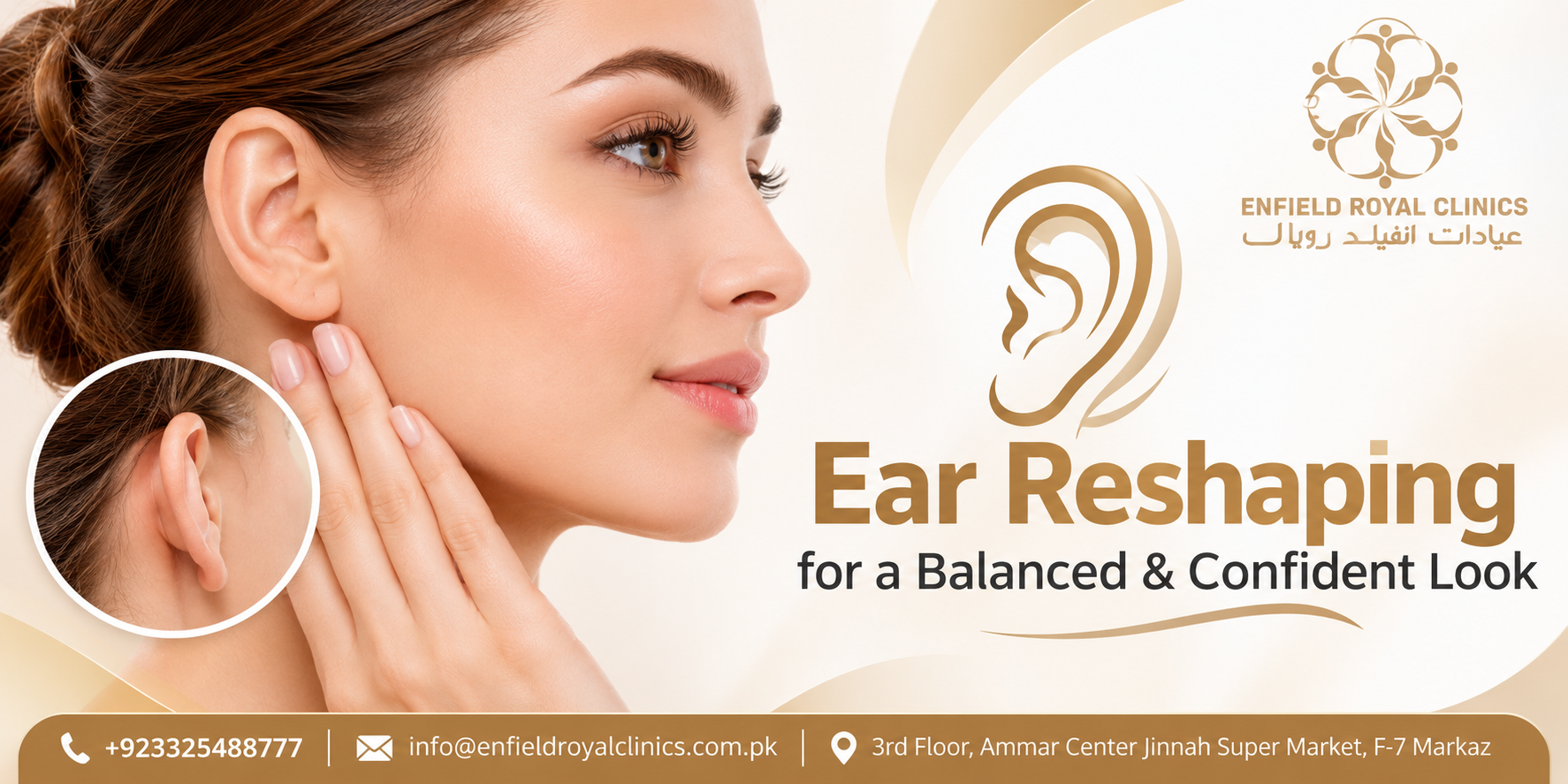
Protruding ears are a common cosmetic concern that can affect the overall appearance of the face. When the ears extend farther outward from the head than usual, they may become more noticeable and create an imbalance in facial proportions. Although prominent ears generally do not affect hearing or physical health, some individuals feel uncomfortable or self-conscious about their appearance.
Ear reshaping surgery offers an effective option for people who want to reduce ear prominence and achieve a more balanced look. Also known as otoplasty, this procedure focuses on adjusting the cartilage and positioning of the ears to create a natural contour.
People considering Ear Reshaping in Islamabad often want to know whether the procedure can correct protruding ears, how it works, and what results they can expect. Understanding the surgical process, benefits, recovery, and suitability can help individuals make informed decisions about their cosmetic goals.
1. What Causes Protruding Ears?
Protruding ears usually develop because of differences in the natural structure of ear cartilage. These differences may be present from birth and can become noticeable as the ears grow.
In most cases, prominent ears result from one or both of the following structural concerns:
-
Underdeveloped antihelical fold: The natural fold inside the outer ear is less defined, causing the ear to project outward.
-
Deep conchal bowl: The central cartilage area of the ear may be more prominent, pushing the entire ear away from the head.
Other factors, including differences in cartilage development and ear positioning, can also contribute to prominent ears.
Protruding ears may affect one ear or both. Some individuals have noticeable differences between their ears, while others experience similar prominence on both sides.
Although this condition is usually harmless, it can influence personal confidence, especially during childhood and adolescence. Ear reshaping can help address the structural causes and improve the appearance of the ears.
2. How Does Ear Reshaping Correct Protruding Ears?
Ear reshaping, medically known as otoplasty, is designed to change the position or shape of the ears. It can reduce excessive projection by adjusting the cartilage and bringing the ears closer to the sides of the head.
The surgical technique depends on the individual's ear structure and the degree of prominence.
Common approaches include:
Cartilage reshaping: The surgeon carefully modifies the cartilage to create a more defined natural fold. This can help correct ears that protrude because of an underdeveloped antihelical fold.
Ear pinning: Special sutures may be used to position the ears closer to the head, reducing their outward projection.
Conchal adjustment: When the central ear cartilage contributes to excessive prominence, the surgeon may adjust this area to improve positioning.
Combined techniques: Some individuals require more than one technique to achieve a balanced and natural-looking result.
The procedure generally involves small incisions behind the ears, where scars are usually less noticeable. Depending on the patient's age and surgical requirements, local or general anesthesia may be used.
For people researching Ear Reshaping in Islamabad, a detailed examination is important because the best surgical approach depends on the underlying cartilage structure rather than simply how far the ears extend outward.
3. What Are the Benefits of Ear Reshaping for Protruding Ears?
Correcting prominent ears can offer several cosmetic and personal benefits. The procedure focuses on improving ear position while maintaining natural proportions.
Some important benefits include:
-
Reduced ear prominence: The ears are repositioned closer to the head, creating a less noticeable appearance.
-
Improved facial balance: Better ear positioning can complement the individual's other facial features.
-
Enhanced side profile: Correcting outward projection may improve the appearance of the face from different angles.
-
Better ear symmetry: Noticeable differences between the two ears may be reduced.
-
Natural-looking contours: Proper cartilage adjustment helps maintain the natural folds and curves of the ears.
-
Long-lasting improvement: Surgical correction generally provides durable changes in ear position and shape.
Another potential benefit is improved self-confidence. Individuals who have felt uncomfortable about prominent ears may feel more relaxed about hairstyles, photographs, and social situations after treatment.
However, cosmetic surgery cannot guarantee emotional or psychological benefits. Personal expectations should remain realistic, and the decision should be based on individual needs.
4. Who Is a Suitable Candidate for Ear Reshaping?
Ear reshaping may be suitable for children and adults who want to correct prominent ears or improve their overall ear appearance.
Children are commonly considered for otoplasty around five to six years of age, when the ears have developed sufficiently for surgery. Early treatment may help address cosmetic concerns before they become a source of persistent self-consciousness.
Adults can also undergo the procedure, even if their ears have been prominent since childhood.
A suitable candidate generally:
-
Has noticeably protruding ears.
-
Wants to improve ear position or shape.
-
Is in good general health.
-
Has realistic expectations about surgical results.
-
Understands the recovery process and aftercare requirements.
-
Does not have medical conditions that would make surgery unsuitable.
Before recommending surgery, the surgeon evaluates cartilage development, ear symmetry, skin condition, and the individual's medical history.
A consultation also provides an opportunity to discuss the desired degree of correction and understand what the procedure can realistically achieve.
5. What Happens During Recovery After Ear Reshaping?
Recovery is an important part of achieving satisfactory results. After otoplasty, patients may experience temporary swelling, bruising, tenderness, or mild discomfort around the ears.
These symptoms generally improve as the healing process progresses.
Initial recovery often takes around one to two weeks, although complete healing may require several weeks or longer.
To support proper recovery, patients are generally advised to follow these precautions:
-
Wear a protective headband as instructed.
-
Avoid sleeping directly on the treated ears.
-
Keep the surgical area clean and dry.
-
Take prescribed medications according to instructions.
-
Avoid strenuous exercise during early recovery.
-
Avoid contact sports and activities that may injure the ears.
-
Attend follow-up appointments as recommended.
Patients should also avoid touching, bending, or putting unnecessary pressure on the ears during the healing period.
The final results become more noticeable as swelling decreases and the cartilage settles into its new position. Following postoperative instructions can help protect the surgical correction.
If increasing pain, unusual discharge, fever, or significant redness develops, medical advice should be sought promptly.
6. Are the Results of Ear Reshaping Permanent?
One of the common questions about otoplasty is whether the ears will remain in their corrected position.
Ear reshaping generally provides long-lasting results because the procedure modifies the underlying cartilage structure rather than temporarily changing the appearance.
Once healing is complete, the ears usually maintain their improved position and contour. However, individual outcomes can vary depending on cartilage characteristics, surgical technique, and healing response.
In some cases, changes in ear position may occur during recovery. Rarely, complications or unsatisfactory results may require additional treatment.
Patients can support long-term results by protecting their ears from injuries and following all postoperative recommendations.
People considering Ear Reshaping in Islamabad should discuss expected outcomes, possible complications, and the likelihood of revision surgery during their consultation.
Frequently Asked Questions (FAQs)
1. Can ear reshaping completely correct protruding ears?
Ear reshaping can significantly reduce ear prominence by adjusting cartilage structure and positioning. The degree of correction depends on the individual's anatomy and the surgical technique used.
2. Is ear reshaping surgery painful?
The procedure is performed under anesthesia, so significant pain is not expected during surgery. Mild discomfort, swelling, and tenderness may occur afterward and can generally be managed with prescribed medication.
3. At what age can someone undergo ear reshaping?
Children are commonly considered for otoplasty around five to six years of age, once the ears have developed sufficiently. Adults can also undergo the procedure if they are suitable candidates.
4. How long does ear reshaping surgery take?
The procedure commonly takes around one to two hours, although the duration varies depending on the complexity of the correction and whether one or both ears require treatment.
5. Will ear reshaping leave visible scars?
Small incisions are commonly placed behind the ears, making scars less noticeable. However, scar appearance varies depending on individual healing.
6. Can protruding ears become prominent again after surgery?
Otoplasty generally provides long-lasting results. However, cartilage changes, healing complications, or injury may occasionally affect the corrected position.
Conclusion
Ear reshaping is an effective surgical option for individuals who want to correct protruding ears and improve their overall appearance. By adjusting the cartilage and repositioning the ears closer to the head, otoplasty can reduce excessive prominence, improve facial proportions, and create more natural-looking contours.
For individuals considering Ear Reshaping in Islamabad, understanding the causes of prominent ears, available surgical techniques, recovery requirements, and possible risks is essential. A consultation with a qualified surgeon can help determine the most suitable approach based on individual ear structure and cosmetic expectations.

 Arabic
 French
 Spanish
 Portuguese
 Deutsch
 Turkish
 Dutch
 Italiano
 Russian
 Romaian
 Portuguese (Brazil)
 Greek
