

Bladder Stones in Dogs: Common Symptoms, Causes, Diagnosis, and Surgical Treatment
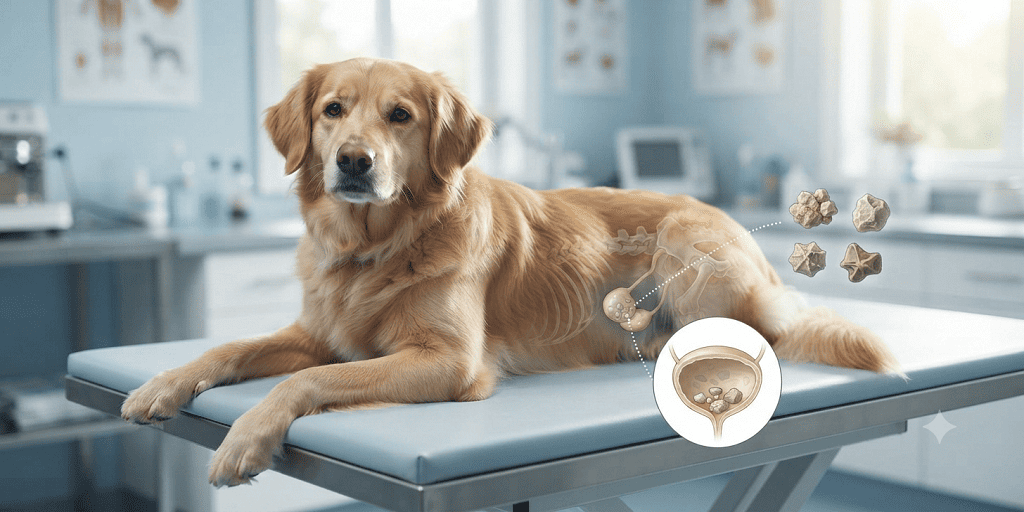
- Bladder stones in dogs are mineral deposits that cause straining, bloody urine, and frequent urination. A complete blockage is an emergency.
- Struvite and calcium oxalate are the two most common types, and each needs a different prevention plan.
- Diagnosis combines urinalysis, X-rays, and ultrasound. Surgery (cystotomy) is the most direct way to remove large or non-dissolving stones.
- Stones recur without follow-up, so diet, hydration, and rechecks matter.
What Are Bladder Stones in Dogs?
Bladder stones in dogs, also called uroliths or cystic calculi, are solid mineral masses that form in the urinary bladder. They range from sand-like grit to stones several centimeters wide. They irritate the bladder lining, invite infection, and can lodge in the urethra, especially in male dogs.
Common Symptoms of Bladder Stones in Dogs
Signs often resemble a urinary tract infection, so stones are easy to miss early. Watch for:
- Straining to urinate or passing only small amounts
- Blood-tinged or cloudy urine
- Frequent trips outside and indoor accidents
- Excessive licking of the genital area
- Pain when the abdomen is touched
A dog that strains with no urine output, vomits, or seems lethargic may have a urethral obstruction. This is life-threatening within 24–72 hours and needs emergency care immediately.
Causes and Risk Factors
Stones form when urine becomes saturated with minerals, often because of urine pH, diet, genetics, or chronic infection. Struvite stones are strongly linked to bacterial infections that raise urine pH. Calcium oxalate stones are more common in older, small-breed males.
Breeds commonly affected include Miniature Schnauzers, Shih Tzus, Bichon Frises, Lhasa Apsos, and Yorkshire Terriers. Dalmatians are prone to urate stones because of their unique purine metabolism.
Bladder Stones in Dogs by Type: Key Differences
Stone TypeTypical CauseDissolves With Diet?Common BreedsStruviteUrinary infection, alkaline urineOften yesMiniature Schnauzer, Shih Tzu, femalesCalcium oxalateGenetics, high urine calciumNoBichon Frise, Yorkshire Terrier, older malesUratePurine metabolism, liver shuntsSometimesDalmatian, English BulldogCystineInherited kidney transport defectSometimesBulldog, Dachshund, Basset Hound
How Veterinarians Diagnose Bladder Stones
Diagnosis starts with a physical exam and urinalysis to check for crystals, blood, and infection. A urine culture identifies bacteria and guides antibiotic choice. Imaging confirms the stones:
- Radiographs (X-rays): reveal most stones, though urate and cystine stones can be hard to see.
- Ultrasound: shows stone size, number, and bladder wall changes.
- Stone analysis: after removal, laboratory analysis identifies the mineral type and shapes prevention.
The American College of Veterinary Internal Medicine publishes consensus guidance on urolithiasis management for veterinary professionals.
Surgical Treatment for Bladder Stones in Dogs
Surgery is recommended when stones are large, numerous, infected, unlikely to dissolve, or causing obstruction. The standard procedure is a cystotomy: the surgeon opens the bladder, removes every stone, flushes the bladder, and closes it in layers. Surgeons also flush the urethra to clear small fragments that could cause a later blockage.
Most dogs go home within 1–2 days. Recovery typically involves 10–14 days of restricted activity, pain medication, and antibiotics when infection is present. A recheck with urinalysis and imaging confirms that no stones remain.
Non-surgical options include prescription dissolution diets for struvite and laser lithotripsy in select cases. Dissolution can take 4–12 weeks and is not suitable for obstructed dogs.
Preventing Recurrence
Recurrence rates can reach 20–50% depending on stone type. Prevention relies on a veterinarian-prescribed diet, increased water intake (canned food or added water), prompt treatment of urinary infections, and periodic urinalysis or imaging every 3–6 months.
Conclusion
Early recognition and the right treatment plan give dogs an excellent outlook. Community Care Veterinary Specialist - Local SEO Campaign supports North Florida pet owners with emergency care, board-certified specialists, diagnostic imaging, and surgical expertise for urinary conditions.
Bladder Stones in Dogs: Common Symptoms, Causes, Diagnosis, and Surgical Treatment FAQ
Can bladder stones in dogs pass on their own?
Very small stones may pass, but larger stones rarely do and can obstruct the urethra. Any dog with suspected stones needs a veterinary exam.
How much does bladder stone surgery cost?
Costs vary by region and case complexity. In the United States, cystotomy commonly ranges from $1,500 to $4,000 including diagnostics and hospitalization.
Are bladder stones in dogs an emergency?
They become an emergency when a dog cannot urinate, vomits, or shows severe pain. Urethral blockage can cause kidney failure and death within days.
For More Information About minimally invasive surgery and boas surgery Please Visit: Community Care Veterinary Specialists.

 English
 Arabic
 French
 Spanish
 Deutsch
 Turkish
 Dutch
 Italiano
 Russian
 Romaian
 Portuguese (Brazil)
 Greek
