

When the World Feels Unreal: Understanding Derealization Symptoms in Adults
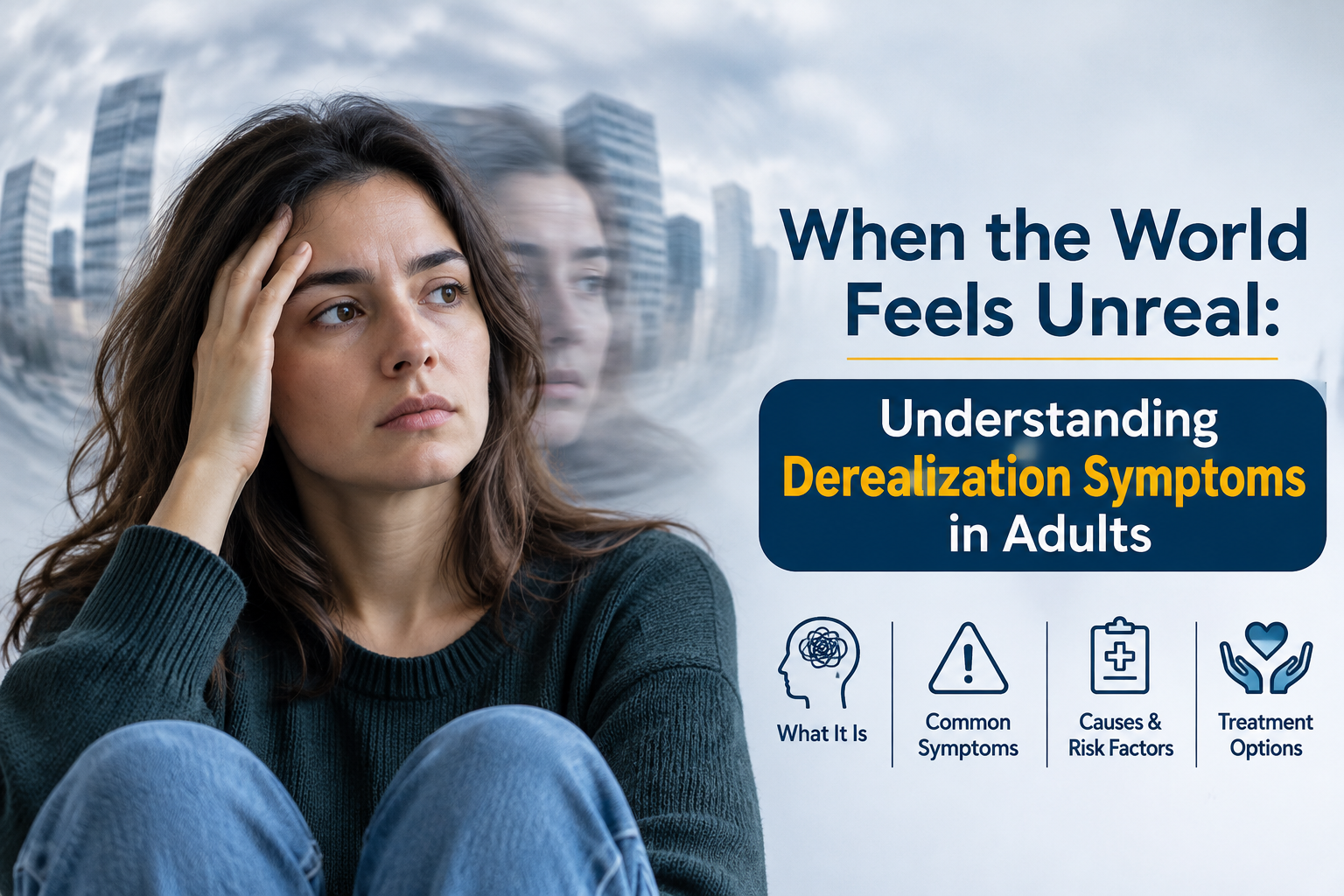
Have you ever looked around a familiar room and suddenly felt as though everything seemed strange, distant, or unreal? The people around you may look familiar, and you may recognize where you are, yet your surroundings can feel unusually disconnected from your sense of reality. Even ordinary activities may seem unfamiliar or difficult to experience naturally.
These sensations can be confusing and frightening, particularly when they occur unexpectedly. Some adults describe feeling as though they are watching life through glass, moving through a dream, or experiencing the world without fully connecting to it.
These experiences are sometimes associated with derealization symptoms in adults, which involve changes in how a person experiences or perceives their external surroundings. Although the sensations can be unsettling, they do not automatically mean someone is losing touch with reality.
Understanding derealization, its possible triggers, and how it may affect everyday functioning can help individuals recognize their experiences and determine when professional support may be appropriate.
What Is Derealization?
Derealization is a feeling of detachment from the external environment. A person may recognize their surroundings but experience them as unfamiliar, distant, artificial, or dreamlike. The environment itself has not necessarily changed; instead, the individual's subjective experience of it feels different.
For example, someone may enter their home and recognize every object, yet feel as though they are seeing the space for the first time. Conversations may sound distant, familiar faces may seem strange, or ordinary surroundings may appear unusually flat or lifeless.
Derealization can occur occasionally during periods of stress, exhaustion, or emotional overwhelm without necessarily indicating a disorder. When feelings of detachment from the environment are persistent or recurrent, cause significant distress, or interfere with daily functioning, they may be associated with depersonalization/derealization disorder. A clinical assessment is needed to determine whether the experiences meet diagnostic criteria or are related to another psychological or medical condition.
The experience alone does not establish a mental health diagnosis. Clinicians consider how often it occurs, how long it lasts, the distress it causes, and whether it interferes with daily functioning.
Common Derealization Symptoms in Adults
Derealization experiences can vary in intensity, duration, and how they affect a person's perception. Some individuals notice subtle changes in their surroundings, while others experience a stronger sense of separation from the world around them.
Common experiences may include:
-
Feeling as though the surroundings are dreamlike, foggy, or unreal
-
Familiar places appearing strangely unfamiliar
-
Seeing objects as flat, distant, blurry, or visually altered
-
Feeling separated from other people by an invisible barrier
-
Experiencing sounds as muted, distant, or unusually clear
-
Having difficulty feeling emotionally connected to the surrounding environment
-
Perceiving time as moving unusually slowly or quickly
-
Feeling present physically but disconnected from what is happening
Visual blurriness, changes in how objects appear, or sounds seeming distant, muted, or unusual may describe subjective perceptual experiences associated with derealization. However, actual changes in vision or hearing should not automatically be attributed to derealization and may require a separate medical assessment.
These sensations may fluctuate throughout the day. Some people experience brief episodes, while others notice persistent or recurring feelings of disconnection.
Derealization can also affect concentration. A person may struggle to follow conversations, remain attentive during meetings, or feel comfortable in busy environments. However, the symptoms are not identical for everyone, and experiencing one or more of these sensations does not necessarily indicate a dissociative disorder.
Why Do Surroundings Feel Unreal?
Derealization may be associated with different psychological, environmental, or health-related factors. Sometimes it occurs during a specific stressful situation, while in other cases, the reason may not be immediately apparent.
Stress and Emotional Overload
Prolonged stress may influence attention, emotional processing, and the way a person responds to their surroundings. During periods of intense pressure, some individuals experience a sense of detachment or emotional distance.
Major life changes, grief, interpersonal difficulties, traumatic experiences, and ongoing responsibilities may contribute to feelings of disconnection. This does not mean that everyone experiencing stress will develop derealization or that every episode is caused by trauma.
Anxiety and Derealization
There is a recognized connection between derealization and anxiety. During heightened anxiety, a person's attention may become focused on perceived threats, bodily sensations, or changes in their surroundings. This altered state of alertness may contribute to feelings of unfamiliarity or detachment.
Some individuals experience derealization during panic episodes, while others notice it when they are not consciously feeling anxious. Fear of the sensation itself may also increase attention toward it, making the experience more distressing.
Anxiety may be one contributing factor, but it should not automatically be assumed to be the underlying cause.
Sleep Deprivation and Substance-Related Factors
Poor sleep, prolonged exhaustion, and disruptions to normal sleep patterns may affect concentration, sensory processing, and emotional regulation. Some people notice unusual perceptual experiences after several nights of insufficient rest.
Alcohol, cannabis, hallucinogens, certain medications, and other substances may also contribute to changes in perception or awareness. If symptoms begin after substance use, a medication change, or significant sleep disruption, discussing the timing with a healthcare professional may help clarify possible contributing factors.
Neurological conditions, including certain seizure disorders, can sometimes cause episodes involving altered perception, awareness, or sensations that resemble derealization. These experiences may have different underlying causes, so a medical evaluation may be important when symptoms are new, unusual, or accompanied by other neurological changes.
Derealization vs. Depersonalization: What Is the Difference?
Derealization and depersonalization are related dissociative experiences, but they involve different aspects of perception.
Derealization refers to feeling disconnected from the external world. The surroundings may seem distant, unfamiliar, artificial, or unreal.
Depersonalization involves feeling detached from yourself. A person may feel disconnected from their body, thoughts, emotions, actions, or sense of identity. They may describe feeling as though they are observing themselves from outside or functioning automatically.
|
Derealization |
Depersonalization |
|
Surroundings feel unreal or unfamiliar |
The self feels disconnected or unfamiliar |
|
People or objects may seem distant or dreamlike |
Thoughts, emotions, or bodily sensations may feel detached |
|
The external environment feels different |
Personal experiences or actions may feel disconnected from oneself |
Both experiences can occur at the same time or separately. Some individuals may experience one type of disconnection more prominently than the other.
How Derealization Can Affect Work, Relationships, and Daily Activities
When surroundings feel unfamiliar, everyday responsibilities may require more effort. Tasks that usually feel automatic, such as driving a familiar route, shopping, attending meetings, or talking with friends, may become uncomfortable.
At work, a person may struggle to remain focused, process information, or feel engaged in conversations. Socially, they may withdraw because they find it difficult to connect with others or worry that their experience will be misunderstood.
Some individuals begin avoiding crowded environments, unfamiliar places, or situations in which they previously experienced an episode. Others may repeatedly check their surroundings or seek reassurance that everything is normal.
These changes can create additional stress and affect confidence. Recognizing the practical impact of derealization is important because the level of disruption may help determine whether professional evaluation is needed.
When derealization affects concentration, perception, or awareness, activities requiring alertness and judgment may become unsafe. Individuals experiencing significant impairment should avoid driving or operating machinery until they can do so safely and should seek appropriate medical or mental health assessment.
Does Knowing the Experience Is Unreal Matter?
A commonly reported feature of derealization is awareness that the sensation of unreality is subjective. For instance, a person may feel that their surroundings look artificial while understanding that the environment itself has not actually changed.
This awareness is often described as preserved reality testing. In depersonalization/derealization disorder, individuals generally recognize that their experiences of detachment or unreality are feelings rather than literal changes in reality.
Reality testing can help clinicians understand a person's experiences during an assessment. However, preserved reality testing alone cannot confirm derealization or depersonalization/derealization disorder, nor can it definitively rule out other psychiatric or medical conditions. Diagnosis requires consideration of the person's overall symptoms, history, and clinical presentation.
If someone is uncertain about what they are experiencing, describing their perceptions, thoughts, and concerns directly to a healthcare professional is more useful than trying to diagnose themselves based on one symptom.
When Should Derealization Be Professionally Evaluated?
Occasional feelings of disconnection may occur without indicating a psychiatric disorder. However, professional assessment is recommended when episodes become frequent, last longer than expected, cause significant distress, or interfere with normal functioning.
During an assessment, a clinician may ask about:
-
The onset, frequency, duration, and intensity of episodes
-
Possible triggers, including stress or panic
-
Sleep quality and recent lifestyle changes
-
Medication use, substance exposure, and physical health
-
Other emotional, cognitive, or perceptual symptoms
-
Effects on relationships, work, and daily responsibilities
Depending on the presentation, a clinician may consider anxiety disorders, depression, trauma-related conditions, dissociative disorders, medication or substance effects, neurological conditions, and other medical explanations.
If episodes involve impaired concentration, altered perception, confusion, or reduced awareness, avoid driving until these symptoms have resolved sufficiently to make driving safe. New, sudden, or significant changes in vision, hearing, awareness, or perception should be medically assessed rather than assumed to be caused by derealization.
New or sudden perceptual changes, particularly when accompanied by confusion, severe headache, fainting, weakness, or other neurological symptoms, warrant prompt medical evaluation rather than being assumed to be derealization.
How Is Derealization Managed?
Management depends on the frequency of symptoms, their underlying contributors, and how much they affect a person's life. There is no single treatment that is appropriate for everyone experiencing derealization.
Psychotherapy may help individuals understand the experiences, identify patterns or triggers, address related anxiety, and develop healthier responses to distress. Treatment may also focus on underlying concerns, such as depression, trauma-related symptoms, or persistent anxiety, when present.
Grounding strategies may help some people reconnect with the present moment. Examples include noticing the texture of an object, identifying sounds in the room, feeling the feet against the floor, or focusing attention on a familiar activity. These techniques are coping tools rather than diagnostic tests or guaranteed ways to stop an episode.
Regular sleep, reducing substance-related triggers, and maintaining manageable daily routines may also support overall well-being. Treatment recommendations should be based on an individual's clinical needs and assessment findings.
For additional clinical context, this peer-reviewed review of depersonalization-derealization disorder discusses its mechanisms, diagnosis, and management.
Understanding Derealization Without Fear
Experiencing familiar surroundings as distant or unreal can be difficult to explain, especially when everything appears normal to other people. However, these sensations do not automatically mean someone is losing their mind or that the experience will become permanent.
Learning about derealization symptoms in adults can help people describe what they are experiencing, but understanding the possible causes requires considering the broader picture of their health and well-being.
If derealization experiences become frequent, distressing, or difficult to manage, seeking professional support through telepsychiatry services may help individuals understand their symptoms and explore appropriate next steps. Cordial Psychiatry provides mental health support for individuals seeking guidance about their experiences and emotional well-being.
Seeking help is not about labeling yourself. It is about understanding your experiences, addressing concerns, and finding a clearer path toward emotional well-being.
Frequently Asked Questions
Can derealization make everyday activities feel unfamiliar?
Yes. Routine activities such as walking through a store, using a phone, driving a familiar route, or having a conversation may feel unusual or less automatic during an episode. The activity itself remains familiar, but the sense of connection to the experience may feel different.
Why do I feel like I am watching my life instead of living it?
Some people experiencing dissociative sensations describe feeling like observers of their own experiences rather than actively participating in them. This may be associated with depersonalization, derealization, or other experiences of detachment.
Can derealization make it difficult to recognize familiar faces?
People may recognize friends, family members, or familiar surroundings but experience them as emotionally distant, strange, or less familiar than usual. If face recognition itself becomes impaired or the change is sudden, medical evaluation is important.
Why do I keep checking whether everything feels real?
When an unfamiliar sensation causes fear, a person may repeatedly monitor their surroundings or perception to see whether things feel normal again. This repeated checking may increase attention to the sensation and make the experience more distressing.
Does derealization affect emotional responses?
It can. Some individuals report feeling emotionally numb, disconnected, or unable to respond naturally to situations that would usually make them happy, sad, excited, or concerned. This emotional distance may accompany the sense of disconnection from surroundings.
Conclusion
Derealization can make familiar surroundings feel strange or unreal, but these experiences do not automatically indicate a serious mental health condition. Understanding possible triggers and recognizing when symptoms affect daily life can help individuals respond with greater clarity. If the feelings persist or become distressing, professional assessment can help identify contributing factors and appropriate support.

 English
 Arabic
 French
 Spanish
 Portuguese
 Deutsch
 Dutch
 Italiano
 Russian
 Romaian
 Portuguese (Brazil)
 Greek
