

Mortgage Advice Course: Build Knowledge for a Career in Mortgage Advisory
Buying a property is one of the most significant financial decisions many people make. Understanding mortgage products, lending criteria, affordability and financial commitments can help individuals make informed choices when financing a home. For those interested in financial services, learning how mortgage advice works can also open up opportunities for professional development.
A Mortgage Advice course provides an introduction to the mortgage market and the principles involved in helping clients understand different borrowing options. It can be valuable for aspiring mortgage advisors, banking professionals, financial services employees and individuals considering a career change.
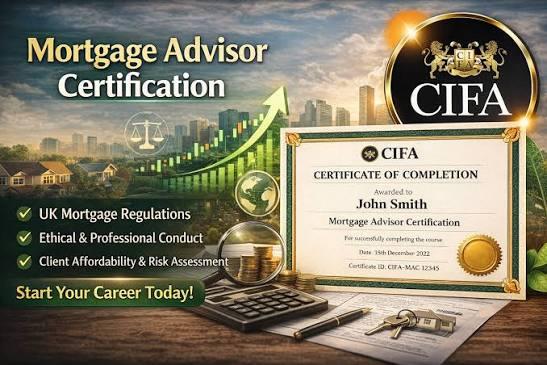
CIFA offers an online Mortgage Advice course that explores mortgage products, the application process, lending practices, affordability assessments and the regulatory environment surrounding mortgage advice.
What Is a Mortgage Advice Course?
A mortgage advice course introduces learners to the knowledge and processes involved in understanding mortgage products and the needs of borrowers. It explores how lenders assess applications and how mortgage professionals evaluate financial circumstances when considering suitable options.
Mortgage advice involves more than comparing interest rates. Borrowers may need to consider their income, credit history, deposit, existing financial commitments, mortgage term and future affordability.
Learning about these factors helps learners understand why mortgage decisions require careful assessment and clear communication. It also introduces the importance of responsible lending practices and compliance with applicable regulations.
Why Is Mortgage Advice Training Important?
The mortgage market includes different products, lending conditions and eligibility requirements. Without an understanding of these factors, it can be difficult to evaluate the potential costs and commitments associated with borrowing.
A mortgage advisor training course can help learners develop a foundation in mortgage terminology, lending criteria and the steps involved in the application process.
Mortgage training can also improve awareness of client needs, affordability considerations and regulatory responsibilities. These concepts are relevant to people exploring mortgage advisory work and professionals who interact with customers in banking, lending or property-related services.
Key Topics Covered in Mortgage Advice Training
1. Understanding Different Mortgage Products
Mortgage products vary according to their repayment structure, interest rate and terms. Understanding these differences is essential when learning about the mortgage market.
Common mortgage types include:
-
Fixed-rate mortgages: The interest rate remains fixed for an agreed period.
-
Variable-rate mortgages: The interest rate can change according to the relevant terms and conditions.
-
Tracker mortgages: The interest rate follows a specified reference rate, usually with an additional margin.
-
Repayment mortgages: Borrowers make payments towards both the principal and interest.
-
Interest-only mortgages: Monthly payments cover interest, while the borrowed principal must be repaid separately under the agreed arrangement.
Each option has different features and risks. Studying mortgage products helps learners understand why borrowers should consider their financial circumstances, repayment plans and tolerance for changing costs.
2. Mortgage Lending and Eligibility
Lenders assess various factors when deciding whether to approve a mortgage application. These may include income, employment circumstances, credit history, deposit size, existing debts and the property's value.
A mortgage lending course helps learners understand the basic principles behind lending decisions and why different lenders may apply different criteria.
Understanding eligibility requirements is important because meeting one lender's criteria does not guarantee approval from another. Applications must be assessed according to the lender's policies and the relevant regulatory framework.
3. Mortgage Affordability Assessments
Affordability is a central part of mortgage lending. Borrowers need to consider whether they can manage repayments alongside everyday expenses and other financial commitments.
Affordability assessments may involve reviewing income, regular expenditure, outstanding borrowing and potential changes in interest rates or personal circumstances.
For mortgage professionals, understanding affordability helps explain why the maximum amount a lender might offer is not necessarily the amount a borrower should choose to borrow.
4. The Mortgage Application Process
The mortgage application process involves several stages, from gathering information about the borrower to submitting an application and receiving a lending decision.
Depending on the circumstances, the process may include an initial consultation, document checks, affordability assessments, credit checks, property valuation and lender underwriting.
Learning about these stages helps learners understand how mortgage applications are processed and why accurate information and complete documentation are important.
5. Interest Rates and Mortgage Costs
Interest rates influence the cost of borrowing and can affect monthly repayments. The impact depends on the mortgage product, the outstanding balance, the repayment term and the terms of the agreement.
A fixed-rate mortgage can provide payment certainty during the fixed period, whereas a variable-rate mortgage may expose borrowers to changing repayments.
Mortgage training introduces these considerations and helps learners appreciate the importance of explaining costs, risks and contractual conditions clearly.
6. Mortgage Regulation and Professional Responsibilities
Mortgage advice in the UK operates within a regulatory framework that includes rules and requirements established by the Financial Conduct Authority (FCA).
Professionals working in regulated mortgage activities need to understand the obligations relevant to their roles. These can include treating customers fairly, providing appropriate information, maintaining records and ensuring that recommendations meet applicable suitability requirements.
A mortgage advice training course can introduce learners to these responsibilities and explain why ethical conduct and regulatory awareness are essential in financial services.
Completing an introductory course does not automatically authorise someone to provide regulated mortgage advice. Anyone pursuing a professional role should check the qualification, competence and regulatory requirements that apply to that position.
Who Should Consider a Mortgage Advice Course?
A mortgage advisor course may be relevant to several groups of learners.
-
Aspiring mortgage advisors: Individuals exploring a career in mortgage advisory services.
-
Banking professionals: Employees who want to develop their understanding of mortgage lending.
-
Financial services employees: Professionals seeking to broaden their knowledge of borrowing and affordability.
-
Property professionals: Estate agents and other property-sector workers who want to understand mortgage processes.
-
Career changers: Individuals considering a move into mortgage lending or financial services.
-
Finance students and graduates: Learners who want to develop foundational knowledge of the mortgage market.
The best starting point depends on your previous experience and career objectives. Reviewing the course syllabus and any relevant professional requirements can help you decide whether the training is appropriate.
How Mortgage Advice Skills Can Support Career Development
Mortgage knowledge can be relevant to roles across lending, financial services and property finance. Depending on experience and additional requirements, related career paths may include mortgage administration, lending support, mortgage operations and mortgage advisory services.
Professionals in these areas may need to understand customer documentation, lending criteria, affordability calculations and the practical stages of a mortgage application.
A mortgage advice certification can help demonstrate a commitment to professional learning and provide a structured introduction to the subject. However, employment opportunities depend on several factors, including experience, employer expectations and the qualifications required for specific roles.
For those seeking to become mortgage advisors in the UK, it is particularly important to distinguish between general training and the qualifications required to perform regulated activities.
Why Choose CIFA's Mortgage Advice Course?
CIFA provides online learning options for people interested in finance and professional development. Its Mortgage Advice course is designed to introduce learners to important concepts in mortgage finance and advisory practice.
The published course syllabus covers five main chapters:
-
The Mortgage Process
-
Mortgage Lending
-
The Mortgage Industry
-
Elements of Mortgage Advice
-
Mortgage Solutions
The course is listed at intermediate level and includes 45 CPD hours, chapter-based mock exams, lifetime portal access and a certificate of achievement after successfully completing and passing the examination.
These features provide learners with a structured way to explore mortgage-related topics and review their understanding as they progress through the material.
Before enrolling, review the course requirements, learning resources, assessment arrangements and any additional costs so that you can make an informed decision.
Explore the course here: CIFA Mortgage Advice Course
How to Make the Most of Mortgage Training
To strengthen your understanding, practise applying mortgage concepts to realistic examples.
For instance, consider how a change in interest rates could affect monthly repayments. Think about the factors a lender might review when assessing an applicant with existing debts, or how different repayment structures affect the outstanding balance over time.
You can also practise explaining mortgage terminology in simple language. Clear communication is important because borrowers need to understand the costs, conditions and potential risks associated with financial commitments.
Alongside your studies, follow relevant UK mortgage regulation updates and make sure any further professional training aligns with your intended career path.
Conclusion
A Mortgage Advice course can provide a useful foundation for understanding mortgage products, lending criteria, affordability assessments and the application process. These subjects are important for people exploring mortgage-related careers and those seeking to broaden their knowledge of financial services.
CIFA's online course offers structured learning across key areas of mortgage finance and advisory practice. By developing your knowledge and understanding the regulatory requirements relevant to your career goals, you can take a more informed approach to professional development in the mortgage sector.
Frequently Asked Questions
1. What do you learn in a Mortgage Advice course?
A mortgage advice course may cover mortgage products, lending criteria, affordability assessments, interest rates, mortgage applications and relevant regulatory responsibilities. The precise topics depend on the course syllabus.
2. Can I study a Mortgage Advice course online?
Yes, online courses allow learners to study mortgage-related topics remotely. Check the provider's learning materials, assessment arrangements and access conditions before enrolling.
3. Do you need a qualification to become a mortgage advisor in the UK?
People carrying out regulated mortgage advice activities generally need to meet the applicable qualification, competence and regulatory requirements. Check the current requirements for the specific role you intend to pursue.

 English
 Arabic
 French
 Spanish
 Deutsch
 Turkish
 Dutch
 Italiano
 Russian
 Romaian
 Portuguese (Brazil)
 Greek
