

Natural-Looking Pediatric Zirconia Dental Crowns
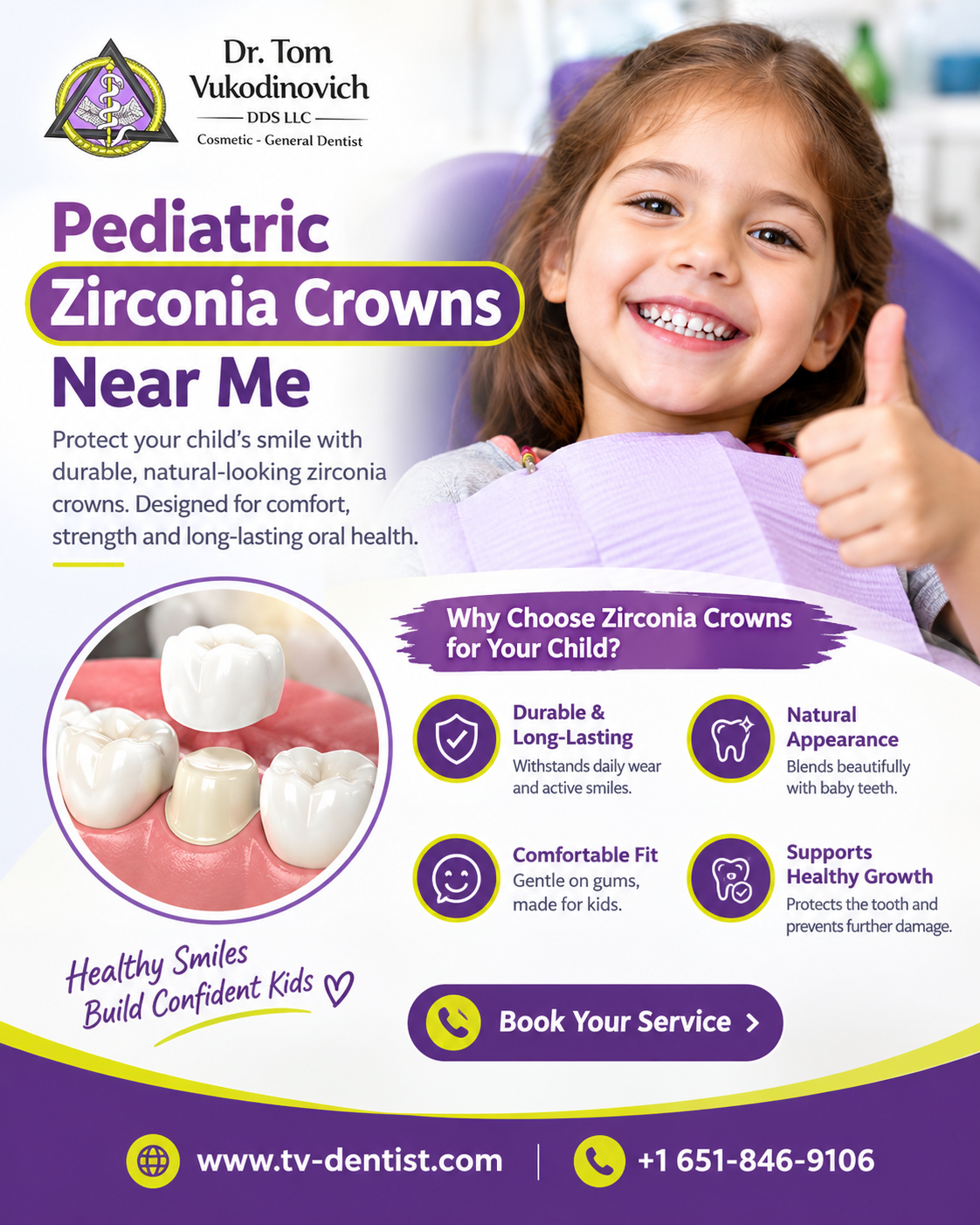
Children's teeth play an important role in chewing, speaking, and guiding permanent teeth into their proper positions. When a baby tooth becomes severely decayed, cracked, or weakened, a simple filling may not provide enough protection. In these situations, a dental crown may help restore the tooth's structure and function.
Parents searching for Pediatric Zirconia Crowns Near Me often want a durable, natural-looking solution that protects their child's tooth without the appearance of a traditional metal crown. Pediatric zirconia crowns are tooth-colored ceramic restorations designed to cover damaged primary teeth and help preserve their function.
For families in Inver Grove Heights, Minnesota, understanding the benefits, treatment process, and care requirements of children's dental crowns can make it easier to discuss suitable options with a dental professional. Dr. Tom Vukodinovich DDS LLC provides dental care in Inver Grove Heights and can help patients explore appropriate restorative treatment options.
What Are Pediatric Zirconia Crowns?
Pediatric zirconia crowns are full-coverage restorations made from zirconium dioxide, a strong ceramic material. They are designed specifically for children's teeth and are used when a primary tooth needs more extensive protection than a conventional filling can provide.
Unlike stainless steel crowns, which have a silver-colored metallic appearance, zirconia crowns are white and designed to resemble natural teeth. Their tooth-colored appearance makes them an option for parents who value both dental function and aesthetics.
Natural-looking dental crowns for children can help restore the visible appearance of a damaged tooth while providing coverage over weakened tooth structure. However, the suitability of a zirconia crown depends on the child's dental condition, the tooth's location, and the dentist's clinical assessment.
How Are Zirconia Crowns Different from Porcelain Dental Crowns?
A porcelain dental crown is a tooth-shaped restoration used to cover and protect a tooth weakened by decay, fractures, large fillings, or certain root canal treatments. Porcelain crowns are custom-selected or fabricated to complement the color, shape, and size of surrounding teeth.
Zirconia is a particular type of ceramic used in dental restorations. Although zirconia and other porcelain-based materials can provide tooth-colored results, they are not identical materials, and not every porcelain crown is a pediatric zirconia crown.
For children, the dentist selects a suitable restoration according to the tooth's condition, expected lifespan, bite, and stage of dental development.
Why Might a Child Need a Dental Crown?
Baby teeth are temporary, but they remain important until they are naturally replaced by permanent teeth. When damage is extensive, appropriate restorative treatment can help preserve a primary tooth and maintain its function.
Extensive Tooth Decay
Cavities can develop when bacteria in dental plaque produce acids that damage tooth enamel. If decay becomes extensive, a standard filling may not adequately protect the remaining tooth.
Pediatric dental crowns for severe tooth decay may be recommended when a substantial amount of tooth structure has been lost and full coverage is needed.
Cracked, Broken, or Weakened Teeth
Falls, sports injuries, accidents, and weakened tooth structure can cause a child's tooth to chip or break. A crown may help cover and protect the remaining tooth, depending on the severity of the damage.
Protection After Pulp Therapy
When decay reaches the inner tissues of a primary tooth, the dentist may recommend pulp therapy when appropriate. Following certain treatments, a full-coverage crown may be advised to protect the remaining tooth structure.
Large Fillings or Extensive Previous Treatment
A tooth with a large restoration may have less natural structure available to withstand chewing forces. A crown can provide additional coverage when the dentist determines that a filling alone is insufficient.
Preserving Primary Teeth
Baby teeth support chewing and speech and help maintain space for developing permanent teeth. When a primary tooth can be preserved, a suitable restoration may help it remain functional until natural exfoliation.
Key Benefits of Pediatric Zirconia Crowns
Parents considering white zirconia crowns for baby teeth often want to understand how these restorations compare with other available options.
1. Natural-Looking Appearance
Zirconia crowns have a tooth-colored finish that can blend with surrounding teeth. This may be particularly appealing when restoring front teeth or other visible areas.
Aesthetic pediatric dental crowns offer an alternative to metal-colored restorations for families who prefer a more natural appearance.
2. Strength and Durability
Zirconia is a strong ceramic material designed to withstand normal biting and chewing forces when appropriately selected and placed. It may be suitable for certain children who need full-coverage restoration.
The durability of a crown depends on factors such as the tooth's condition, bite, crown fit, oral hygiene, and the child's dental development. No crown can be guaranteed to last for a specific period in every child.
3. Restored Tooth Function
A properly fitted crown restores the shape of a damaged tooth and can help a child chew more effectively. It also covers vulnerable tooth surfaces that might otherwise be exposed to further damage.
4. Metal-Free Appearance
Zirconia crowns do not have the silver-colored appearance of stainless steel crowns. Families seeking metal-free tooth-colored crowns for children's teeth may wish to discuss zirconia with their dentist.
5. Coverage for Weakened Teeth
When a tooth has extensive decay or structural damage, a full-coverage restoration can help protect the remaining tooth. The dentist determines whether a zirconia crown is appropriate or whether another treatment would offer better results.
Pediatric Zirconia Crowns vs. Stainless Steel Crowns
Both zirconia and stainless steel crowns are used in pediatric restorative dentistry. The most suitable choice depends on the child's specific dental needs rather than appearance alone.
Pediatric Zirconia Crowns
-
Tooth-colored ceramic appearance.
-
An aesthetic option for selected front and back primary teeth.
-
Requires appropriate tooth preparation and careful placement.
-
May not be suitable for every tooth or bite condition.
Stainless Steel Crowns
-
Silver-colored metal appearance.
-
Commonly used for restoring primary molars.
-
Established option for teeth requiring durable full coverage.
-
May be preferred when clinical conditions make zirconia less suitable.
Parents searching for pediatric zirconia crowns vs. stainless steel crowns should discuss the advantages, limitations, cost, and expected maintenance of both options with their child's dentist.
What Happens During the Pediatric Zirconia Crown Procedure?
Understanding the treatment process can help parents prepare their child for a dental appointment.
Step 1: Dental Examination
The dentist examines the affected tooth and surrounding gums. X-rays may be recommended when necessary to evaluate the extent of decay, the tooth's roots, and nearby structures.
Step 2: Treatment Planning
The dentist considers the child's age, tooth position, remaining tooth structure, bite, and expected timing of natural tooth loss. Available treatment options are explained to the parent or guardian.
Step 3: Tooth Preparation
If a zirconia crown is selected, the dentist prepares the tooth according to the clinical requirements of the restoration. This may include removing decay and shaping the tooth so the crown can fit properly.
Step 4: Crown Placement
The dentist places and checks the crown, ensuring that its fit and relationship with the child's bite are appropriate. The crown is secured using a suitable dental cement.
Step 5: Aftercare Instructions
Parents receive guidance on brushing, flossing, food choices, and follow-up visits. The dentist may also explain what to expect as the child grows and the primary tooth approaches its natural exfoliation stage.
How to Care for a Child's Zirconia Crown
Good oral hygiene remains essential after crown placement. A crown protects the covered tooth, but it does not prevent cavities from developing in other teeth or around vulnerable areas.
-
Brush twice daily with an age-appropriate amount of fluoride toothpaste.
-
Supervise young children while brushing and help them clean thoroughly.
-
Clean between teeth daily when the teeth touch.
-
Limit frequent sugary snacks and sweetened drinks.
-
Avoid chewing ice or other very hard objects.
-
Attend regular dental checkups to monitor the crown and surrounding teeth.
Contact the dentist if your child develops persistent pain, swelling, gum irritation, or problems with the crown. A loose or damaged crown should be evaluated promptly.
Who Is a Suitable Candidate for Pediatric Zirconia Crowns?
Zirconia crowns for children with damaged baby teeth may be appropriate when a primary tooth has extensive decay, a fracture, or weakened structure requiring full coverage.
However, not every child is a candidate. The dentist considers the location of the tooth, available space, bite, gum health, extent of damage, and how long the tooth is expected to remain in the mouth.
A zirconia crown may require more tooth preparation than some alternatives. The dentist will also consider whether another type of crown, a filling, pulp treatment, or another treatment plan is more appropriate.

 Arabic
 French
 Spanish
 Portuguese
 Deutsch
 Turkish
 Dutch
 Italiano
 Russian
 Romaian
 Portuguese (Brazil)
 Greek
