

Nesting Gift Box Sets: A Holiday Packaging Guide for 2026
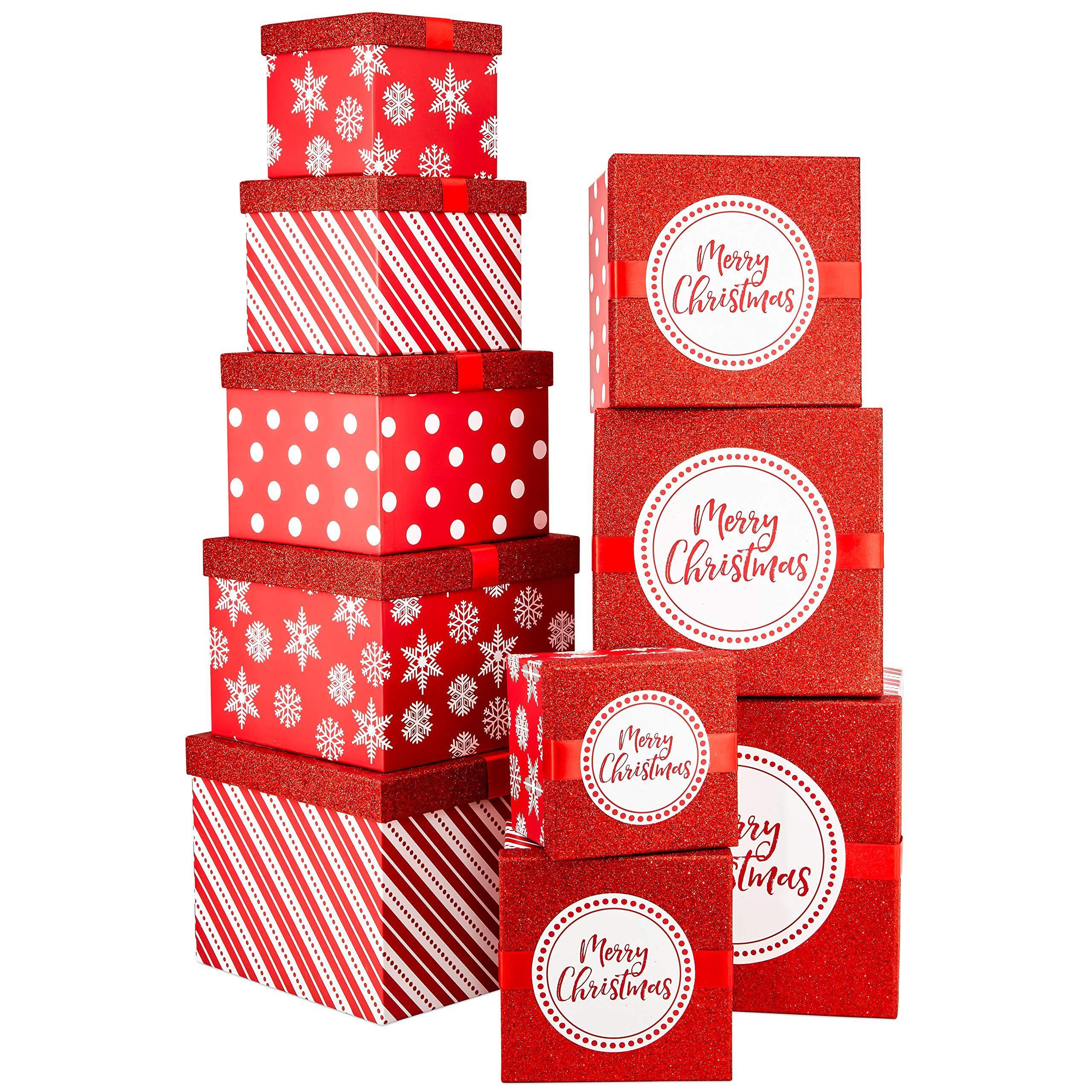
How to Use Nesting Box Sets for Holiday Gifts in 2026
Custom Christmas Boxes in a nesting set let you stack several sizes inside one another, which saves storage space and creates a layered unboxing moment. Choose sizes with even gaps between them, use sturdy board, and keep the artwork consistent across the set. Order by early October so production and shipping stay ahead of the holiday rush.
Opening one box to find another inside is a small thrill, and shoppers love it. That's the appeal of Christmas Nesting Boxes: a set of boxes that fit neatly inside each other, from largest to smallest. Brands use them for gift sets, subscription kits and keepsakes, and customers often reuse them for storage afterward. They also solve a practical problem, since the set stacks into a single compact shape on a shelf or in a warehouse.
Why Nesting Sets Work at the Holidays
Holiday gifting drives a large share of yearly retail sales. The National Retail Federation forecast that U.S. holiday sales in 2024 would reach roughly $979 billion to $989 billion. Check the NRF's latest forecast before quoting a figure in your own marketing.
In a crowded season, a set of boxes tells the buyer they're getting more than one item. Custom Christmas Boxes arranged as a nesting set can support higher prices, because the packaging itself feels like a collection. They also give you flexibility, since you can sell the boxes empty, partly filled or as part of a bundle.
Nesting sets work as marketing, too. People photograph the reveal, keep the boxes on display and often hand them down. Each of those moments keeps your brand visible well past the holidays.
Plan the Sizes and the Fit
The key to a good nesting set is clearance. Each box must slide into the next without being too tight or too loose.
How Many Boxes?
Sets of three to five are common. Three sizes feel manageable and cost less, while five or more create a dramatic effect but add weight and production time. Choose the number based on your product range and price point.
Size Gaps and Proportions
Leave a small gap between each box, typically a few millimeters on each side, so the lid closes smoothly and boxes slide in easily. When you compare Christmas Nesting Boxes, ask your supplier for a dieline or a sample set so you can test the fit before ordering.
Matching Products to Boxes
Place the largest item in the largest box and work down. A candle might go in the biggest, a small soap in the middle, and a card or keepsake in the smallest. Keep fragile items in the smaller boxes where inserts can hold them steady.
Materials and Finishes That Hold Up
Nesting boxes need rigid walls so the stack doesn't collapse or bulge:
- Rigid board: Strong and luxurious, ideal for premium gift sets.
- White SBS paperboard: Clean surface that prints holiday colors crisply.
- Kraft paperboard: Natural, recyclable and suited to eco-minded brands.
- Corrugated board: Added protection if the set ships fully packed.
For finishes, matte lamination looks refined and hides fingerprints. Gloss makes colors pop, and foil stamping adds shimmer to a logo or snowflake. Soft-touch coating feels luxurious but can show scuffs, so ask for a sample first. If any item touches food or skin, confirm that the liners and coatings are suitable.
Ask each supplier for a full quote that spells out what's included. Inserts, ribbons, finishes and extra sizes can change the price noticeably, and Custom Christmas Boxes with several upgrades cost more than the base unit price suggests.
Design Tips for a Memorable Reveal
A nesting set should feel like one story told in layers. Follow these steps:
- Use a shared pattern. Repeat a color or motif so the boxes look like a family.
- Vary the details. Use different lid colors or small icons so each layer feels like a new surprise.
- Print the inside. A message or pattern inside each lid adds a second reveal.
- Keep the logo clear. Put it on the largest lid so it's visible on a shelf.
- Leave a gift area. A tag space or ribbon slot lets customers personalize the set.
- Test the full stack. Nest the samples, close every lid and check that nothing sticks.
Keep your year-round branding visible. Custom Christmas Boxes should feel like a seasonal version of your brand, not a different company's packaging.
Plan Your Timeline and Quantities
Printing, finishing and delivery all take time, and holiday demand slows every supplier. Sets take longer than single boxes, so start early. A workable schedule looks like this:
- Early September: Pick set sizes, box counts and quantities.
- Mid September: Approve artwork and request samples.
- Early October: Place the production order.
- Early November: Receive boxes and practice packing before the rush.
Minimum order quantities vary, so ask early. If you're unsure how many to buy, look at your best holiday week last year and add about 10 to 15 percent as a buffer. Custom Christmas Boxes ordered late can mean rush fees or missed sales, so build in extra time.
Frequently Asked Questions
How many boxes should be in a nesting set?
Three to five is a good range. Fewer boxes cost less, and more boxes create a bigger reveal but add weight and production time.
Do nesting boxes ship well?
Yes, if you pack them tightly and place the set inside a sturdy outer shipper. Rigid board holds up best.
Are Christmas Nesting Boxes affordable for small brands?
Often, yes. A three-box set in standard proportions with a simple one- or two-color print costs less than fully custom shapes.
Final Thoughts
A nesting set turns packaging into part of the gift. Choose sizes with a clean fit, use sturdy materials, repeat a consistent design across the set and order early. Done well, Custom Christmas Boxes give customers a reveal worth remembering, and that memory often brings them back next season.

 English
 Arabic
 French
 Spanish
 Portuguese
 Deutsch
 Turkish
 Dutch
 Russian
 Romaian
 Portuguese (Brazil)
 Greek
