

How Resort-Led Destinations Create Year-Round Residential Demand
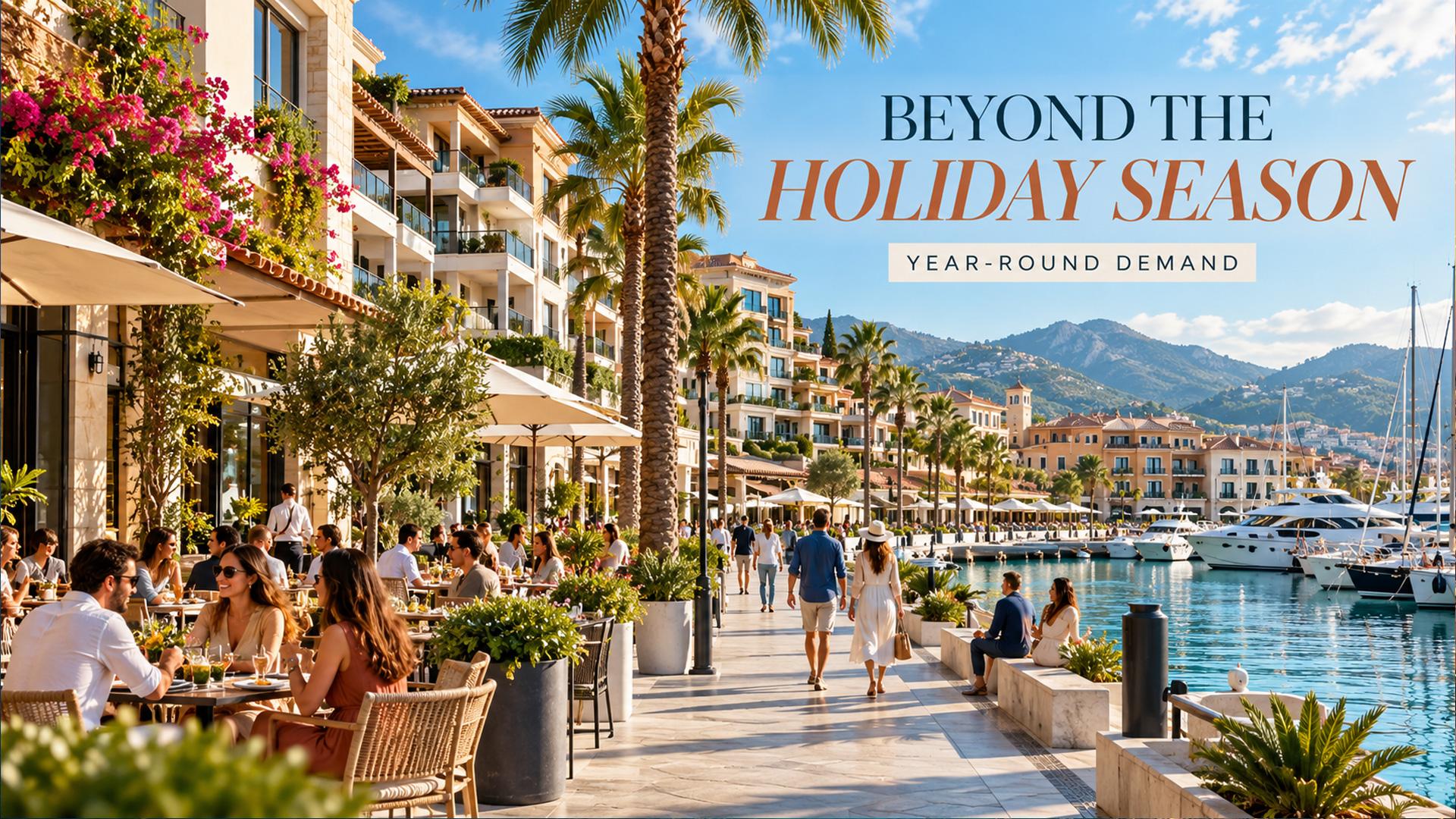
A successful resort destination eventually needs more than hotel rooms. Employees need homes, repeat visitors stay longer, second-home owners return regularly, businesses follow the visitor economy and the place gradually begins functioning beyond the holiday calendar.
Resorts are usually discussed in terms of visitors.
How many guests arrive?
How long do they stay?
What do they spend?
For property investors, another question is equally important:
What happens to residential demand when a resort destination begins operating as a year-round economy?
The answer helps explain why hospitality-led locations can sometimes evolve into substantial residential markets.
Resort-led destinations can support year-round residential demand when tourism creates permanent employment, businesses, transport infrastructure, restaurants, services and repeat visitors who spend longer periods in the area. Second-home owners and long-term residents can then complement hotel demand, creating several overlapping populations rather than a destination dependent only on seasonal tourists.
A Hotel Guest Is Only the Beginning of the Demand Chain
Tourists do not automatically create residential demand.
But servicing tourism requires people and businesses.
A large hospitality sector can need:
-
Hotel employees
-
Restaurant staff
-
Managers
-
Engineers
-
Retail workers
-
Transport providers
-
Events specialists
-
Security
-
Maintenance
-
Professional services
These people do not stay in hotel rooms indefinitely.
They become part of the longer-term housing requirement around the destination.
Tourism becomes more relevant to residential property when visitors create an economy that continues operating after those visitors return home.
1. Employment Creates the First Permanent Residential Layer
A new resort generates direct jobs.
A collection of resorts creates something larger.
The destination begins needing people across:
-
Hospitality
-
Food and beverage
-
Facilities management
-
Transport
-
Retail
-
Entertainment
As employment expands, nearby residential markets can begin serving employees at different income levels.
The relationship is rarely one-to-one, but the economic mechanism is clear.
2. Supporting Businesses Bring Another Resident Group
Hotels do not operate in isolation.
They buy services from:
-
Suppliers
-
Logistics providers
-
Marketing companies
-
Maintenance businesses
-
Food distributors
-
Professional advisers
Entrepreneurs and employees associated with these businesses can create another layer of housing demand.
This helps resort destinations gradually diversify beyond tourism itself.
3. Repeat Visitors Can Become Longer-Stay Residents
A traveller who visits once has little reason to buy property.
A traveller returning every year begins to understand the destination differently.
They become familiar with:
-
Neighbourhoods
-
Roads
-
Restaurants
-
Beaches
-
Local services
Some repeat visitors eventually consider:
-
Second homes
-
Seasonal residence
-
Longer stays
This creates a bridge between tourism and residential ownership.
4. Second-Home Owners Create Demand Outside Hotel Stays
Second-home owners behave differently from hotel guests.
They may:
-
Visit repeatedly
-
Remain for longer periods
-
Bring relatives
-
Use local shops and restaurants regularly
-
Employ property-management services
They create a more persistent form of destination activity.
Importantly, they can also occupy homes outside traditional peak periods.
5. Hospitality Makes Residential Locations More Enjoyable
Hotels can introduce services that benefit nearby residents.
These may include:
-
Restaurants
-
Spas
-
Fitness
-
Events
-
Beach facilities
-
Meeting venues
This can make a location more attractive to people who do not work in tourism at all.
A resident may choose the destination simply because the quality of leisure available nearby improves everyday life.
6. Restaurants and Retail Need Year-Round Customers
A destination dominated entirely by temporary visitors can experience strong seasonal variation.
A growing resident population changes the business model.
Restaurants, cafés and retail operators gain customers who are present:
-
Midweek
-
Outside holidays
-
During quieter tourism periods
This can make the destination economy more resilient and further improve residential convenience.
7. Transport Infrastructure Benefits Residents Too
Tourism destinations compete through accessibility.
This can encourage investment in:
-
Airports
-
Roads
-
Taxis
-
Marinas
-
Mobility platforms
Residents gain from those improvements too.
Better connectivity can make a location more practical for:
-
Commuting
-
International ownership
-
Business travel
-
Second-home use
8. Events Can Reduce Seasonality
Resort markets can become more year-round when they attract:
-
Conferences
-
Weddings
-
Corporate events
-
Sports
-
Entertainment
These bring visitors outside traditional leisure peaks.
They also create work for local businesses and hospitality teams.
9. Mixed-Use Planning Makes the Transition Easier
Successful residential resort destinations rarely consist solely of hotels beside apartment towers.
They increasingly combine:
-
Residences
-
Hotels
-
Public spaces
-
Retail
-
Restaurants
-
Leisure
-
Workplaces
This creates more reasons to spend time in the destination.
The broader the use mix, the less dependent the area becomes on one daily or seasonal pattern.
Al Marjan Island Provides a Useful UAE Example
Al Marjan Island is developing at the intersection of hospitality and residential property.
Marjan's published planning information includes a substantial pipeline of residences and hotel accommodation alongside 23 kilometres of waterfront and 7.8 kilometres of beaches.
This matters because the island is not expected to serve one population.
It can accommodate:
-
Permanent residents
-
Hotel visitors
-
Second-home owners
-
Property investors
-
Hospitality employees
Ras Al Khaimah's Current Tourism Growth Strengthens the Context
RAKTDA reported that the emirate received more than 670,000 visitors during the first half of 2026, its strongest first-half visitor performance on record.
The authority also points to:
-
New hotel openings
-
Airport development
-
Mobility initiatives
-
Major hospitality projects advancing
as part of the destination's next stage.
These developments help explain why investors are monitoring residential demand alongside tourism rather than treating the two markets as entirely separate.
But More Hotel Guests Do Not Equal Guaranteed Apartment Demand
This distinction is essential.
Residential performance still depends on:
-
Property price
-
Location
-
Layout
-
Future housing supply
-
Tenant profile
-
Operating costs
-
Property management
A destination can perform strongly while an individual apartment remains overpriced or poorly positioned.
Destination growth can create the demand environment. The property still has to compete successfully within it.
Residential Supply Needs to Match the People the Destination Creates
One common mistake is assuming every resident created by tourism wants the same home.
Housing demand can include:
-
Employee accommodation
-
Professional apartments
-
Family homes
-
Executive residences
-
Luxury second homes
The development that succeeds with one segment may be irrelevant to another.
Investors should therefore identify the specific audience their property is intended to serve.
Resort-Style Apartments Need to Work as Homes
A permanent resident needs more than a pool and beach.
They need:
-
Storage
-
Practical kitchens
-
Parking
-
Privacy
-
Building management
-
Daily services
This is where the distinction between a resort apartment and a truly residential resort development becomes important.
Fully Furnished Residences Can Suit a Mobile Population
Resort-led destinations often attract people moving from elsewhere.
That can increase the appeal of homes that require less setup.
A fully furnished property can appeal to:
-
International owners
-
New residents
-
Second-home buyers
-
Certain rental audiences
provided the furnishing is durable and appropriate for long-term use.
How Should Investors Evaluate a Resort-Led Destination?
Look beyond tourist-arrival headlines.
Track:
-
Visitor growth
-
Hotel delivery
-
Employment
-
Business formation
-
Transport infrastructure
-
Residential supply
-
Long-term tenant demand
-
Second-home ownership
-
Public realm and everyday services
When several of these factors improve together, the residential story becomes more substantial.
Design Differentiation Becomes Important as Supply Expands
Growing resort markets naturally attract new residential projects.
More development means buyers and tenants can become selective.
Properties need to compete through:
-
Layout
-
View
-
Beach access
-
Furniture
-
Amenities
-
Management
-
Design quality
This is one reason developers with established residential and interior expertise can become increasingly relevant as markets mature.
Investors examining this relationship in Ras Al Khaimah can explore the wider drivers behind Ras Al Khaimah property investment, including tourism, infrastructure and coastal development.
Final Thoughts: The Strongest Resort Destinations Eventually Become Places to Live
Tourism brings people into a destination.
A deeper economy gives some of them reasons to stay.
Hospitality creates jobs.
Jobs create residents.
Visitors become repeat visitors.
Some repeat visitors become second-home owners.
Restaurants and businesses follow the growing population.
Transport improves.
The destination gradually becomes more complete.
That is how resort-led growth can contribute to year-round residential demand.
Not through one hotel opening or one visitor statistic, but through an ecosystem that increasingly works for people who are there on ordinary weekdays as well as holiday weekends.

 English
 Arabic
 French
 Spanish
 Portuguese
 Turkish
 Dutch
 Italiano
 Russian
 Romaian
 Portuguese (Brazil)
 Greek
