

BigCommerce SEO Guide: How to Improve Rankings and Organic Traffic
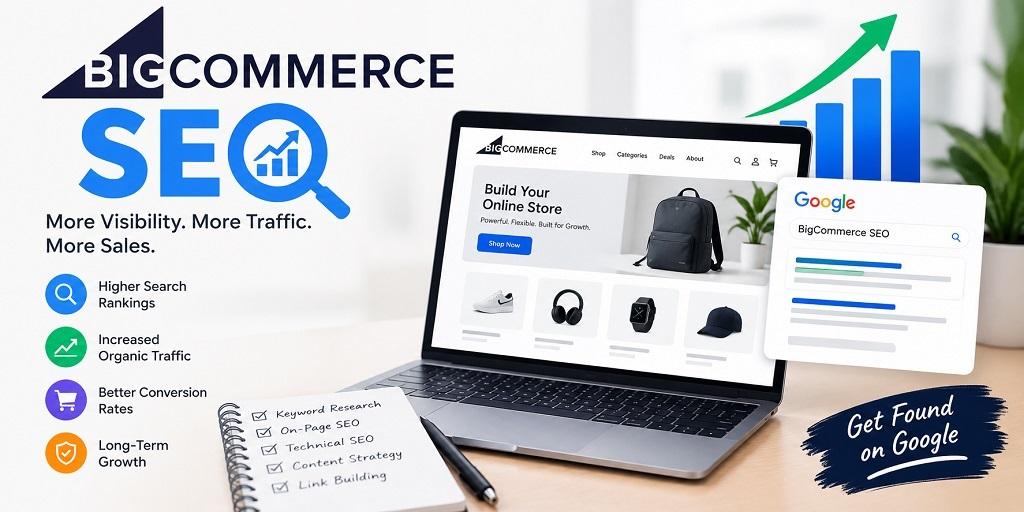
- BigCommerce SEO gains come from fixing URL structure, page speed, and duplicate content before publishing new pages.
- Stencil themes that pass Core Web Vitals (LCP under 2.5 seconds) rank more reliably on mobile.
- Unique product copy and clean canonical tags matter more than keyword stuffing.
- Track progress monthly in Google Search Console, using non-brand clicks as the main metric.
What Drives BigCommerce SEO Results in 2026
BigCommerce SEO improves rankings when a store pairs clean technical foundations with unique, intent-matched content. The platform handles many basics natively, including SSL, XML sitemaps, and editable meta fields, so gains in 2026 come from configuration and content quality rather than plugins.
Mid-market stores with 1,000 or more SKUs usually see the largest returns from three areas: URL hygiene, template speed, and product page differentiation.
Technical BigCommerce SEO Fixes to Make First
Start with the settings that affect every page at once.
- URL structure: Use the keyword-based product URL option and keep category paths short. Avoid changing live URLs without 301 redirects.
- Canonical tags: Confirm that variant, sorted, and paginated URLs point to the correct canonical page.
- Robots and sitemap: Review the robots.txt file in the control panel and submit the sitemap to Google Search Console.
- Page speed: Compress images, defer third-party scripts, and audit app bloat. Each added app can add JavaScript that slows Largest Contentful Paint.
- Redirect hygiene: Replace redirect chains with single-step 301s, and fix 404s for discontinued products.
Google publishes the thresholds in its Core Web Vitals documentation: LCP under 2.5 seconds, INP under 200 milliseconds, and CLS under 0.1.
On-Page BigCommerce SEO for Products and Content
Manufacturer descriptions copied across dozens of retailers rarely rank. Rewrite descriptions for your top 20% of revenue-generating products first, covering use cases, sizing, materials, and compatibility. Add a unique title tag of roughly 50–60 characters and a meta description under 160 characters.
Product pages also gain from customer reviews, which add fresh text and qualify for rich results when marked up with Google's Product structured data guidelines. Internal links from blog guides to product and category pages pass relevance and help shoppers move toward purchase.
BigCommerce SEO Tactics: Quick Wins vs Long-Term Projects
TacticEffortTypical TimelineImpactRewrite title tags and meta descriptionsLow2–6 weeksHigher click-through rateFix redirect chains and 404sLow1–4 weeksRecovered link equityRemove unused apps and scriptsMedium4–8 weeksFaster load, better vitalsUnique product descriptionsHigh3–6 monthsBroader keyword coverageBuying guides and content hubsHigh4–9 monthsTop-of-funnel traffic
Measuring Organic Traffic Growth
Segment Google Search Console data by page type: product, category, and blog. Watch non-brand impressions, average position, and indexed page counts. Pair this with GA4 revenue attribution so organic growth ties to sales rather than sessions alone. Review the numbers monthly and run a full technical audit twice a year.
Conclusion
Strong BigCommerce SEO starts with a clean technical base, then builds through better product content and measured iteration. Genius eCommerce, an agency focused exclusively on eCommerce platforms, applies this sequence in technical audits, content programs, and link building for online stores.
BigCommerce SEO Guide: How to Improve Rankings and Organic Traffic FAQ
Is BigCommerce good for SEO?
Yes. BigCommerce includes editable URLs, meta tags, automatic sitemaps, SSL, and a built-in CDN. Rankings still depend on how well you configure these features and on content quality.
How long does BigCommerce SEO take to show results?
Technical fixes often show movement in 4–8 weeks. Content and authority gains typically take 4–9 months to appear in organic traffic and revenue.
Do BigCommerce apps hurt SEO?
Apps that inject heavy JavaScript can slow pages and hurt Core Web Vitals. Audit installed apps quarterly and remove any that do not produce measurable revenue.
For more information about Shopify SEO and WordPress SEO Please visit: Genius Ecommerce.

 English
 Arabic
 French
 Spanish
 Portuguese
 Deutsch
 Turkish
 Dutch
 Italiano
 Russian
 Portuguese (Brazil)
 Greek
