

15 Effective Play Therapy Activities for Children: Creative Ways to Build Emotional Resilience
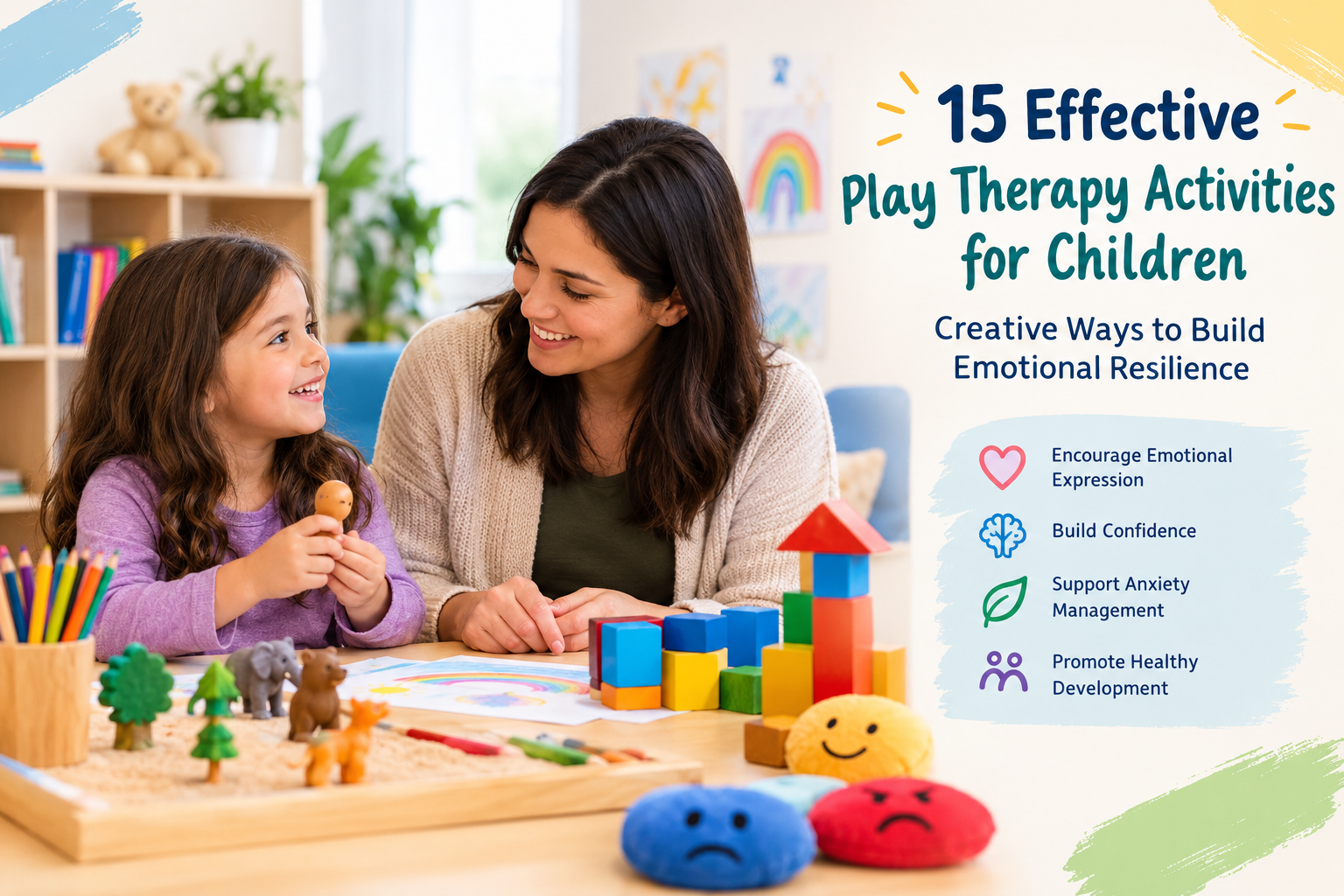
Children do not always have the words to explain what they feel. Sometimes, they express their emotions through behaviour, imagination, drawing, or play. A child experiencing anxiety, frustration, sadness, or stress may find it difficult to communicate these feelings directly.
This is where play therapy can make a difference. Play provides children with a comfortable way to explore emotions, communicate experiences, and develop healthy coping skills.
For therapists, counsellors, and social workers, incorporating creative activities into sessions can create meaningful opportunities for children to express themselves.
Whether you are exploring new approaches through Play therapy Training or looking for practical ideas for your sessions, these 15 activities can support children’s emotional development and well-being.
Why Are Play Therapy Activities Important?
Play is a natural part of childhood development. It allows children to explore their surroundings, build relationships, and communicate experiences in ways that feel comfortable.
Play therapy activities can help children:
- Recognize and understand different emotions.
- Improve communication and social skills.
- Develop confidence and self-esteem.
- Practice problem-solving.
- Explore difficult feelings in a supportive environment.
- Develop healthy emotional regulation strategies.
- Build positive relationships with others.
15 Effective Play Therapy Activities for Children
1. Emotion Colour Wheel
The Emotion Colour Wheel helps children connect colours with different feelings.
How to do it:
- Give children a blank circle and coloured pencils.
- Ask them to choose colours representing happiness, sadness, anger, or fear.
- Encourage them to explain their choices.
- Discuss situations that bring out different emotions.
Benefits: Improves emotional awareness and encourages self-expression.
2. Feelings Face Drawing
Drawing different facial expressions helps children recognize and communicate emotions.
How to do it:
- Provide paper, crayons, and pencils.
- Ask children to draw faces showing different emotions.
- Encourage them to describe each expression.
- Discuss what might make someone feel that way.
Benefits: Develops emotional vocabulary and communication skills.
3. Worry Monster Craft
This activity can be especially useful when exploring play therapy for anxiety.
How to do it:
- Provide coloured paper, craft materials, and markers.
- Ask children to create their own worry monster.
- Invite them to share what their monster worries about.
- Discuss what might help the monster feel safe.
Benefits: Encourages children to express worries and explore coping strategies.
4. Sand Tray Storytelling
Sand tray storytelling allows children to create their own scenes using miniature objects.
How to do it:
- Provide a tray of sand and small toys.
- Let children choose figures and objects.
- Encourage them to create a story or imaginary world.
- Allow them to explain their creation if they feel comfortable.
Benefits: Supports imagination, symbolic expression, and emotional exploration.
5. Feelings Puppet Show
Puppets provide children with an opportunity to explore emotions through fictional characters.
How to do it:
- Provide animal or character puppets.
- Ask children to create a short story.
- Introduce situations involving friendship, fear, or frustration.
- Explore how the characters might respond.
Benefits: Encourages communication, empathy, and social understanding.
6. Calm-Down Glitter Jar
A glitter jar can introduce children to mindful observation and calming strategies.
How to do it:
- Prepare a sealed sensory jar.
- Encourage children to shake it gently.
- Ask them to observe the glitter settling.
- Practice slow breathing while watching the movement.
Benefits: Supports mindful attention and emotional regulation.
7. Feelings Treasure Hunt
This activity combines movement with emotional learning.
How to do it:
- Hide emotion cards around the room.
- Ask children to find the cards.
- Encourage them to identify each emotion.
- Discuss situations associated with those feelings.
Benefits: Makes emotional learning engaging and interactive.
8. My Safe Place Drawing
Children create a picture of a place where they feel comfortable and secure.
How to do it:
- Give children paper and drawing materials.
- Ask them to draw their favourite safe place.
- Encourage them to describe the people and objects in the picture.
- Discuss what makes that place feel comfortable.
Benefits: Encourages conversations about safety, comfort, and emotional needs.
9. Emotion Matching Cards
Emotion cards help children identify different facial expressions.
How to do it:
- Prepare cards showing different emotions.
- Ask children to match similar expressions.
- Encourage them to name each emotion.
- Discuss how facial expressions communicate feelings.
Benefits: Builds emotional recognition and social awareness.
10. Animal Figure Storytelling
Animal figures encourage imaginative storytelling and creative expression.
How to do it:
- Provide different animal figures.
- Ask children to select characters.
- Encourage them to create a story.
- Discuss how the characters handle different challenges.
Benefits: Supports creativity, communication, and problem-solving.
11. The Strengths Tree
This activity helps children recognize their positive qualities.
How to do it:
- Draw a large tree on paper.
- Provide small paper leaves.
- Ask children to write or draw something they are good at.
- Add the leaves to the tree.
Benefits: Builds confidence, self-awareness, and positive self-image.
12. Feelings Charades
Feelings Charades makes emotional learning interactive and enjoyable.
How to do it:
- Write different emotions on small cards.
- Ask children to select one card.
- Encourage them to act out the emotion.
- Let others guess the feeling.
Benefits: Develops emotional recognition, empathy, and nonverbal communication.
13. Coping Skills Toolbox
A coping skills toolbox introduces children to practical ways of managing difficult feelings.
How to do it:
- Provide a small box and craft supplies.
- Create cards with activities such as drawing, breathing, or asking for help.
- Ask children to decorate their toolbox.
- Discuss when they could use each strategy.
Benefits: Encourages emotional regulation and healthy coping habits.
14. Building Blocks Problem-Solving Game
Building activities can help children practice patience and cooperation.
How to do it:
- Provide colourful building blocks.
- Give children a simple building challenge.
- Encourage them to work through difficulties.
- Discuss what they can do when something does not work.
Benefits: Supports persistence, problem-solving, and frustration management.
15. Gratitude Garden
The Gratitude Garden encourages children to recognize positive experiences.
How to do it:
- Draw a garden with several flowers.
- Ask children to write or draw something they appreciate.
- Add their flowers to the garden.
- Encourage them to share their thoughts.
Benefits: Supports positive reflection and emotional awareness.
How Play Therapy Can Help Children with Anxiety
Anxiety can affect children’s behaviour, relationships, sleep, and everyday activities. Some children may become withdrawn, while others may experience restlessness, frustration, or difficulty expressing their concerns.
Play therapy for anxiety offers developmentally appropriate opportunities to explore these feelings.
Some helpful activities include:
- Worry Monster Craft: Helps children represent and discuss their worries.
- My Safe Place Drawing: Encourages conversations about comfort and safety.
- Calm-Down Glitter Jar: Introduces mindful observation and relaxation.
- Puppet Storytelling: Allows children to explore difficult situations through characters.
- Coping Skills Toolbox: Helps children identify supportive coping strategies.
These activities should be adapted to each child’s age, developmental needs, and therapeutic goals. They can complement professional care but should not replace individualized assessment or treatment.
Why Play Therapy Training Matters for Mental Health Professionals
Working effectively with children requires more than knowing different games and creative activities. Mental health professionals need an understanding of child development, therapeutic communication, emotional expression, and appropriate intervention techniques.
Play therapy Training can help practitioners strengthen their knowledge and develop practical skills for working with children.
Important learning areas include:
- Child-centred play therapy approaches.
- Trauma-informed therapeutic practices.
- Emotional regulation techniques.
- Supporting children experiencing anxiety.
- Therapeutic communication with children.
- Ethical considerations in child-focused practice.
Continuing education for mental health professionals also helps practitioners stay informed about developing approaches and professional knowledge.
Continuing Education for Social Workers in Canada
Social workers in Canada have different professional development requirements depending on their province, regulatory body, and professional designation.
Continuing education social work opportunities can help practitioners improve their knowledge, explore new therapeutic approaches, and strengthen their professional skills.
Social workers searching for free continuing education credits for social workers should check:
- Whether the course is relevant to their professional practice.
- Whether the provider is recognized by their regulatory organization.
- Whether the learning activity qualifies for continuing education credits.
- Whether documentation or a completion certificate is available.
- Whether the course meets their provincial requirements.
Not every free educational resource provides recognized continuing education credits for social workers. Always confirm eligibility before enrolling.
Final Thoughts
Play therapy activities offer children different ways to communicate emotions, explore experiences, and develop healthy coping skills. From drawing and storytelling to sensory play and creative problem-solving, these activities can make therapeutic sessions more engaging and meaningful.
For therapists, counsellors, and social workers, understanding how to use play-based approaches effectively is an important part of supporting children’s emotional well-being.
Through continued learning, appropriate Play therapy Training, and individualized therapeutic support, professionals can create environments where children feel comfortable expressing themselves and developing emotional resilience.
Frequently Asked Questions
1. What are the best play therapy activities for children?
Some effective activities include emotion drawing, sand tray storytelling, puppet shows, worry monster crafts, feelings charades, and sensory play. The best activity depends on the child’s age and therapeutic needs.
2. How does play therapy help children express emotions?
Play therapy provides opportunities for children to communicate through drawing, storytelling, toys, and imaginative activities when talking directly about feelings may be difficult.
3. Can play therapy help children with anxiety?
Play therapy can support children experiencing anxiety by helping them explore worries, develop coping strategies, and practice emotional regulation in a supportive environment.
4. What age group benefits from play therapy?
Play therapy is commonly used with children between approximately 3 and 12 years old. However, approaches can be adapted for older children and adolescents.
5. What materials are needed for play therapy?
Common materials include crayons, paper, puppets, animal figures, sand trays, building blocks, emotion cards, and sensory materials.
6. What is the purpose of sand tray therapy?
Sand tray therapy allows children to create scenes using sand and miniature objects. It can provide opportunities for symbolic expression and emotional exploration.
7. How can social workers use play therapy techniques?
Social workers can incorporate appropriate play-based activities into their work with children when they have the necessary training, professional competence, and authorization.
8. Why is Play therapy Training important?
Play therapy Training helps professionals understand child development, therapeutic relationships, emotional expression, and appropriate play-based interventions.
9. Where can social workers find free continuing education credits?
Social workers can explore professional associations, educational institutions, regulatory organizations, and approved training providers. They should verify whether the courses qualify for credits in their province.
10. How often should therapists use play therapy activities?
There is no fixed frequency. Activities should be selected according to the child’s treatment plan, developmental needs, therapeutic goals, and progress.
11. Can parents use play therapy activities at home?
Parents can use simple creative activities such as drawing emotions, storytelling, and building games to encourage communication. However, formal play therapy should be conducted by appropriately trained professionals.
12. What is the difference between play therapy and regular play?
Regular play is generally recreational, while play therapy involves intentional therapeutic goals and professional guidance to support a child’s emotional and developmental needs.

 English
 Arabic
 French
 Spanish
 Portuguese
 Deutsch
 Dutch
 Italiano
 Russian
 Romaian
 Portuguese (Brazil)
 Greek
