

Pit Tagging: How to Plan a Reliable Fish Identification Study Without Losing Valuable Data
Pit Tagging: How to Plan a Reliable Fish Identification Study Without Losing Valuable Data
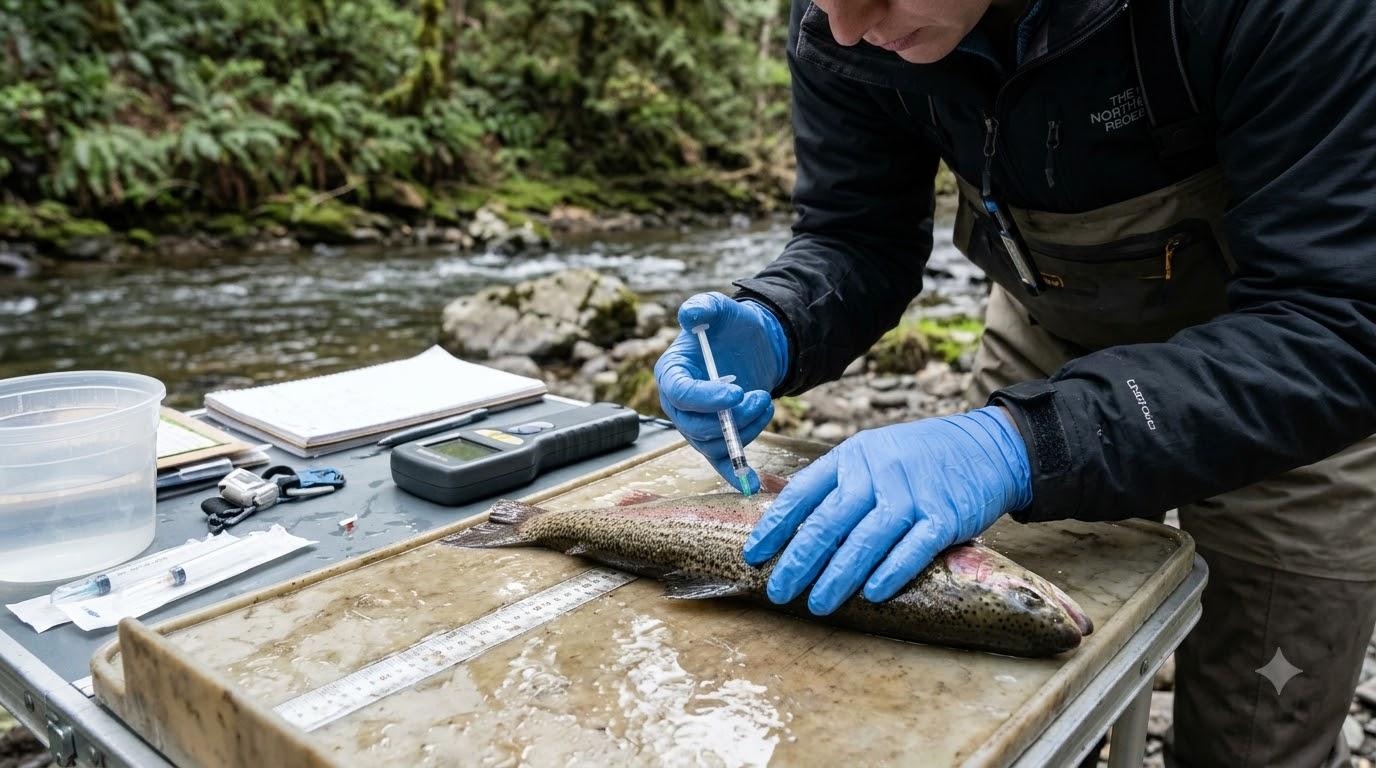
A fish identification study can produce unreliable results if researchers choose unsuitable tags, overlook equipment compatibility, or fail to establish a consistent recording process. The solution is to plan the entire identification workflow before tagging begins. Effective planning for Pit tagging in fish research projects involves matching the tag to the species, confirming reader compatibility, standardising handling procedures, and organising identification records from the beginning.
Passive Integrated Transponder technology gives researchers a way to identify individual fish without relying on visible external marks. Each tag contains an identification code that can be detected by a compatible reader when it enters the reader's effective range. Because the tag is passive, it does not need its own battery.
However, purchasing tags is only one part of a successful study. Researchers also need to consider fish size, tag dimensions, implantation methods, detection conditions, data storage, and animal welfare. A weakness in any of these areas can affect the quality of the final dataset.
This guide explains how to plan a dependable identification programme, avoid common implementation problems, and decide what equipment and procedures are appropriate for a particular research setting.
Start with the research question, not the equipment catalogue
Before selecting a tag, define exactly what the study needs to discover.
A research team studying fish movement may want to know whether an individual returns to a particular location. A hatchery may need to associate individual fish with growth measurements. A conservation project may be interested in survival, migration, or population movement over a longer period.
These objectives are related, but they do not necessarily require identical identification arrangements.
For example, a study that records fish passing through a fixed detection point has different practical requirements from a project in which researchers periodically capture fish and scan them manually. The first may depend heavily on antenna placement and detection coverage. The second may place greater emphasis on handheld reader suitability, handling procedures, and field record management.
Write down the following before purchasing supplies:
-
The species being studied.
-
The approximate size range of the fish.
-
The number of individual fish requiring identification.
-
Whether identification will be performed once or repeatedly.
-
Whether scanning will take place in a laboratory, hatchery, field location, or through a fixed detection system.
-
The measurements and observations that must be associated with each identification code.
-
The expected duration of the study.
This initial assessment helps prevent a common planning mistake: selecting a product because it is familiar or readily available rather than because it suits the actual research question.
How to assess tag suitability for different fish
Tag suitability depends on more than the identification technology. Physical dimensions, housing material, implantation requirements, and the characteristics of the animal all matter.
A tag that is practical for a larger fish may not be appropriate for a smaller species. Researchers should therefore assess the dimensions and handling implications before making a final selection.
Voda IQ lists several tag options with different dimensions. Its product range includes an 8 mm nano tag, 9 mm and 12 mm full-duplex tags, and larger 22 mm options. The product information also identifies differences in housing, including bioglass and surgical plastic designs.
These specifications are useful starting points, but they should not replace species-specific assessment or an approved animal-care protocol.
Consider the fish's size and condition
A research team should assess the size and physical condition of the fish that will be tagged. The smallest individuals in a study may determine the practical limits of the chosen tag and implantation method.
Do not assume that a tag suitable for one species will automatically be suitable for another species of a similar length. Body shape, anatomy, condition, and the intended implantation location can all influence the decision.
Check the tag dimensions
Tag length and diameter affect the equipment needed for application. They also influence whether a particular tag is appropriate for the intended animal and procedure.
A useful preliminary comparison is:
|
Tag option listed by Voda IQ |
Published dimensions |
Planning consideration |
|
HQ8 nano tag |
8 mm × 1.25 mm |
A smaller format to evaluate for smaller animals and fish |
|
HQ9 full-duplex tag |
9 mm × 2.12 mm |
Check the specified needle and applicator compatibility |
|
HQ12 full-duplex tag |
12 mm × 2.12 mm |
Confirm suitability for the species and implantation protocol |
|
HQ22 full-duplex tag |
22 mm × 4.0 mm |
Assess carefully for larger animals and the intended application |
These dimensions describe the listed products, not a universal recommendation for particular fish species. The research team should confirm current specifications and seek appropriate veterinary or fisheries guidance before use.
Check the housing material
Housing material can matter when a study has specific application requirements. For example, Voda IQ lists bioglass injectable transponders and a food-safe plastic alternative in its product range.
A food-safe designation should not be interpreted as automatic approval for every species, food-production system, or regulatory environment. Confirm the relevant intended use and applicable requirements before choosing a product.
The difference between a suitable tag and a suitable tagging system
A tag may meet the study's physical requirements but still be unsuitable if it cannot be read reliably with the equipment available.
A complete identification system has several connected components:
-
The individual identification tag.
-
The applicator, needle, or other approved application equipment.
-
A compatible RFID reader.
-
A detection arrangement appropriate to the research setting.
-
A recording process that connects the tag code with the correct fish and study observations.
Researchers should assess these components together. Buying tags first and investigating reader compatibility later can create unnecessary delays or lead to equipment that does not support the intended workflow.
Confirm frequency and protocol compatibility
Voda IQ lists several products operating at 134.2 kHz and describes compatibility with relevant ISO standards. The reader and tag specifications should be checked together rather than relying on a general statement that both products use RFID technology.
The terms full duplex and half duplex also matter when comparing equipment. They describe different communication approaches, so researchers should confirm which tag types a reader supports.
Do not assume that every RFID reader can detect every animal identification tag. Confirm supported frequencies, protocols, and tag formats with the equipment supplier.
Build a consistent tagging workflow before fieldwork
A well-planned process makes it easier to identify errors before they affect the dataset. The procedure should be documented and tested before the main study begins.
The following framework is intended for project planning. Actual implantation must be performed only by trained personnel using an approved procedure appropriate to the species.
A practical preparation sequence
Step 1: Define the identification record
Decide what information will be stored for each fish. At a minimum, the record should connect the tag's unique code to the study's individual animal record.
Depending on the project, additional fields may include species, length, weight, sampling location, date, and relevant observations.
Step 2: Confirm the tag and reader combination
Check the exact tag model, frequency, protocol, and reader capabilities. If possible, test representative tags with the intended reader before the study begins.
Step 3: Check application equipment
Verify that the selected applicator and needle are designed for the tag dimensions and connection type. A mismatch can interrupt the workflow and create avoidable handling difficulties.
Step 4: Establish animal-care procedures
Document who is authorised to handle and tag the fish, the approved handling method, monitoring requirements, and the response to any unexpected complication. Follow the institution's animal-care approval and applicable regulations.
Step 5: Test the recording process
Practise scanning a tag and transferring its code into the correct record. Check that the code is not accidentally assigned to another individual.
Step 6: Run a small pilot
Before scaling up, conduct a controlled pilot under the approved protocol. Review handling time, reader performance, data entry, and any procedural problems.
Step 7: Review the pilot results
Identify issues and revise the workflow before the main sampling period. Do not treat a successful single scan as proof that every part of the system is ready.
Common mistakes that can weaken a fish identification study
A technically functioning tag does not guarantee a reliable dataset. Many problems arise from planning and record management rather than from the tag itself.
Mistake 1: Choosing a tag based only on price
A lower purchase price may appear attractive, particularly when a project requires many tags. But price alone does not establish suitability.
Compare the tag dimensions, material, supported protocol, intended application, and compatibility with existing equipment. Also consider the cost of needles, applicators, reader equipment, replacement supplies, and staff time.
Mistake 2: Ignoring reader compatibility
A tag and reader must work together. A research team should verify supported tag types and frequencies before committing to a large purchase.
Mistake 3: Recording identification codes manually without verification
Manual transcription can introduce errors. Where possible, use a workflow that captures the code directly from the reader and links it to the correct record.
If manual entry is unavoidable, introduce a second-person check or another documented verification method.
Mistake 4: Failing to test the full workflow
Testing a reader with one tag is useful, but it does not test the entire research process. The team should also test how records are created, how measurements are associated with codes, and how data are backed up.
Mistake 5: Treating every missed reading as tag failure
A missed detection may have several possible explanations, including reader positioning, detection range, interference, equipment settings, or an unsuitable scanning procedure. Investigate the circumstances before concluding that a tag has failed.
Example 1: A hatchery monitoring project
Imagine a hatchery that wants to associate individual fish with periodic length and weight measurements.
The team initially plans to use a familiar tag model for every fish. During preparation, however, it recognises that the study includes different size groups.
Instead of immediately ordering the same tag for all individuals, the team reviews the size range, application requirements, and approved procedures. It then checks which tag models and applicators are appropriate for the relevant groups.
The team also tests whether the reader can capture each code and whether the measurement record can be connected to the correct individual.
The important lesson is that the identification method should be designed around the study population and data requirements, not simply around the convenience of ordering one product.
Example 2: A field study with repeated scanning
Consider a conservation team that plans to scan fish at several sampling locations over a season.
The team needs portable equipment, a consistent identification procedure, and records that remain usable when different researchers work at different sites.
Its planning priorities include reader portability, supported tag formats, battery management, data storage, and a shared recording protocol.
The team should also decide how to document a missed scan, a repeated code, or an incomplete record. These situations should have clear procedures rather than being handled differently by each fieldworker.
Illustrative Case Study: Improving record consistency in a multi-person study
Situation: A hypothetical fisheries research group is preparing to monitor individually identified fish across several sampling sessions.
Problem: Different team members have been using slightly different recording methods. Some enter tag codes immediately, while others write them down for later transfer. The project manager is concerned that individual measurements may become associated with incorrect records.
Actions: The group standardises the identification workflow. It tests the selected tags and readers, establishes a common record format, and trains team members to verify each detected code before saving measurements. It also introduces a procedure for documenting incomplete scans and unusual readings.
Expected outcome: The revised process should make records more consistent and easier to review. It does not guarantee that every detection will succeed, but it reduces avoidable variation in how the team captures and manages identification data.
Transferable lesson: A successful identification programme depends on people, equipment, procedures, and data management working together.
Organising identification data for long-term use
The usefulness of an identification study depends on what researchers can do with the information after data collection.
A tag code should not exist as an isolated entry. It should connect to the relevant animal record and observations, with enough context to make later analysis meaningful.
A consistent data structure might include:
|
Field |
Purpose |
Example of information recorded |
|
Tag code |
Identifies the electronic tag |
Code captured by the reader |
|
Study ID |
Connects the fish to the project record |
Internal individual reference |
|
Species |
Identifies the animal type |
Recorded species name |
|
Sampling date |
Provides time context |
Date of observation |
|
Sampling location |
Records where the observation occurred |
Site or station identifier |
|
Measurements |
Stores relevant biological data |
Length or weight |
|
Observation notes |
Records unusual circumstances |
Incomplete scan or handling note |
The example entries above are illustrative, not actual research records.
For larger projects, teams may benefit from digital tools that reduce repeated manual entry. Voda IQ describes VodaTrak as Android-based data-management software for fisheries and wildlife research. Its published features include customisable fields, data export, and integration with certain Voda IQ readers and measuring equipment.
Researchers should confirm the software's current compatibility and suitability for their own devices and workflow before adopting it.
Voda IQ provides information about its products and services through its official Voda IQ website. Reviewing product specifications, manuals, and support information can help a team prepare questions before selecting equipment.
How to evaluate whether your identification plan is ready
Before beginning the main study, use a readiness review rather than relying on informal confidence.
|
Evaluation area |
Questions to resolve |
Warning sign |
|
Research objective |
Is the purpose of individual identification clear? |
The team has not defined what data it needs |
|
Tag selection |
Are dimensions and intended applications suitable? |
Selection is based only on price |
|
Compatibility |
Have tags and readers been checked together? |
Compatibility is assumed |
|
Application |
Is there an approved, trained procedure? |
Staff are improvising |
|
Data capture |
Can codes be linked to the correct records? |
Codes are transferred without verification |
|
Pilot testing |
Has the full workflow been tested? |
Only the reader has been tested |
|
Data security |
Are records backed up and accessible? |
Data exist in one person's notebook or device |
If several warning signs remain unresolved, postpone scaling up the project until the relevant issues have been addressed.
Conclusion: Treat identification as a complete research process
A reliable fish identification programme requires more than selecting a tag and scanning it. Researchers need to consider the species, tag dimensions, reader compatibility, approved application methods, staff training, and the quality of the resulting records.
Good planning reduces avoidable errors and makes it easier to interpret observations collected over multiple sampling sessions. A pilot study, documented procedures, and a consistent data structure are practical foundations for a stronger research workflow.
Before purchasing equipment, define the study's requirements and confirm that the tags, readers, applicators, and data-management process work together. That preparation is more valuable than choosing equipment based on one specification in isolation.
Frequently Asked Questions
1. What does PIT mean in fish research?
PIT stands for Passive Integrated Transponder. It is an electronic identification tag that contains a code and does not require an internal battery. A compatible reader activates and detects the tag when it is within the effective reading range.
2. Do PIT tags need batteries?
No. Passive tags receive the energy needed for communication from the reader's electromagnetic field. They do not operate like active tracking devices with their own battery-powered transmissions.
3. Can the same PIT tag be used for every fish species?
No universal tag choice should be assumed. Researchers must consider species, animal size, tag dimensions, application requirements, and relevant animal-care guidance.
4. How do researchers check whether a PIT tag is compatible with a reader?
They should compare the tag's frequency and communication protocol with the reader's documented supported formats. Testing representative tags with the intended reader before the study is also a sensible preparation step.
5. Can PIT tags help researchers study fish movement?
Yes. When tags are detected at suitable scanning locations, the identification codes can help researchers associate observations with individual fish. The quality of movement information depends on the study design and detection coverage.
6. Why is data management important in a fish identification project?
Data management connects each tag code with the correct fish and its observations. Consistent records help researchers review, compare, and analyse information collected across different dates and locations.

 English
 Arabic
 French
 Spanish
 Portuguese
 Deutsch
 Turkish
 Italiano
 Russian
 Romaian
 Portuguese (Brazil)
 Greek
