

Food processing industries generate large amounts of organic waste during daily operations. Fruit and vegetable peels, spoiled food, dairy residues, grain waste and other biodegradable materials often require proper disposal. Managing this waste can increa
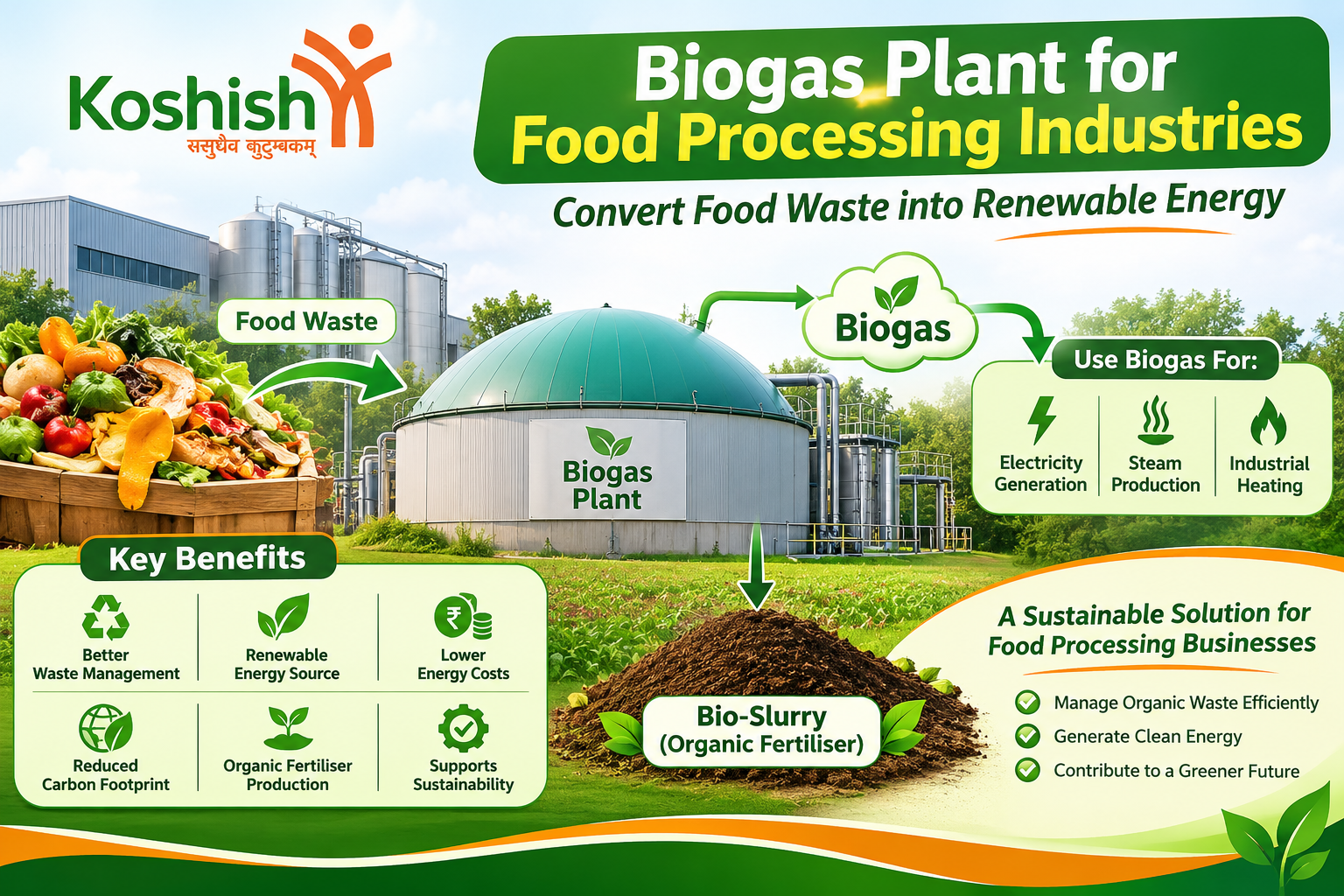
Food processing industries generate large amounts of organic waste during daily operations. Fruit and vegetable peels, spoiled food, dairy residues, grain waste and other biodegradable materials often require proper disposal. Managing this waste can increase operational costs and create environmental challenges.
A Biogas Plant for Food Processing Industries provides an effective solution by converting organic waste into renewable energy and nutrient-rich bio-slurry. Using anaerobic digestion technology, businesses can turn waste into a useful resource while reducing their dependence on conventional fuels.
What Is a Biogas Plant for Food Processing Industries?
A biogas plant is a waste-to-energy system that processes biodegradable organic materials in an oxygen-free environment. Naturally occurring microorganisms break down the organic matter and produce methane-rich biogas.
Food processing companies can use this biogas for cooking, electricity generation, steam production and industrial heating. The remaining digestate can also be processed into organic fertiliser.
A commercial biogas plant helps industries manage their daily food waste while supporting cleaner and more sustainable production practices.
Types of Food Waste Used for Biogas Production
Different types of organic waste generated by food processing industries can be used as feedstock for biogas production.
Some commonly used materials include:
-
Fruit and Vegetable Waste: Peels, seeds, spoiled fruits, vegetable trimmings and processing residues.
-
Dairy Waste: Spoiled milk, whey, curd residues and other biodegradable dairy by-products.
-
Bakery Waste: Expired bread, biscuits, cakes and other bakery products.
-
Cooked Food Waste: Leftover rice, vegetables, chapati and other food materials.
-
Grain and Cereal Waste: Organic residues generated during grain cleaning and food processing.
-
Food Processing Sludge: Biodegradable organic residues produced during industrial food processing.
Proper waste segregation and feedstock preparation are important for maintaining stable biogas production.
How Does an Industrial Food Waste Biogas Plant Work?
A food waste to biogas system follows a biological process known as anaerobic digestion. The main steps involved are:
-
Waste Collection: Organic waste is collected from food processing units and separated according to its type.
-
Waste Segregation: Plastic, glass, metal and other non-biodegradable materials are removed.
-
Waste Preparation: Organic materials are shredded and mixed with water to prepare a suitable slurry.
-
Anaerobic Digestion: The prepared slurry enters an airtight digester, where microorganisms break down organic matter without oxygen.
-
Biogas Collection: The methane-rich gas produced during digestion is collected and stored for further use.
-
Bio-Slurry Management: The remaining digestate is collected and can be processed into organic fertiliser.
The plant can operate continuously with regular feeding and proper maintenance.
Applications of Biogas in Food Processing Industries
Biogas produced from industrial organic waste can support several daily operations.
-
Electricity Generation: Biogas can be used in suitable generator systems to produce electricity for industrial operations.
-
Steam Production: Industries can use biogas in compatible boilers for steam generation.
-
Industrial Heating: It can provide thermal energy for various food processing activities.
-
Cooking Applications: Commercial kitchens and food facilities can use biogas as an alternative to LPG.
-
Compressed Biogas (CBG): After suitable purification and upgrading, biogas can be converted into CBG for use as a transportation or industrial fuel.
Key Benefits of Installing a Food Waste Biogas Plant
Installing a biogas plant for food waste management offers several operational, environmental and economic benefits.
-
Reduced Waste Disposal Costs: Industries can process biodegradable waste at their own facilities instead of depending entirely on external disposal methods.
-
Lower Energy Expenses: Biogas can replace a portion of conventional fuel consumption, helping businesses manage energy costs.
-
Better Waste Management: Regular processing reduces organic waste accumulation and supports cleaner working conditions.
-
Renewable Energy Generation: Food waste becomes a useful source of energy for different industrial applications.
-
Organic Fertiliser Production: The nutrient-rich digestate can be further processed into organic manure.
-
Environmental Sustainability: The system supports landfill waste reduction, resource recovery and lower greenhouse gas emissions when properly designed and operated.
Industries That Can Benefit from Food Waste Biogas Plants
Food waste biogas technology is suitable for different types of commercial and industrial facilities, including:
-
Food and beverage manufacturing units
-
Fruit and vegetable processing industries
-
Dairy and milk processing plants
-
Hotels and restaurants
-
Bakery and confectionery industries
-
Food storage and packaging facilities
-
Large commercial kitchens and institutional canteens
Each facility requires a suitable plant design based on its daily organic waste quantity, feedstock characteristics and energy requirements.
Why Choose Koshish India for a Food Waste Biogas Plant?
Choosing the right technology and plant design is important for achieving reliable biogas production. Koshish India provides customised biogas solutions based on the waste generation and energy requirements of different industries.
From initial consultation and plant design to installation and technical support, the focus is on providing suitable solutions for efficient organic waste management.
Whether you operate a food processing unit, dairy facility or commercial kitchen, a properly designed biogas plant can help convert organic waste into valuable energy.
Koshish India to discuss your food waste management requirements and explore a suitable biogas solution for your facility.
Frequently Asked Questions (FAQs)
1. Can food processing waste be used to produce biogas?
Yes. Biodegradable food processing waste such as fruit peels, vegetable residues, dairy waste, spoiled food and grain residues can be used for biogas production through anaerobic digestion.
2. What type of energy can a food waste biogas plant generate?
A food waste biogas plant produces methane-rich biogas that can be used for cooking, electricity generation, industrial heating and steam production. It can also be upgraded into compressed biogas.
3. Is a biogas plant suitable for large food processing industries?
Yes. Commercial and industrial biogas plants can be designed according to the daily waste generation, feedstock characteristics and energy requirements of large food processing facilities.
4. What happens to the waste after biogas production?
After anaerobic digestion, the remaining material is called digestate or bio-slurry. It contains useful nutrients and can be further processed into organic fertiliser.
5. How much food waste is required to install a biogas plant?
The required waste quantity depends on the plant capacity, type of organic waste and expected energy output. A technical assessment helps determine the appropriate plant size.
6. Does a food waste biogas plant help reduce operating costs?
Yes. It can help reduce waste disposal expenses and conventional fuel consumption by converting organic waste into renewable energy. Actual savings depend on the quantity and quality of waste and the plant's operating efficiency.
Domestic Biogas plant , Commercial Biogas plant , cbg plant , Sewage Water Treatment Plant , Effluent Water Treatment Plant , ZLD systems , Water Treatment Plant ,

 English
 Arabic
 French
 Spanish
 Deutsch
 Turkish
 Dutch
 Italiano
 Russian
 Romaian
 Portuguese (Brazil)
 Greek
