

Small Businesses Need Commercial Water Filter Systems
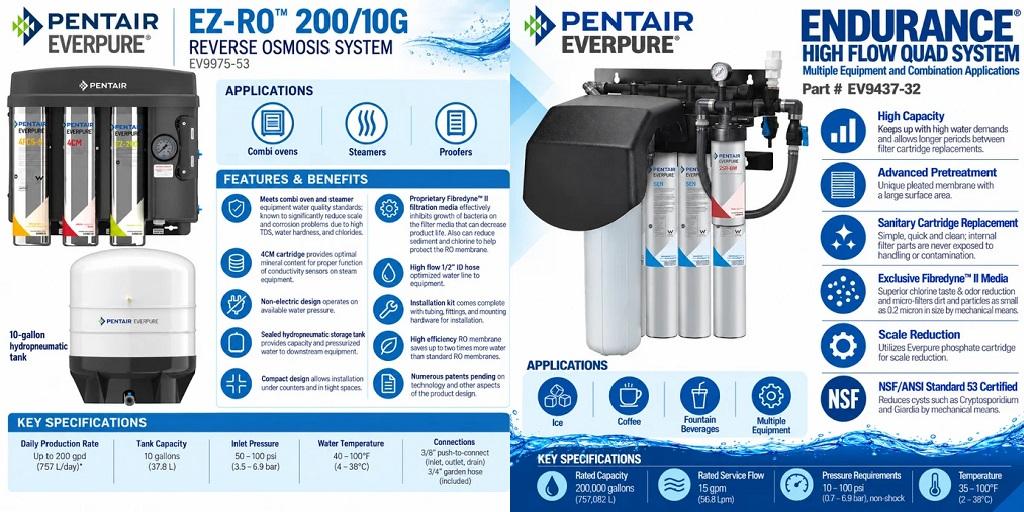
Water is a vital element we all need, and this is true for all commercial establishments. And commercial water filter systems aren't just for large factories or restaurant chains. Small businesses rely on clean, consistent water every day, whether they're preparing food, serving customers, making products, or maintaining equipment.
Water quality can affect everything from the taste of a cup of coffee to the lifespan of an expensive machine. Installing the right filtration system is a practical way to protect daily operations and give customers a more reliable experience.
Water Quality and Small Businesses
A business might use more water than its owners realize. Restaurants need it for cooking, drinking, ice machines, and dishwashing. Cafés depend on it for coffee and espresso equipment. Salons use water for washing and rinsing, while offices need a dependable supply for drinking fountains and breakroom appliances.
Even treated municipal water can contain chlorine, dissolved minerals, sediment, and other substances that affect its taste, odor, or performance in equipment. Hard water, for example, can leave mineral deposits inside boilers, coffee machines, and water heaters. After some time that buildup may reduce efficiency and lead to more frequent maintenance.
A filtration system helps address these issues at the source. Depending on the technology selected, it can reduce sediment, chlorine, certain chemicals, and unwanted minerals. The result is water better suited to a business's particular needs.
What Does a Commercial Water Filtration System Offer?
Not every business needs the same level of filtration. A basic cartridge filter may be enough to improve water used for drinking or food preparation. Other operations may benefit from a more advanced setup, such as reverse osmosis (RO).
Reverse osmosis uses pressure to move water through a specialized membrane, separating much of the dissolved material from the purified water. However, the membrane is only one part of a complete system. Pre-filtration is important because sediment can interfere with performance, while carbon filtration can remove chlorine and chloramines that may damage certain RO membranes. Businesses dealing with hard water may also need a softener to reduce mineral scaling.
After filtration, additional treatment may be useful depending on the application. Deionization can further reduce dissolved ions, while ultraviolet treatment can help control microorganisms. Storage tanks, booster pumps, and monitoring equipment may also be needed to deliver water consistently. Conductivity or total dissolved solids (TDS) monitors help operators keep track of water quality, particularly in applications that require higher purity.
For small businesses, the biggest advantages of a commercial water filter system are often practical:
- Better-tasting water: Reducing chlorine and other unwanted substances can improve drinking water, coffee, and beverages.
- Equipment protection: Proper filtration can limit sediment and mineral buildup that contribute to wear and maintenance.
- More consistent results: Reliable water quality helps businesses maintain the same standards throughout the day.
- Less downtime: A system designed for the application can reduce problems caused by untreated water.
- A better customer experience: Clean-tasting water and well-maintained equipment make a difference in service.
How Should a Business Install a Filtration System?
Start by identifying how much water the business uses and what it needs the water for. A café with espresso machines has different requirements from a manufacturing facility or a small office. Have the incoming water tested so the filtration equipment can address actual concerns rather than relying on guesswork.
Next, work with a qualified water treatment professional to select the right combination of pre-filters, carbon filtration, softening, RO membranes, or additional treatment. Installation should account for water pressure, flow rate, drainage, electrical requirements, available space, and local plumbing codes. Some systems are supplied as packaged units with connected piping, wiring, and controls, which can make installation more straightforward.
Once installed, the system needs regular attention. Filters and membranes should be replaced according to manufacturer recommendations, and monitoring equipment should be checked to confirm that the system is performing properly. Businesses using storage tanks and distribution loops may also need procedures to maintain water quality throughout the system.
A Practical Investment in Daily Operations
For a small business, dependable water isn't a luxury. It's part of keeping equipment running, products consistent, and customers satisfied. Choosing commercial water filter systems from a trusted water filter supplier based on actual water conditions and business demands can make filtration a worthwhile long-term investment.
For more information about Everpure i2000 and commercial water filter for restaurant Please visit: Efilters.

 English
 Arabic
 French
 Portuguese
 Deutsch
 Turkish
 Dutch
 Italiano
 Russian
 Romaian
 Portuguese (Brazil)
 Greek
