

White Label App Builder: How It Works, Benefits, and Business Applications
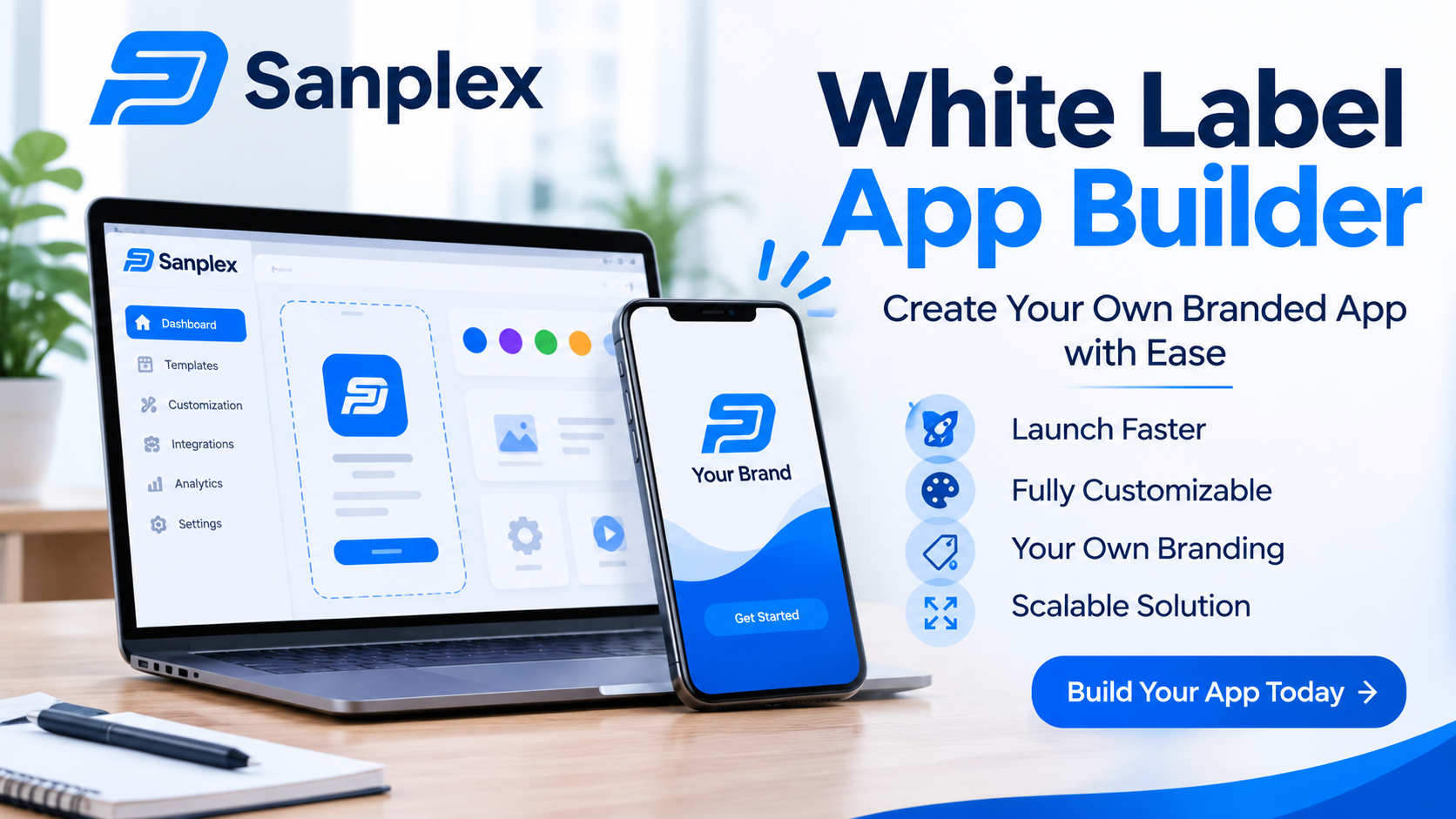
A white label app builder is a software platform that allows businesses to create mobile applications under their own brand without developing the entire technology from scratch. It provides ready-made tools, features, and infrastructure that companies can customize with their logos, colours, content, and business requirements. This approach makes app development more accessible to businesses that want a professional mobile presence without investing heavily in custom software development.
As customers increasingly expect convenient mobile experiences, businesses need practical ways to deliver services through smartphones and tablets. A white label app builder offers a solution by reducing development time and simplifying the process of launching an application. Agencies, startups, retailers, service providers, and established companies can use these platforms to provide branded digital experiences while relying on an existing technology framework.
Understanding how these platforms work, which features matter, and what limitations to consider can help businesses make informed decisions before choosing a solution.
What Is a White Label App Builder?
A white label app builder is a software development platform that enables users to create applications using an existing framework and distribute them under their own business identity. The platform provider develops and maintains the underlying technology, while the purchasing business controls the branding and customer-facing experience.
For example, a digital marketing agency might want to offer mobile applications to its restaurant clients. Instead of hiring developers to build every application separately, the agency can use a white label platform to create customised apps with restaurant menus, online ordering, loyalty programmes, and customer notifications.
The final application carries the agency's or client's branding rather than prominently displaying the platform provider's identity, depending on the licensing agreement.
How Does It Work?
Most white label app builders follow a relatively straightforward process:
-
Select a platform: Choose a provider offering the features required for the intended application.
-
Customise the design: Add the business logo, colours, images, navigation, and other branding elements.
-
Configure features: Enable relevant functions such as booking, payments, messaging, or user accounts.
-
Add business content: Upload product information, service details, descriptions, and other necessary content.
-
Test the application: Check performance, navigation, compatibility, and functionality across supported devices.
-
Publish the app: Prepare the application for distribution through supported app stores or other approved channels.
The platform provider generally manages the core software infrastructure, although the responsibilities for maintenance, updates, and support depend on the agreement.
Key Features of a White Label App Builder
Not every platform offers the same capabilities. Businesses should evaluate features based on their operational needs rather than choosing a solution simply because it promises quick app creation.
1. Custom Branding and Design
Brand identity is important when launching a business application. A suitable platform should allow users to customise logos, colour schemes, fonts, icons, and application layouts.
Some platforms also provide design templates that can be adjusted to match different industries. This helps businesses maintain a consistent appearance across their websites, applications, and other digital channels.
2. No-Code and Low-Code Development
Many platforms provide visual editors that allow users to build applications without extensive programming knowledge.
No-code tools generally use drag-and-drop interfaces and predefined components. Low-code platforms offer additional flexibility through configuration options, custom scripts, or integrations.
These capabilities make app creation more accessible to business owners, marketing teams, and agencies that do not have large technical departments.
3. Third-Party Integrations
Modern applications often need to communicate with other business systems. Integrations can connect an app with payment gateways, customer relationship management systems, analytics platforms, booking software, and marketing tools.
Before selecting a platform, businesses should confirm that it supports the services they already use. Integration availability can significantly affect how efficiently an application fits into existing operations.
4. Push Notifications
Push notifications allow businesses to send updates directly to users who have installed their applications and granted the necessary permissions.
Retailers can use them to announce promotions, while service providers can send appointment reminders or booking updates. Notifications should be relevant and appropriately timed because excessive messages can encourage users to disable them.
5. Analytics and Reporting
Analytics help businesses understand how customers interact with their applications.
Useful reporting features may include:
-
Application downloads and installations.
-
Active users and engagement levels.
-
Screen views and navigation patterns.
-
Customer retention.
-
Transaction and conversion activity.
These insights help businesses identify areas that need improvement and make decisions based on actual usage data.
Who Can Benefit from a White Label App Builder?
White label app development is useful across several industries. Its flexibility makes it suitable for businesses that need branded mobile applications but do not want to manage a complete development project.
Digital Marketing and Development Agencies
Agencies can use these platforms to expand their service offerings. Instead of limiting their work to websites and marketing campaigns, they can provide branded applications to clients.
A single platform may support multiple client projects, depending on its subscription and licensing structure.
Retail and E-Commerce Businesses
Retailers can create applications featuring product catalogues, shopping carts, customer accounts, payment options, and order tracking.
A branded mobile app can provide customers with another way to browse products and complete purchases.
Restaurants and Hospitality Businesses
Restaurants can use mobile applications for digital menus, food ordering, table reservations, and loyalty programmes.
Hotels and hospitality providers may use similar solutions for booking management, service requests, and guest communication.
Healthcare and Professional Services
Professional service providers can use suitable applications for appointment scheduling, reminders, customer communication, and access to service information.
However, businesses handling sensitive personal or medical information must carefully assess data protection, security, regulatory requirements, and the platform's contractual responsibilities.
Practical Benefits of Using a White Label App Builder
Choosing an established platform can provide several operational and financial advantages.
Reduced Development Costs
Building an application from the ground up requires investment in design, programming, testing, infrastructure, and ongoing maintenance.
A white label solution provides an existing technical foundation. Businesses pay for access to that technology rather than funding every development stage independently.
However, the total cost should include subscriptions, additional features, integrations, app store accounts, and ongoing support.
Faster Time to Market
Prebuilt components and templates can shorten the development process. Businesses can focus on branding, content, and configuration instead of spending months creating basic application functionality.
This can be particularly useful when launching a new service or testing a business idea.
Easier Application Management
Many platforms provide centralised dashboards for managing content, users, notifications, and application settings.
This allows authorised team members to make routine updates without requiring developers for every small change.
Opportunities for Recurring Revenue
Agencies and software resellers may offer branded applications through monthly or annual service packages.
For example, an agency could charge local businesses for application setup, hosting, maintenance, and ongoing management. This creates an opportunity for recurring revenue, provided the agency has clear pricing and service agreements.
Scalability
Some platforms allow businesses to manage multiple applications or increase their subscription capacity as customer demand grows.
This can make expansion easier, although businesses should verify user limits, storage allowances, performance capacity, and pricing before committing.
Common Challenges and Considerations
Although white label platforms simplify application development, they are not suitable for every project. Businesses should understand their limitations before making a decision.
Limited Customisation
Prebuilt platforms may restrict access to certain design elements, application workflows, or technical functions.
A business requiring highly specialised features may find that a standard platform cannot fully support its requirements.
Platform Dependency
Using a third-party provider creates a degree of dependency. If the provider changes its pricing, removes features, or discontinues its service, the business may be affected.
Review the provider's export options, migration policies, service agreements, and long-term support commitments.
Security and Data Protection
Applications may process customer details, payment information, and other sensitive data. Businesses should examine encryption, authentication, access controls, backup procedures, and data storage arrangements.
They should also understand which party is responsible for handling security incidents and meeting applicable privacy obligations.
Ongoing Costs
A low starting price does not always mean an affordable long-term solution.
Some providers charge additional fees for publishing, advanced integrations, multiple applications, premium support, or increased usage. Compare the complete pricing structure before signing an agreement.
How to Choose the Right White Label App Builder
Selecting the right platform requires more than comparing subscription prices. The solution should support both current business requirements and future growth.
Consider the following factors:
-
Required features: Confirm that the platform supports the functions your application needs.
-
Ease of use: Check whether your team can manage updates without technical assistance.
-
Customisation: Evaluate branding flexibility and available design options.
-
Device compatibility: Check support for the required iOS and Android versions.
-
Integrations: Make sure essential payment, marketing, and business tools are supported.
-
Security: Review data protection practices and access management.
-
Customer support: Check support availability, response times, and technical assistance.
-
Pricing: Calculate the total cost, including additional services and potential expansion.
It is also useful to request a demonstration or trial before purchasing. Testing the actual platform can reveal limitations that may not be obvious in marketing materials.
Frequently Asked Questions (FAQs)
1. What Is a White Label App Builder Used For?
A white label app builder is used to create branded mobile applications using an existing software platform. Businesses can customise the appearance and features to provide services such as online shopping, booking, customer communication, and loyalty programmes.
2. Do I Need Coding Skills to Use a White Label App Builder?
Not necessarily. Many platforms offer no-code or low-code interfaces with visual editors and ready-made components. However, advanced integrations and specialised customisations may require programming knowledge.
3. How Much Does a White Label App Builder Cost?
Pricing varies depending on the provider, available features, number of applications, usage limits, and support services. Some providers offer monthly subscriptions, while others charge annual fees or setup costs.
4. Can I Publish a White Label App on Google Play and the Apple App Store?
Many platforms support publishing applications through Google Play and Apple's App Store. However, approval is not automatic. Each application must meet the relevant store guidelines, technical requirements, and account conditions.
5. Is a White Label App Builder Better Than Custom App Development?
It depends on the project's requirements. White label platforms are generally suitable for businesses that need standard functionality, faster deployment, and lower initial development costs. Custom development is often more appropriate when an application requires specialised functionality, complete technical control, or a unique architecture.
Conclusion
A white label app builder provides businesses with a practical way to develop and launch branded mobile applications without building the entire technology infrastructure themselves. Its combination of prebuilt features, custom branding, integrations, and centralised management can reduce development costs and shorten the time required to reach customers.
However, choosing the right platform requires careful evaluation. Businesses should consider customisation options, security, scalability, integration capabilities, customer support, and long-term pricing. A platform that meets these requirements can become a valuable part of a company's digital strategy, helping it deliver better customer experiences and expand its services efficiently.

 English
 Arabic
 French
 Portuguese
 Deutsch
 Turkish
 Dutch
 Italiano
 Russian
 Romaian
 Portuguese (Brazil)
 Greek
