

Sea Freight Forwarding in India: Reliable Ocean Shipping Solutions for Businesses
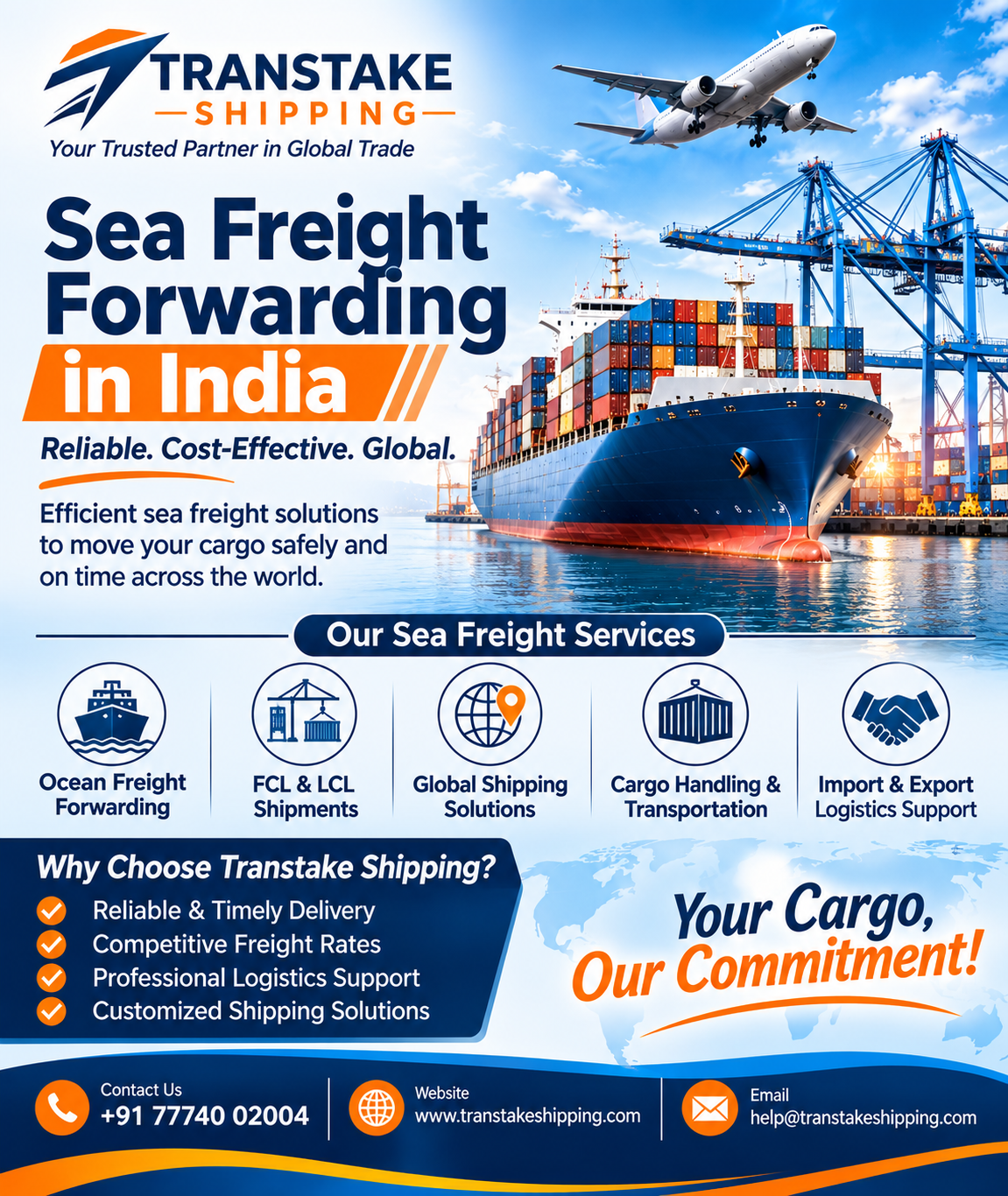
International trade depends on efficient cargo transportation and well-organised logistics. Businesses importing and exporting goods need reliable shipping solutions to move their products across international markets. Sea freight forwarding in India is an important part of global trade, helping companies transport large, heavy, and containerised shipments by ocean.
India has a well-connected network of seaports that supports international cargo movement. From commercial products and industrial machinery to raw materials and consumer goods, ocean freight provides businesses with different options for managing international shipments.
Transtake Shipping offers freight forwarding and logistics support to help businesses coordinate their sea cargo transportation requirements.
What Is Sea Freight Forwarding?
Sea freight forwarding is the process of coordinating the transportation of goods from one country to another through ocean shipping. A freight forwarder helps arrange cargo movement, coordinate with shipping lines and logistics partners, manage shipping documentation, and support related transportation activities.
It is commonly used by businesses that need to transport large quantities of goods internationally.
Sea freight can be a practical option for companies looking for structured and cost-conscious transportation solutions for commercial cargo.
Why Is Sea Freight Important for International Trade?
Ocean transportation plays a major role in global supply chains. It allows businesses to move large volumes of cargo between international markets.
Some important advantages include:
-
Large cargo capacity: Suitable for heavy, bulky, and containerised shipments.
-
Cost-effective options: Often economical for larger cargo volumes.
-
International connectivity: Connects Indian businesses with overseas suppliers and customers.
-
Flexible shipment options: Supports both FCL and LCL shipping.
-
Wide cargo suitability: Used for many types of commercial and industrial goods, subject to applicable regulations.
Types of Sea Freight Services in India
Businesses can choose different sea freight arrangements depending on cargo volume, shipment requirements, and budget.
1. Full Container Load (FCL) Shipping
Full Container Load shipping is used when a business books an entire shipping container for its cargo.
FCL can be suitable for:
-
Large commercial shipments
-
Industrial equipment
-
Bulk inventory
-
Heavy cargo
-
Regular import and export shipments
It offers dedicated container space for the shipment.
2. Less than Container Load (LCL) Shipping
Less than Container Load shipping is suitable when a business does not require an entire container. Cargo from multiple shippers is consolidated into a shared container.
LCL may be useful for:
-
Small and medium-sized shipments
-
Businesses with lower cargo volumes
-
Occasional international shipments
-
Importers testing new overseas suppliers
The suitability of LCL depends on cargo dimensions, handling requirements, route availability, and total charges.
3. Import Sea Freight Forwarding
Import sea freight forwarding involves coordinating the movement of cargo from an overseas supplier to an Indian destination.
The process may include:
-
International ocean freight arrangements
-
Shipping documentation coordination
-
Cargo tracking and shipment updates
-
Import customs clearance support
-
Port handling and inland transportation coordination
4. Export Sea Freight Forwarding
Export sea freight forwarding supports businesses sending goods from India to international destinations.
It may involve cargo booking, export documentation coordination, container arrangements, and transportation planning.
How Does the Sea Freight Forwarding Process Work?
Understanding the shipping process helps businesses plan their cargo movement more effectively.
Step 1: Cargo Details and Requirements
The shipper provides details such as cargo type, weight, dimensions, origin, destination, and expected shipping schedule.
Step 2: Freight Planning
The suitable shipping arrangement is identified based on shipment volume, route, budget, and delivery requirements.
Step 3: Container Booking
Depending on the shipment, an FCL or LCL arrangement is coordinated with the relevant shipping and logistics partners.
Step 4: Documentation Coordination
The necessary shipping documents are prepared and reviewed. These may include the commercial invoice, packing list, and shipping instructions.
Step 5: International Ocean Transportation
The cargo is transported by vessel from the origin port to the destination port.
Step 6: Customs Clearance
Applicable customs declarations, assessments, documentation, and duty payments are completed.
Step 7: Cargo Delivery
Following the required release and handling procedures, the shipment is arranged for onward transportation to its final destination.
The actual process and timelines depend on the shipping route, vessel schedule, port operations, cargo requirements, and customs procedures.
Major Indian Ports Supporting Sea Freight
India has several important ports that support international shipping and commercial cargo movement.
Some key ports include:
-
Jawaharlal Nehru Port (JNPA), Maharashtra: A major container port serving the Mumbai region.
-
Mumbai Port, Maharashtra: An important port supporting maritime trade.
-
Mundra Port, Gujarat: A significant commercial port with container and cargo facilities.
-
Chennai Port, Tamil Nadu: Supports international cargo movement on India's eastern coast.
-
Visakhapatnam Port, Andhra Pradesh: Handles various types of commercial and industrial cargo.
-
Kolkata–Haldia Port System, West Bengal: Supports maritime trade in eastern India.
The appropriate port depends on the cargo origin, destination, shipping route, and logistics requirements.
Documents Required for Sea Freight Shipping
Accurate documentation is essential for smooth international cargo transportation.
Common documents may include:
-
Commercial Invoice
-
Packing List
-
Bill of Lading
-
Shipping Instructions
-
Certificate of Origin, where required
-
Import or export licences, where applicable
-
Other product-specific certificates and declarations
Document requirements vary according to the goods, destination, trade regulations, and customs procedures.
Factors Affecting Sea Freight Charges in India
Sea freight costs depend on several factors. Businesses should consider the complete logistics cost rather than only the basic ocean freight rate.
Important cost factors include:
-
Origin and destination ports
-
Cargo weight and volume
-
FCL or LCL shipping arrangement
-
Container size and type
-
Shipping line and vessel availability
-
Fuel and seasonal surcharges
-
Port and terminal handling charges
-
Customs duties and applicable taxes
-
Inland transportation and warehousing
Requesting a detailed freight quotation can help businesses understand the applicable charges before confirming a shipment.
Common Challenges in Sea Freight Forwarding
International ocean shipping can involve several operational challenges, including:
-
Vessel schedule changes
-
Port congestion
-
Incorrect or incomplete documentation
-
Customs queries and regulatory requirements
-
Container availability issues
-
Unexpected handling or storage charges
-
Delays in inland cargo transportation
Advance planning, accurate documentation, and regular communication with logistics partners can help businesses manage these challenges.
Why Choose Transtake Shipping for Sea Freight Forwarding in India?
Transtake Shipping provides freight forwarding and logistics support for businesses involved in international trade.
Our focus is on helping customers coordinate their cargo movement through suitable shipping and transportation arrangements.
Our service areas include:
-
Sea Freight Forwarding
-
FCL and LCL Shipment Coordination
-
Import Freight Forwarding
-
Export Freight Forwarding
-
Air Freight Forwarding
-
Customs Clearance Support
-
Cargo Handling and Transportation
-
Door-to-Door Delivery Coordination
Whether you are planning a full container shipment or a smaller consolidated cargo movement, choosing appropriate freight arrangements is important for managing your international supply chain.
Conclusion
Sea freight forwarding is an important transportation solution for businesses involved in international trade. With FCL and LCL options, ocean shipping allows companies to coordinate different types of commercial cargo across global markets.
Choosing a suitable freight forwarding partner can help businesses organise shipping arrangements, documentation, cargo handling, and onward transportation.
If you are looking for sea freight forwarding in India, contact Transtake Shipping to discuss your cargo requirements and explore suitable ocean freight solutions.
Transtake Shipping – Your Cargo, Our Commitment!
Contact Transtake Shipping
Company: Transtake Shipping Pvt. Ltd.
Phone: +91 77740 02004
Website: https://www.transtakeshipping.com
Email: help@transtakeshipping.com

 English
 Arabic
 French
 Spanish
 Portuguese
 Deutsch
 Dutch
 Italiano
 Russian
 Romaian
 Portuguese (Brazil)
 Greek
