

Industrial Ultrasonic Cleaners: An Effective Solution for Precision Industrial Cleaning
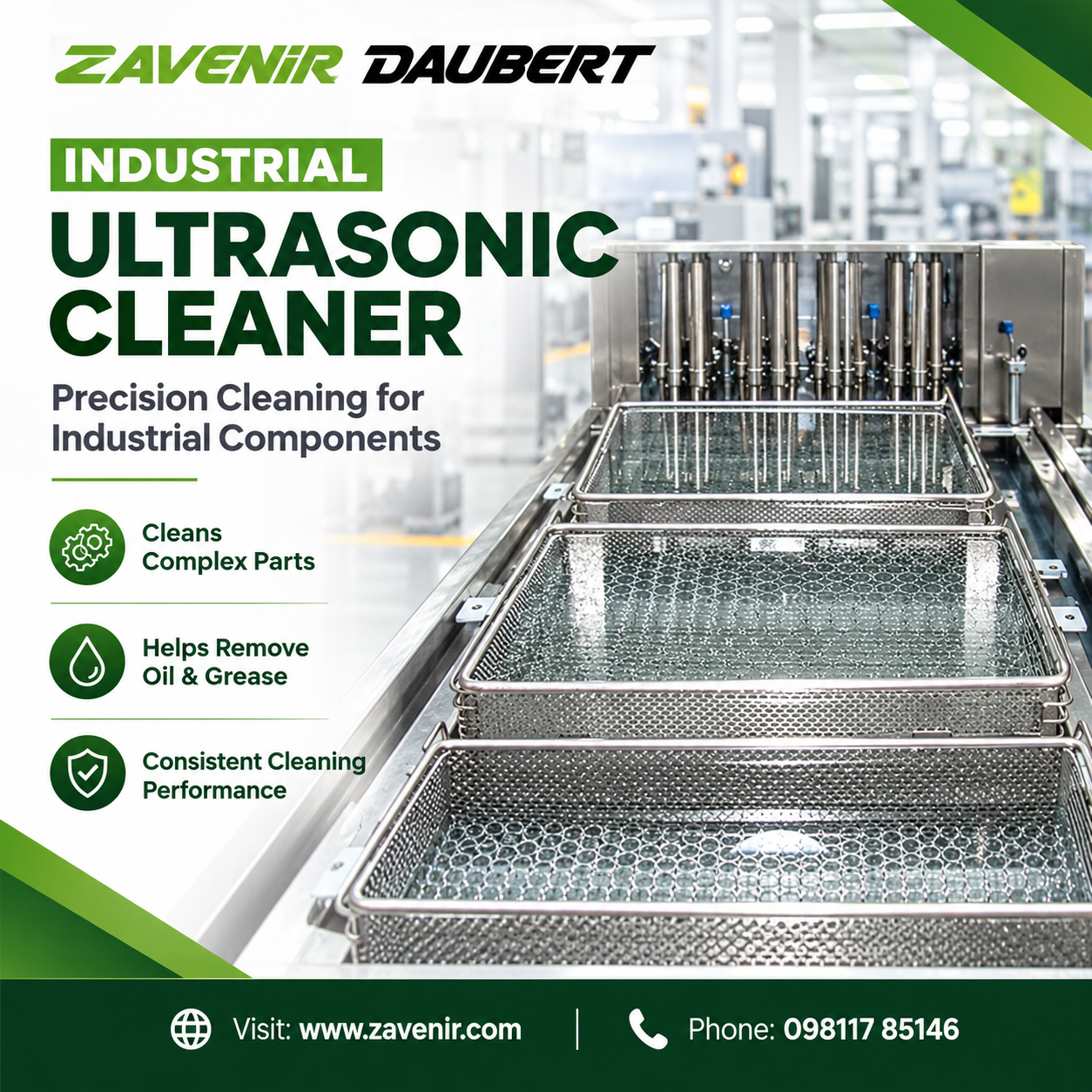
Industrial cleaning plays an important role in maintaining equipment performance and product quality across manufacturing facilities. Metal components, machine parts, automotive assemblies, and engineering tools often accumulate oil, grease, dust, and other contaminants during production. Traditional cleaning methods may not always reach complex shapes or narrow spaces. This is where Industrial Ultrasonic Cleaners offer a practical and efficient cleaning solution.
What Are Industrial Ultrasonic Cleaners?
Industrial ultrasonic cleaners are specialized cleaning systems that use high-frequency sound waves to remove contaminants from different types of components. The process works through ultrasonic cavitation, where tiny bubbles form and collapse rapidly in a cleaning liquid. This action helps loosen dirt, grease, oil, and other unwanted particles from component surfaces.
These machines are particularly useful for cleaning objects with intricate designs, small openings, internal passages, and hard-to-reach areas.
How Does Ultrasonic Cleaning Work?
The ultrasonic cleaning process begins by placing components inside a tank filled with a suitable cleaning solution. The machine generates high-frequency sound waves that travel through the liquid and create microscopic bubbles.
These bubbles continuously form and collapse against the component surfaces. This activity helps dislodge contaminants without relying entirely on manual scrubbing. The cleaning process can be adjusted according to the material, type of contamination, and cleaning requirements.
Key Applications of Industrial Ultrasonic Cleaners
Industrial ultrasonic cleaning technology is used across several industries because of its ability to clean complex components.
1. Automotive Industry
Automotive manufacturers use ultrasonic cleaning systems for cleaning engine parts, fuel injectors, valves, bearings, and other precision components. Proper cleaning helps prepare parts for inspection and further processing.
2. Metalworking Industry
Metalworking operations often leave cutting oil, metal particles, and machining residues on components. Ultrasonic cleaning helps remove these contaminants before subsequent manufacturing processes.
3. Engineering and Manufacturing
Engineering facilities use ultrasonic cleaners for cleaning precision tools, machine components, and equipment parts. The technology supports consistent cleaning across different production requirements.
4. Electronics Industry
Certain electronic components and compatible assemblies require careful cleaning to remove dust, flux residues, and other contaminants. Suitable ultrasonic cleaning systems can support these applications when the materials and components are compatible.
Benefits of Using Industrial Ultrasonic Cleaners
Industrial ultrasonic cleaners provide several advantages for businesses looking to improve their cleaning operations.
-
Thorough Cleaning: Ultrasonic waves help reach narrow gaps and complex surfaces.
-
Reduced Manual Effort: The cleaning process reduces dependence on intensive hand cleaning.
-
Consistent Results: Controlled cleaning conditions support repeatable cleaning performance.
-
Time Efficiency: Multiple compatible components can be cleaned in a single cycle.
-
Versatile Applications: These systems can be used for different components and industrial requirements.
-
Improved Maintenance: Regular cleaning helps maintain equipment and component cleanliness.
How to Choose the Right Industrial Ultrasonic Cleaner
Selecting an appropriate ultrasonic cleaning system requires understanding the specific needs of your facility. Consider the size and material of the components being cleaned, the type of contaminants involved, tank capacity, operating frequency, cleaning temperature, and cycle duration.
The cleaning solution is equally important because different materials and contaminants require different formulations. Compatibility testing is recommended to avoid damaging sensitive components. Businesses should also consider maintenance requirements and the overall suitability of the equipment for their production environment.
Conclusion
Industrial ultrasonic cleaners provide a modern approach to removing contaminants from complex industrial components. Their ability to clean detailed surfaces makes them useful across automotive, engineering, metalworking, and manufacturing applications. By selecting suitable equipment and cleaning solutions, businesses can improve cleaning consistency and support efficient production operations.
Zavenir Daubert is a leading manufacturer specializing in advanced corrosion protection and metalworking solutions. With a commitment to innovation and quality, the company delivers industrial solutions designed to meet diverse manufacturing requirements. Explore more about its products and industrial solutions at Zavenir Daubert.

 Arabic
 French
 Spanish
 Portuguese
 Deutsch
 Turkish
 Dutch
 Italiano
 Russian
 Romaian
 Portuguese (Brazil)
 Greek
