

Creative Activities to Complement a Homeschool Chemistry Curriculum
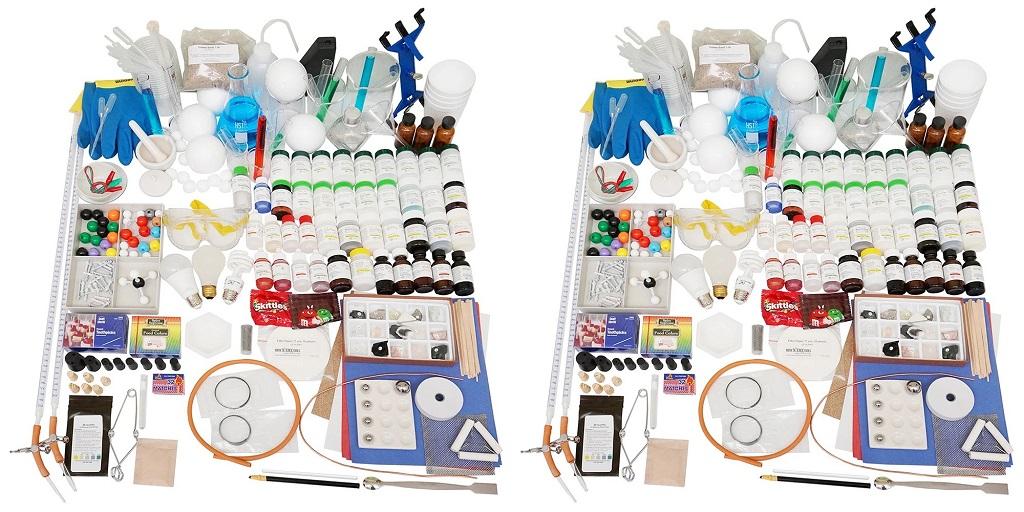
Chemistry is easier to explore when lessons connect scientific concepts with everyday experiences. A homeschool chemistry curriculum provides structure, while complementary activities give students additional ways to investigate reactions, materials, and physical changes. From kitchen experiments to observation journals, these activities bring abstract ideas into familiar settings.
Homeschool students can explore chemistry through activities suited to their current studies. Basic experiments introduce key concepts, while more advanced projects involve measuring results, comparing observations, and explaining chemical changes.
Explore Chemical Reactions With Everyday Objects
Chemical reactions let students observe how different substances interact. A classic baking soda and vinegar experiment demonstrates gas production through visible bubbling and fizzing. Students can record their observations, identify the materials involved, and describe the changes they see.
For an additional challenge, vary the quantities of each ingredient. Ask students to predict what might happen before repeating the experiment. Comparing results encourages them to consider variables and explain differences using scientific evidence.
Always review age-appropriate safety guidance before conducting experiments. Adult supervision, protective eyewear, and suitable materials help keep activities safe.
Investigate Acids, Bases, and Indicators
Color-changing experiments introduce students to acids and bases through visual observations. Red cabbage juice works as a natural pH indicator, changing color when exposed to different substances.
Students can test small samples of household liquids, such as lemon juice and water mixed with baking soda. They can organize their results by color and compare the substances’ properties. A simple chart connects observations with lessons about acidity, alkalinity, and pH.
Students can also learn about experimental controls by adding the same amount of indicator to each sample. This keeps conditions consistent and makes results easier to compare.
Study States of Matter Through Freezing and Melting
To study changes in states of matter, you can use water. Students can watch ice melt, water evaporate, and condensation form on a cold surface. They can also measure temperature and time each change to practice collecting and recording data.
With an ice cream experiment, you can also explore freezing point depression. Salt lowers the freezing point of the ice around a container, allowing the mixture to cool enough to freeze the ice cream ingredients. Students can compare mixtures with different salt quantities and discuss the results.
These activities relate chemistry concepts to daily routine, giving students examples they can revisit in future lessons.
Keep a Chemistry Observation Journal
Students can record experiments, questions, and discoveries in a science journal. Each entry can include the experiment’s purpose, materials, procedure, observations, and conclusions. Drawings, tables, and photographs also document results.
Encourage students to write predictions before beginning each experiment. Afterward, they can compare their predictions with the actual outcomes and explain any differences. Older learners can include chemical formulas, reaction equations, or graphs when appropriate.
Reviewing earlier entries also lets students track how their scientific explanations develop as they encounter new concepts.
Connect Chemistry With Everyday Life
With everyday materials, you can explore chemistry beyond textbook lessons. Cooking shows how heat changes ingredients, while rusting demonstrates how iron reacts with oxygen and moisture. Soap experiments let students investigate surface tension and observe how soap affects the interaction between oil and water.
Students can also investigate the ingredients listed on food labels and compare acids, salts, and other compounds. These observations connect textbook terminology with the materials they encounter daily.
Choose activities that relate to current lessons and leave room for questions after each experiment. Regular experiments let students observe results, test ideas, and explain conclusions with scientific evidence.
Find Chemistry Resources for Homeschool Learning
At Home Science Tools, you will find chemistry curriculum materials and lab kits for homeschool students at different learning levels. Explore the available resources to find lesson materials and experiment supplies that fit your student’s stage of study.
For more information about Physics Curriculum and Digital Microscope Please visit: Home Science Tools.

 English
 Arabic
 French
 Spanish
 Portuguese
 Turkish
 Dutch
 Italiano
 Russian
 Romaian
 Portuguese (Brazil)
 Greek
