

Accessibility Training and Capacity Building: Who Needs What
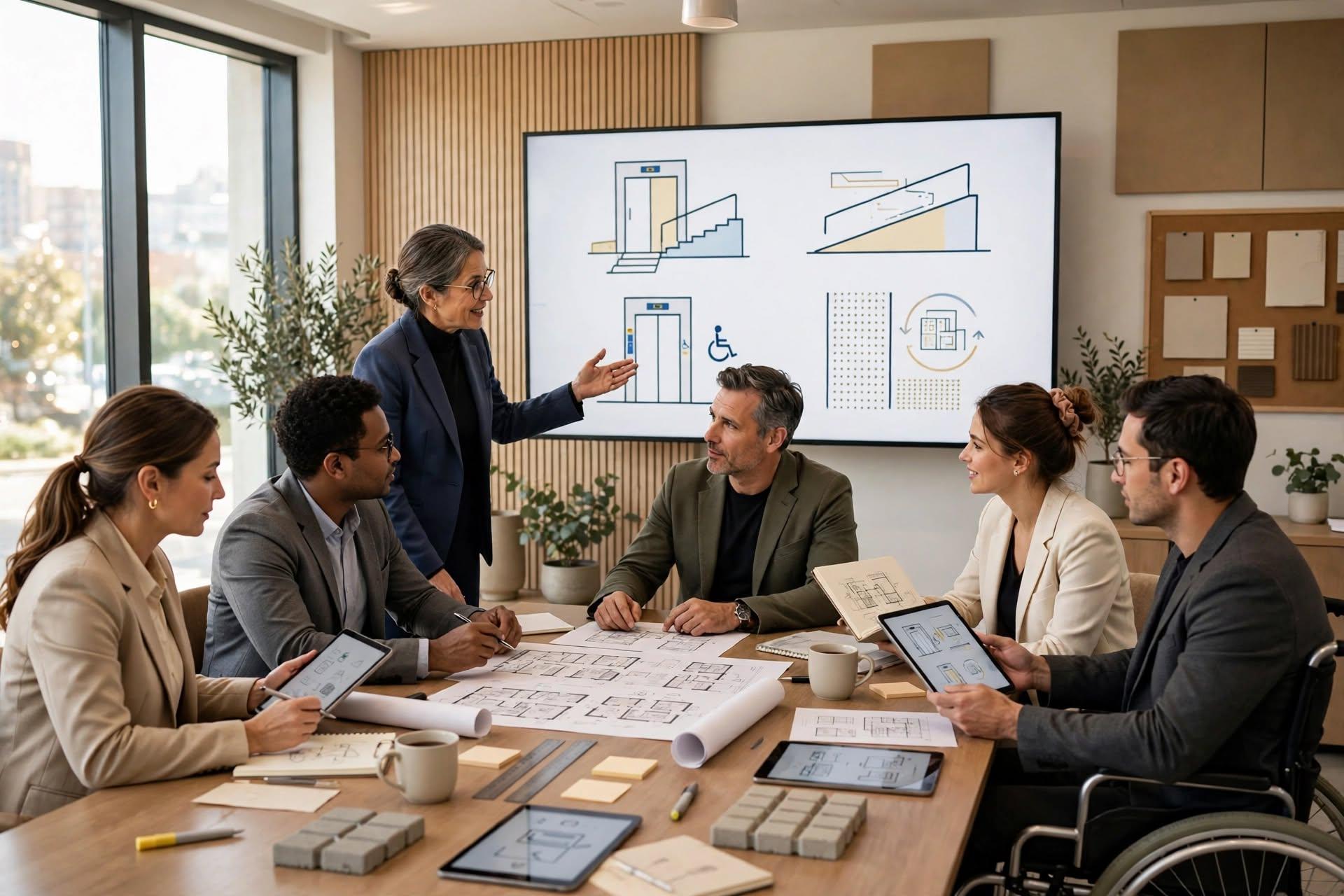
Accessible environments depend not only on good design but also on the people who deliver and run them. Accessibility training and capacity building gives developers, contractors, facility managers and front-of-house staff the working knowledge to implement, manage and maintain accessibility. This guide covers who should be trained, on which topics and how training fits with reviews and audits.
Who Belongs in the Room
Vortex Access provides training for developers, consultants, contractors, facility managers, front-of-house staff, operations teams and project stakeholders. That range matters because accessibility is shaped by decisions made on drawings, on site and at the front desk, so each group needs a working understanding of its part.
Across those groups, the training helps teams understand:
-
Accessibility requirements
-
Universal design principles
-
Disability awareness
-
User needs
-
Practical barrier identification
The last item is the most practical. Spotting a barrier early, before it is built or reported by a visitor, is what separates a well-managed space from a reactive one. It is also a skill that can be practised on any project, which makes it a good starting point for mixed groups.
Matching Topics to Each Team
Training can be tailored for design teams, construction teams, audit teams or operational staff. Topics may include built environment accessibility, People of Determination (persons with disabilities) awareness, inclusive customer service, accessible communication, common non-compliance issues, accessible facilities management and assisted evacuation considerations.
One way to choose is to start from each team's daily decisions:
-
Design teams: built environment accessibility and common non-compliance issues
-
Construction teams: common non-compliance issues
-
Audit teams: practical barrier identification and common non-compliance issues
-
Operational staff: inclusive customer service, accessible communication, facilities management and assisted evacuation
People of Determination awareness suits everyone on the list, since it frames the user needs the rest of the training builds on. Agreeing the topic list with each team lead before sessions begin keeps the content tied to real work rather than general awareness.
Cutting Repeated Errors Over Time
The stated objective is to strengthen internal capability, reduce repeated accessibility errors and help organisations provide safer, more inclusive and more usable environments over time. Accessibility training and capacity works on the habits behind errors, not just the errors themselves, which is why the effect should build as teams move from project to project.
The financial logic is straightforward. Retrofitting after launch costs far more than designing for accessibility upfront, and failing to meet requirements can lead to complaints, legal action, fines and project setbacks. A team that recognises a common non-compliance issue early avoids paying for it twice.
Internal capability also helps with consistency. Tailored sessions support inclusive practice across teams and projects, rather than leaving the knowledge with one specialist who may not be on every job. For organisations with several sites or phases, that consistency is often the real benefit.
Where Training Sits Next to Reviews and Audits
Training is one of three connected services at Vortex Access. Design reviews identify accessibility risks at every stage, audits assess existing buildings and deliver clear, prioritised recommendations, and training builds the internal capability to act on both. A universal design consultant can also help you interpret local and international accessibility standards so a project meets its obligations from start to finish.
When you compare providers, look for a universal design consultant who also offers training, so findings travel from review to team without being retold. That way accessibility training and capacity building becomes part of the project plan rather than an afterthought.
Credentials add confidence. The training includes CPACC exam preparation, and the firm lists Rick Hansen Foundation Accessibility Certification, ISO 9001 and IAAP credentials among its accreditations, with offices in Abu Dhabi, Dubai, Ottawa, Toronto and Winnipeg.
Conclusion
Good accessibility depends on people as much as drawings. Train the right teams on the right topics, tie the lessons to your reviews and audits, and repeated errors become rarer over time. If you are deciding where to start, talking with a universal design consultant about your teams and projects is a practical first step.
FAQs
1. Who can join the training?
Developers, consultants, contractors, facility managers, front-of-house staff, operations teams and project stakeholders.
2. Can sessions be tailored?
Yes. Training can be tailored for design teams, construction teams, audit teams or operational staff.
3. Is exam preparation available?
Yes. The training includes CPACC exam preparation.
4. What is the training meant to achieve?
It aims to strengthen internal capability, reduce repeated accessibility errors and help organisations provide safer, more inclusive and more usable environments over time.

 English
 French
 Spanish
 Portuguese
 Deutsch
 Turkish
 Dutch
 Italiano
 Russian
 Romaian
 Portuguese (Brazil)
 Greek
