

Import and Export Customs Clearance Process in Mumbai – A Complete Business Guide
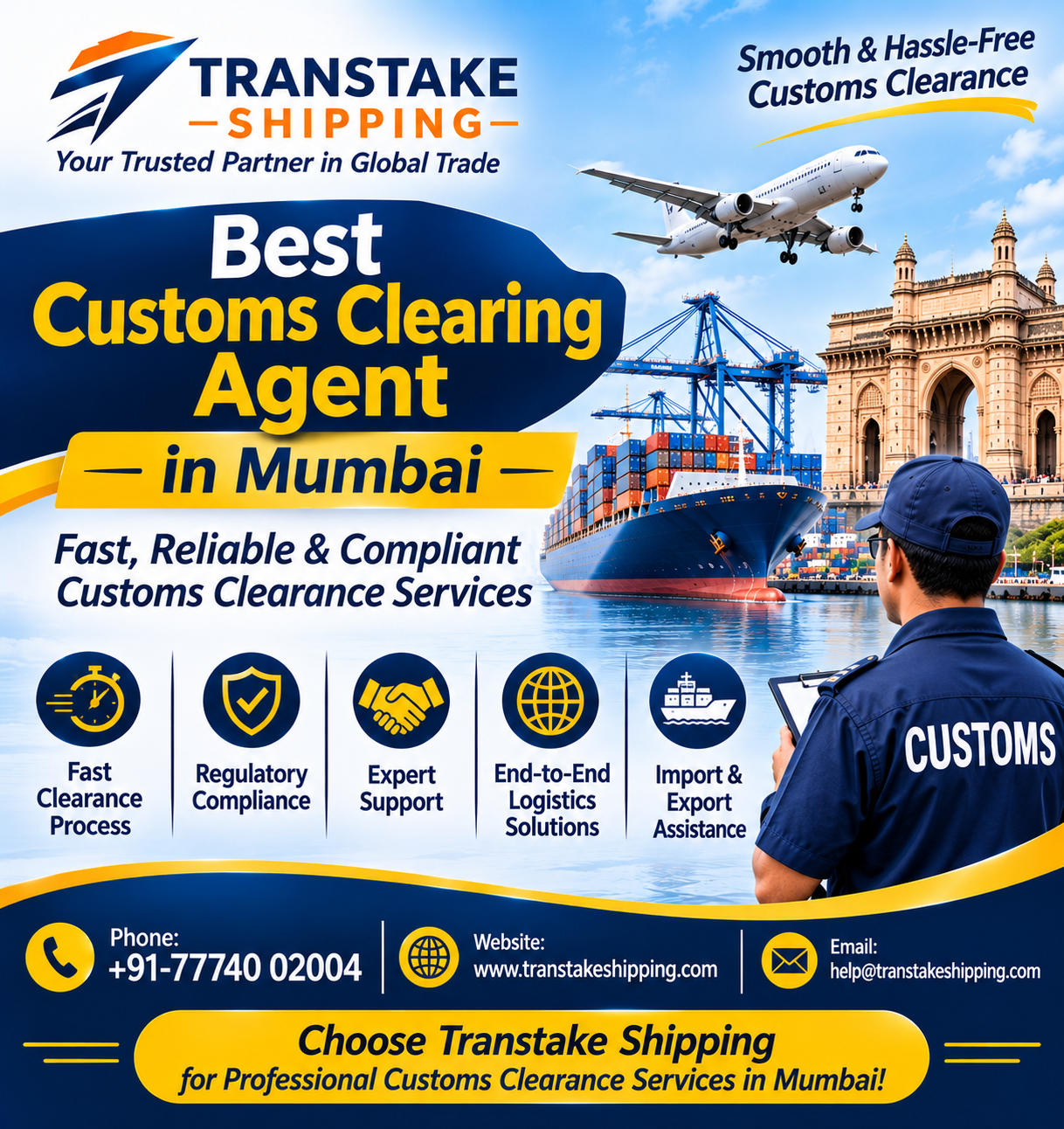
Mumbai is one of India's major international trade hubs, with important seaports and air cargo facilities. For importers and exporters, understanding the customs clearance process can help prevent documentation issues and improve shipment coordination.
If your business is looking for a customs clearing agent in Mumbai, this guide explains the key steps involved in import and export customs clearance.
What Is the Customs Clearance Process?
Customs clearance is the procedure through which imported or exported goods are assessed by customs authorities to verify compliance with applicable laws, duties, taxes, and documentation requirements.
The process varies depending on the nature of the goods, shipment type, country of origin or destination, and applicable regulations.
Import Customs Clearance Process in Mumbai
Importers bringing goods into India must complete the applicable customs procedures before their cargo can be released.
Step 1: Prepare Import Documents
The importer should arrange the necessary documents for the shipment. Common documents include:
-
Commercial Invoice
-
Packing List
-
Bill of Lading or Airway Bill
-
Import Export Code (IEC), where applicable
-
Product-specific licences or certificates, where required
-
Other documents requested by customs authorities
Accurate shipment details help support the clearance process.
Step 2: Arrival of Imported Cargo
Imported cargo arrives through a seaport or airport. The shipping line, airline, or relevant cargo operator provides the necessary arrival information and transport documentation.
Step 3: Bill of Entry Filing
A Bill of Entry is filed with customs for imported goods. The declaration contains details about the importer, goods, classification, value, and other relevant information.
Correct classification and valuation are important for determining applicable customs duties and compliance requirements.
Step 4: Customs Assessment and Examination
Customs authorities may assess the declaration and examine the goods when required. Additional documents or clarification may be requested depending on the shipment.
Step 5: Payment of Applicable Customs Duty
Importers must pay applicable customs duties and taxes as determined under the relevant regulations.
Step 6: Customs Clearance and Cargo Release
After the necessary procedures and approvals are completed, customs authorities issue the applicable clearance or release. The cargo can then be coordinated for delivery to the importer's warehouse or destination.
Export Customs Clearance Process in Mumbai
Businesses exporting goods from India must also follow the applicable customs procedures.
Step 1: Prepare Export Documentation
Common export documents may include:
-
Commercial Invoice
-
Packing List
-
Shipping Bill
-
Export licence or certificate, where applicable
-
Other product-specific documents
Step 2: Cargo Movement to Port or Airport
The exporter arranges transportation of goods to the designated port, airport, or cargo terminal according to the shipment schedule.
Step 3: Shipping Bill Filing
A Shipping Bill is filed with customs containing relevant details about the exporter, goods, value, classification, and destination.
Step 4: Customs Assessment and Examination
Customs authorities may review the documents and examine cargo where required.
Step 5: Export Clearance
Once the applicable requirements are fulfilled and approval is granted, the shipment can proceed for export.
Air Cargo vs Sea Cargo Customs Clearance
The customs clearance process may differ depending on how the cargo is transported.
|
Factor |
Air Cargo |
Sea Cargo |
|---|---|---|
|
Transportation |
Aircraft |
Cargo vessel |
|
Transport document |
Airway Bill |
Bill of Lading |
|
Typical shipment |
Urgent or time-sensitive cargo |
Bulk and containerised cargo |
|
Cargo facility |
Air cargo terminal |
Seaport or container terminal |
|
Clearance |
Based on applicable air cargo procedures |
Based on applicable sea cargo procedures |
Both methods require accurate documentation and compliance with the applicable customs regulations.
Common Customs Clearance Challenges
Importers and exporters may face several challenges during customs clearance.
1. Incorrect Documentation: Missing or inconsistent information can result in queries and delays.
2. Incorrect Product Classification: Incorrect tariff classification can affect duty calculations and regulatory compliance.
3. Valuation Issues: Customs valuation must follow applicable rules and documentation requirements.
4. Product-Specific Restrictions: Certain goods may require additional licences, certificates, or approvals.
5. Coordination Delays: Poor communication between suppliers, importers, transporters, and logistics providers can affect shipment planning.
Businesses should review shipment documents carefully and seek appropriate professional support when needed.
How a Customs Clearing Agent Helps Your Business
A customs clearing agent or logistics service provider can assist with coordinating different activities involved in the clearance process.
Depending on the agreed scope, support may include:
-
Import and export documentation coordination
-
Bill of Entry and Shipping Bill process assistance
-
Customs procedure guidance
-
Air and sea cargo coordination
-
Communication with relevant logistics parties
-
Cargo transportation arrangements
-
Freight forwarding support
Final customs assessment, duty determination, and clearance approval remain the responsibility of the relevant customs authorities.
Customs Clearance and Freight Forwarding Services by Transtake Shipping
Transtake Shipping Pvt. Ltd. provides customs clearance support and freight forwarding solutions for businesses managing international shipments.
Its services include:
-
Import Customs Clearance Support
-
Export Customs Clearance Support
-
Sea Freight Forwarding
-
Import and Export Logistics
-
Cargo Handling and Transportation
-
Door-to-Door Delivery Coordination
Whether you are managing an air cargo shipment or a sea freight consignment, you can contact Transtake Shipping to discuss your logistics requirements.
Why Choose a Professional Customs Clearance Partner in Mumbai?
A suitable customs clearance and logistics partner can help businesses coordinate documentation, transportation, and shipment-related communication.
Before selecting a service provider, review its service capabilities, experience with your cargo type, pricing transparency, communication process, and understanding of applicable customs procedures.
Conclusion
Understanding the import and export customs clearance process in Mumbai is important for businesses involved in international trade. Proper documentation, accurate declarations, and timely coordination can help businesses manage their shipments more effectively.
Transtake Shipping offers customs clearance support and freight forwarding services to help businesses coordinate their import and export logistics requirements.
Contact Transtake Shipping
Phone: +91-77740 02004
Website: https://www.transtakeshipping.com
Email: help@transtakeshipping.com

 English
 Arabic
 French
 Portuguese
 Deutsch
 Turkish
 Dutch
 Italiano
 Russian
 Romaian
 Portuguese (Brazil)
 Greek
