

Does Renting Heavy Machinery Help Construction Companies Manage Project-Specific Capital Requirements?
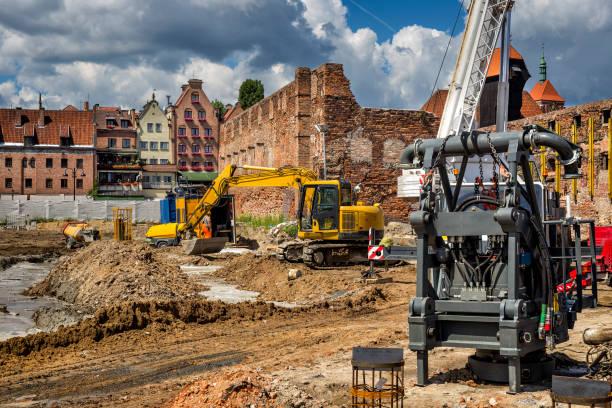
Malaysia’s construction sector requires dependable access to machinery for excavation, lifting, material handling, road development, utilities, industrial facilities, and other project activities. As contractors manage different project phases and equipment requirements, rental solutions can provide greater flexibility than maintaining fully owned fleets. According to Vyansa Intelligence, the Malaysia construction equipment rental market was valued at USD 800 Million in 2025 and is projected to reach USD 1.01 Billion by 2032, registering a CAGR of 3.39% during 2026-2032.
The sector is increasingly connected to the way contractors manage equipment availability, capital allocation, project schedules, maintenance, and operational requirements. Rental models allow companies to access machinery according to project needs without making ownership the only route to obtaining construction equipment.
Flexible Equipment Access Supports Contractors
Construction projects rarely require the same equipment combination throughout their entire lifecycle. Excavation may dominate the early stages of a project, while lifting, grading, material transportation, or road-related machinery can become more important later.
Rental services allow contractors to adjust equipment deployment according to these changing requirements. This flexibility can be particularly useful for businesses working across multiple projects where machinery requirements differ by location, scope, and construction phase.
In this report, equipment rental can therefore be viewed as an operational strategy rather than simply an alternative purchasing method. Contractors can consider rental arrangements when they need additional machinery, temporary capacity, specialized equipment, or greater flexibility in fleet planning.
Earthmoving Equipment Remains Central to Rental Requirements
Earthmoving machinery plays an essential role in construction activities because site preparation, excavation, grading, and material movement are fundamental to many projects. Excavators, loaders, bulldozers, motor graders, crawler loaders, skid steer loaders, trenchers, and dump trucks can support different stages of construction work.
For rental providers, maintaining an appropriate range of equipment is therefore important for serving contractors with varying operational requirements. The ability to supply machinery that matches a project's specific application can influence equipment utilization and customer relationships.
According to this industry report, equipment rental providers need to understand how contractors use machinery rather than focusing only on equipment availability. Machine capability, operating conditions, project duration, transportation requirements, and maintenance support can all influence rental decisions.
Infrastructure Projects Create Opportunities
Infrastructure development can generate recurring requirements for construction machinery. Roads, highways, utility installations, power-related projects, and other civil engineering activities can require equipment capable of supporting excavation, lifting, grading, material handling, and site preparation.
This creates opportunities for rental companies that can provide machinery across different project environments. Contractors can also benefit from having access to equipment without necessarily maintaining every machine within their permanent fleet.
The latest market analysis highlights the importance of flexibility within equipment procurement. Rental arrangements can allow contractors to respond to project requirements while maintaining greater control over how machinery is deployed across their operations.
Power and Utilities Strengthen Equipment Requirements
Power and utilities represent an important area of equipment demand because infrastructure projects in these fields can involve construction, installation, excavation, lifting, and material movement.
Equipment rental providers can support these activities by offering machinery suited to specific project requirements. Depending on the work involved, contractors may require earthmoving equipment, cranes, forklifts, generators, or other construction machinery.
From an industry analysis perspective, the relationship between infrastructure development and equipment availability makes rental services an important component of project planning. Providers that can respond efficiently to changing requirements can strengthen their position as long-term equipment partners for contractors.
Safety and Equipment Management Remain Essential
Construction machinery can create significant workplace risks when equipment is incorrectly operated, poorly maintained, or used without appropriate procedures. Malaysia’s Department of Occupational Safety and Health provides guidance covering machinery and equipment used on construction sites, emphasizing proper and safe operation.
For rental companies, equipment condition and maintenance are therefore fundamental elements of service quality. Contractors also need to ensure that machinery is appropriate for the intended application and that operators follow relevant safety requirements.
The Department of Occupational Safety and Health identifies machinery registration and construction-site registration among its regulatory requirements, reinforcing the importance of compliance within equipment-intensive construction activities.
Digital Fleet Management Can Improve Visibility
Technology is also changing the way rental companies manage construction equipment. Digital fleet systems can help providers monitor machinery, coordinate availability, organize maintenance activities, and improve communication with customers.
For contractors, better visibility into equipment availability can make project planning more efficient. Rental providers can similarly use equipment-management systems to coordinate deployment across different locations and reduce avoidable downtime.
A market research report examining this sector therefore needs to consider the operational capabilities surrounding rental equipment, including availability, service responsiveness, maintenance coordination, and fleet management.
Cost Considerations Influence Rental Decisions
Construction companies must balance equipment requirements against project budgets and capital priorities. Purchasing machinery can provide long-term ownership, but it also requires companies to manage maintenance, storage, depreciation, transportation, and replacement considerations.
Rental provides another approach. Contractors can evaluate equipment access according to individual project requirements and determine whether renting is more suitable than purchasing for particular applications.
This approach can be especially relevant when machinery is required for a limited project period or when utilization levels may vary considerably between assignments.
Compliance and Project Risk Management
Malaysia’s Construction Industry Development Board provides Construction Industry Standards covering areas such as safety and health assessment and construction activity risk assessment. Its SHASSIC framework is designed to assess safety and health performance at construction worksites, while related standards provide guidance for identifying and managing construction risks.
For rental businesses and contractors, this wider safety environment makes equipment selection inseparable from project risk management. Machinery must be suitable for the task, properly maintained, and integrated into safe site procedures.
Detailed market insight shows that equipment rental is consequently influenced by more than the availability of machinery. Service quality, equipment condition, operational flexibility, safety practices, and responsiveness can all affect the value that rental providers deliver to construction companies.
Looking Ahead
Malaysia’s construction equipment rental sector is positioned around a practical need: giving contractors access to machinery when and where it is required. As projects differ in scale, application, duration, and equipment requirements, flexible rental models can help businesses manage changing operational needs.
The competitive environment will increasingly depend on how effectively rental providers combine equipment availability with maintenance support, safety compliance, responsive service, and efficient fleet management.
For contractors, the key consideration is not simply whether equipment can be rented, but whether the rental solution fits the project's technical and operational requirements. As construction activity continues to involve diverse infrastructure, utility, residential, industrial, and commercial applications, flexible access to construction machinery can remain an important component of efficient project execution.

 English
 Arabic
 French
 Spanish
 Portuguese
 Deutsch
 Turkish
 Italiano
 Russian
 Romaian
 Portuguese (Brazil)
 Greek
