

How AI-Powered Supply Chain Management Software Improves Planning and Forecasting
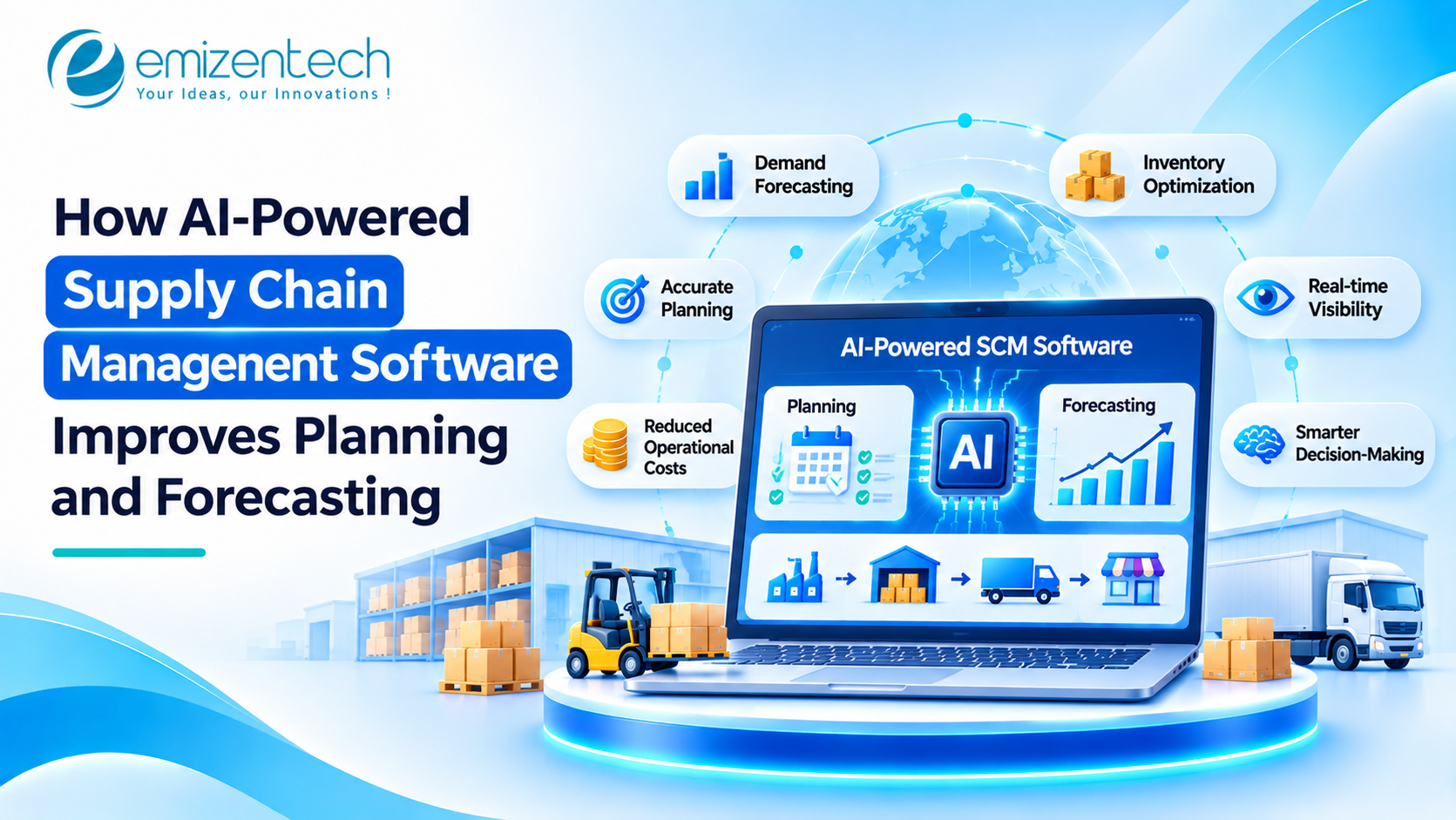
Accurate planning and forecasting are essential for maintaining efficient supply chain operations. However, changing customer demand, inventory shortages, supplier delays, and transportation disruptions can make it difficult to predict future requirements. Traditional planning methods often struggle to process large volumes of data and respond quickly to market changes.
Artificial intelligence (AI) is changing how organizations manage these challenges. By analyzing historical information, identifying patterns, and processing real-time data, AI helps improve forecasting accuracy and support better operational decisions. AI-powered supply chain management software enables businesses to plan inventory, procurement, and logistics activities more effectively.
Why Traditional Supply Chain Planning and Forecasting Fall Short
Traditional forecasting methods often depend on historical reports, spreadsheets, and manual calculations. While these approaches can support basic planning, they may not respond effectively to sudden changes in customer demand or market conditions.
Disconnected systems also make it difficult to access accurate information across inventory, procurement, and transportation activities. As a result, teams may experience delayed decisions, excess inventory, product shortages, and inefficient resource allocation.
Businesses need more adaptive planning methods that can process large datasets, identify changing patterns, and provide timely insights.
How AI Improves Supply Chain Planning and Forecasting
AI improves supply chain planning by analyzing historical records, current operational data, market trends, and demand patterns. Machine learning algorithms identify relationships within this information and use them to generate more informed predictions.
With AI-powered supply chain management software, organizations can anticipate changes in product demand, identify potential supply disruptions, and adjust procurement and inventory plans accordingly. Predictive analytics also helps planning teams evaluate changing market conditions and make timely decisions.
These capabilities allow organizations to take a proactive approach to supply chain planning rather than relying entirely on historical estimates or manual assessments.
Key Ways AI Improves Supply Chain Planning
AI-powered technologies improve supply chain planning by analyzing data, predicting future requirements, and identifying potential disruptions. These capabilities help organizations make more accurate forecasts, optimize resources, and respond proactively to changing supply chain demands.
1. More Accurate Demand Forecasting
Demand forecasting helps organizations estimate how much inventory they will need during a particular period. Inaccurate predictions can result in excess stock or product shortages.
AI analyzes historical sales, seasonal fluctuations, customer behavior, and market trends to identify demand patterns. Machine learning models can also adjust predictions as new information becomes available.
This helps organizations prepare for changing customer requirements, improve purchasing decisions, and maintain more balanced inventory levels.
2. Smarter Inventory Planning
Managing inventory requires balancing product availability with storage and holding costs. Overstocking ties up capital, while insufficient inventory can result in missed sales and delayed orders.
AI-powered forecasting helps estimate future stock requirements and identify products that may need replenishment. It can also analyze inventory movement and demand fluctuations to recommend suitable stock levels.
By using these insights, inventory teams can improve replenishment schedules, reduce unnecessary storage expenses, and maintain better control over stock availability.
3. Better Supplier and Procurement Planning
Supplier performance and procurement delays can directly affect production schedules and product availability. AI helps organizations evaluate supplier data, purchasing patterns, delivery records, and procurement requirements.
Predictive models can identify potential delays, highlight suppliers with inconsistent performance, and estimate future purchasing needs. These insights help procurement teams plan orders more effectively and evaluate alternative sourcing options when required.
Better planning also supports stronger supplier coordination and reduces the impact of unexpected procurement disruptions.
4. Improved Logistics and Distribution Planning
Transportation and distribution activities involve several variables, including delivery schedules, route conditions, shipment volumes, and fuel expenses. AI helps analyze these factors to improve logistics planning.
Intelligent systems can recommend efficient delivery routes, predict potential delays, and support transportation scheduling. They can also help organizations allocate vehicles and resources based on shipment requirements.
These capabilities improve delivery coordination, reduce avoidable transportation expenses, and support more reliable fulfillment operations.
5. Early Identification of Supply Chain Risks
Supply chain disruptions can arise from supplier issues, transportation delays, unexpected demand changes, and inventory shortages. Identifying these risks early helps organizations minimize operational impact.
AI analyzes operational data and identifies unusual patterns that may indicate potential disruptions. For example, it can flag repeated supplier delays, unexpected demand increases, or irregular inventory movements.
These early insights allow teams to evaluate risks, adjust procurement plans, and prepare alternative arrangements before disruptions affect daily operations.
Important AI Capabilities to Look for in Supply Chain Management Software
When evaluating AI-powered solutions, organizations should focus on capabilities that address their actual planning and forecasting requirements.
Some important features include:
-
Predictive analytics: Estimates future demand, inventory requirements, and operational trends using historical and current data.
-
Machine learning: Identifies patterns and improves forecasting models as new information becomes available.
-
Real-time data monitoring: Provides updated information about inventory, shipments, and supplier activities.
-
Automated recommendations: Suggests inventory replenishment, procurement adjustments, and planning improvements.
-
Intelligent dashboards: Presents operational insights and performance indicators to support informed decisions.
The right combination of these capabilities depends on operational complexity, data availability, and existing technology infrastructure.
Challenges of Implementing AI in Supply Chain Planning
Despite its benefits, implementing AI requires careful preparation. Inaccurate or incomplete data can affect prediction quality, while disconnected applications may create integration difficulties.
Organizations must also consider implementation costs, data security, infrastructure requirements, and the availability of skilled professionals. Regular model monitoring and updates are necessary to maintain reliable forecasting results as market conditions change.
Starting with specific planning challenges and gradually expanding AI capabilities can make implementation more manageable.
Conclusion
AI is making supply chain planning more accurate, responsive, and data-driven. From demand forecasting and inventory optimization to supplier coordination and risk identification, intelligent technologies help organizations improve operational decisions. EmizenTech helps businesses implement technology solutions aligned with their operational requirements, supporting better system integration and efficient business workflows.
Frequently Asked Questions
1. How does AI improve supply chain forecasting?
AI analyzes historical sales, customer behavior, market trends, and real-time information to identify demand patterns and generate more accurate forecasts.
2. Can AI reduce inventory management costs?
Yes. AI helps predict inventory requirements, recommend replenishment schedules, and reduce unnecessary stock, helping organizations control storage and inventory costs.
3. What is predictive analytics in supply chain management?
Predictive analytics uses historical and current data to estimate future demand, identify potential disruptions, and support procurement and inventory planning.
4. How does machine learning help with demand planning?
Machine learning identifies patterns in sales, seasonal changes, and customer behavior. It uses these patterns to improve demand predictions as new data becomes available.
5. What are the benefits of AI-powered supply chain management?
Key benefits include improved forecasting accuracy, better inventory control, efficient procurement planning, optimized logistics, and early identification of operational risks.

 English
 Arabic
 French
 Spanish
 Portuguese
 Deutsch
 Turkish
 Dutch
 Italiano
 Romaian
 Portuguese (Brazil)
 Greek
