

Why Learn Dutch Online? Benefits of Virtual Language Classes vs In-Person
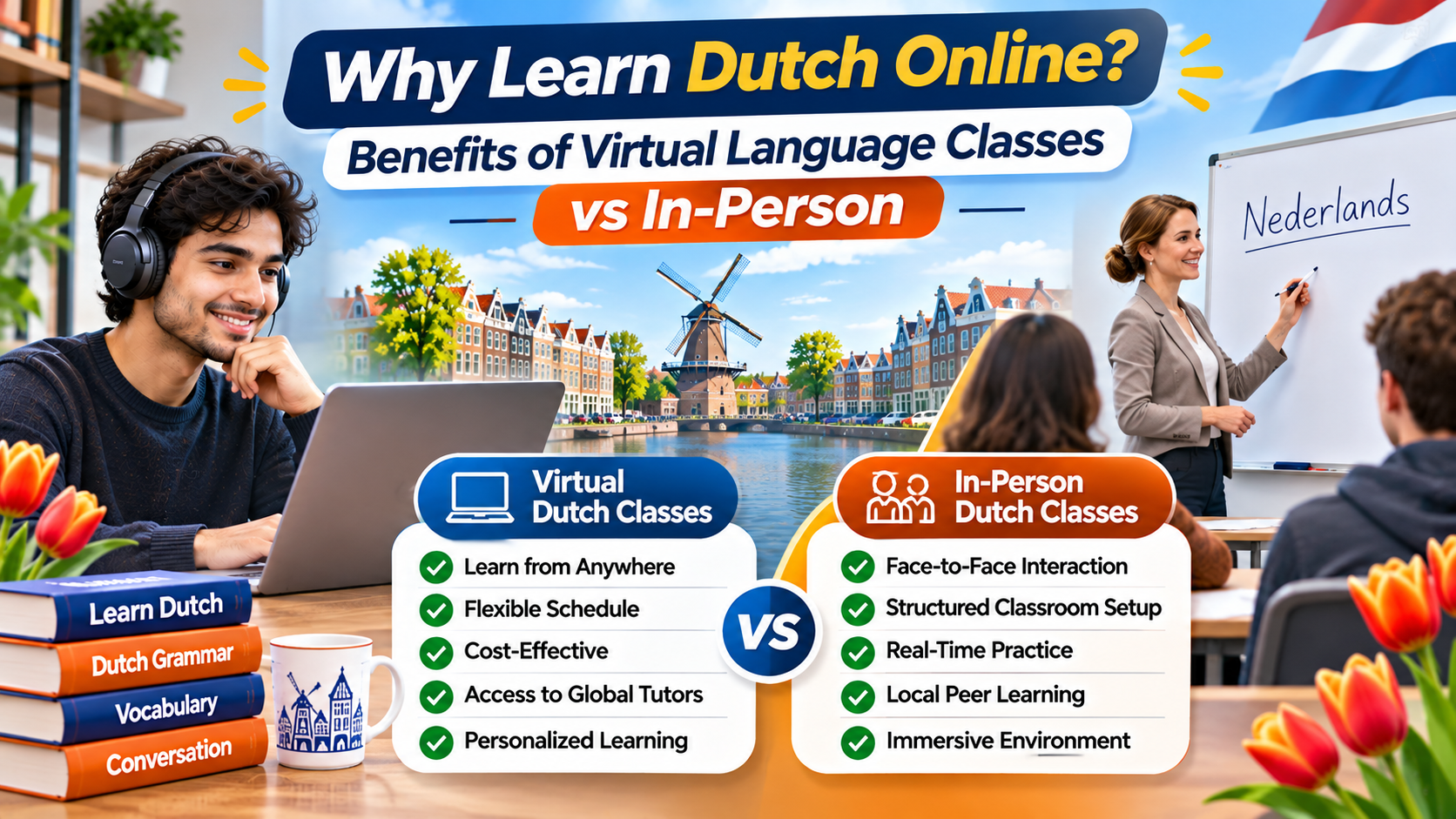
Learning a new language opens doors to exciting opportunities, whether you want to study abroad, build an international career, travel, or connect with people from different cultures. Dutch is an increasingly valuable language, especially for individuals planning to move to the Netherlands or Belgium. However, one common question among beginners is whether they should attend traditional classroom sessions or learn Dutch online.
With the growing popularity of digital education, virtual language classes have made learning more accessible, flexible, and convenient. You no longer need to travel to a language institute or adjust your entire routine around fixed classroom schedules. Instead, you can learn from experienced tutors, practice conversations, and improve your language skills from the comfort of your home.
Choosing the right learning method makes a significant difference in your language-learning journey. Let's explore why online learning is becoming a preferred option and how it compares with traditional in-person classes.
Why Learn Dutch Online?
Online education has transformed the way people acquire new skills. Language learning is no exception. When you learn Dutch online, you get the flexibility to study according to your schedule while accessing professional guidance and interactive learning resources.
Here are some important reasons why virtual Dutch classes are worth considering.
1. Flexible Learning Schedules
One of the biggest advantages of online language education is flexibility. Whether you are a working professional, university student, or someone managing family responsibilities, finding time for regular classroom sessions can be challenging.
An online Dutch course allows you to attend lessons without worrying about daily commuting or relocating to a particular area. You can choose suitable class timings and maintain consistency without disrupting your everyday responsibilities.
This flexibility makes it easier to balance language learning with your personal and professional commitments.
2. Learn From Anywhere
Traditional language classes usually require you to visit a physical institute. This can become inconvenient if you live far away or have a busy schedule.
Virtual classes remove geographical limitations. You can attend lessons from your home, office, or even while travelling, provided you have a stable internet connection.
Whether you are living in India and preparing to move to the Netherlands or already residing abroad, you can access quality Dutch language education without location restrictions.
3. Personalized Attention From Tutors
Every student learns differently. Some understand grammar quickly, while others need additional support with pronunciation, vocabulary, or sentence formation.
When you learn Dutch online through live sessions and small-group or private classes, you can receive more personalized attention. Tutors can identify your weaknesses, correct mistakes, and suggest exercises based on your individual progress.
This focused approach helps beginners develop confidence and build a strong foundation in the Dutch language.
4. Interactive Learning and Speaking Practice
A common misconception is that virtual language classes lack interaction. However, modern online teaching platforms make communication between students and tutors easier through live video sessions, discussions, speaking activities, and interactive exercises.
A well-designed learn Dutch online course should include regular conversation practice rather than focusing only on grammar and vocabulary.
Students can participate in discussions, ask questions, practice everyday conversations, and receive immediate feedback from their instructors.
5. Access to Digital Study Materials
Another important benefit of virtual learning is the availability of digital resources.
Students can access vocabulary lists, grammar explanations, practice worksheets, assignments, and lesson notes. Some learning programs also provide recorded sessions, allowing students to revisit difficult topics whenever necessary.
These resources make revision easier and help learners retain information more effectively.
6. Save Time and Reduce Learning Expenses
Travelling to a physical language institute involves additional expenses, including transportation, fuel, and other commuting costs. It also takes away valuable time that could otherwise be spent studying.
When you learn Dutch online, you can eliminate most of these commuting requirements. This makes language education more convenient and can reduce the overall cost of learning.
You can invest more time in practicing the language instead of travelling to and from your classroom.
7. Consistent Learning From Experienced Teachers
Consistency is essential when learning a foreign language. Skipping classes frequently can affect your understanding of grammar, vocabulary, and pronunciation.
Virtual classes make it easier to maintain a regular learning routine. With planned lessons, structured study materials, and continuous tutor support, students can gradually improve their Dutch communication skills.
Choosing an online Dutch course with qualified instructors ensures that you receive proper guidance throughout your learning journey.
Online Dutch Course vs. In-Person Classes: Which Is Better?
Both learning methods have their advantages. The right choice depends on your schedule, learning preferences, location, and personal goals.
Let's compare the two approaches.
| Learning Factor | Online Dutch Classes | In-Person Classes |
|---|---|---|
| Flexibility | More flexible scheduling | Usually fixed timings |
| Location | Learn from anywhere | Requires physical attendance |
| Commuting | No regular commute | Travel is generally required |
| Personal Attention | Available through private and small-group lessons | Depends on classroom size |
| Study Materials | Digital notes and resources | Printed and classroom materials |
| Interaction | Live video sessions and virtual discussions | Face-to-face interaction |
| Revision | Digital resources may be available for revision | Depends on institute facilities |
| Convenience | Suitable for busy schedules | Requires a consistent travel routine |
Both options can deliver effective results when the teaching quality is good. However, online learning offers greater accessibility and flexibility, making it particularly suitable for students with busy lifestyles.
Does Learning Dutch Online Affect Human Interaction?
This is one of the biggest concerns among beginners. Many students assume that virtual classes mean studying alone without meaningful communication.
That is not necessarily true.
Live online lessons allow students to interact directly with teachers and classmates. They can ask questions, participate in group discussions, practice pronunciation, and improve their conversational abilities.
The important thing is to choose a program that prioritizes interaction instead of relying entirely on pre-recorded videos.
Before enrolling, look for these essential features:
- Live sessions with experienced Dutch language tutors.
- Small-group or personalized learning options.
- Regular speaking and listening activities.
- Individual feedback and progress tracking.
- Interactive assignments and practice exercises.
- Opportunities to understand Dutch culture and everyday communication.
These features can make virtual language learning engaging and productive.
How to Choose the Best Online Dutch Language Course?
Not every online language program offers the same learning experience. Some focus mainly on recorded lessons, while others provide structured classes with professional instructors.
Before selecting a learn Dutch online course, consider the following factors:
1. Check the Course Levels
Choose a program that offers structured learning levels, from beginner to advanced. A well-organized curriculum helps you progress gradually without missing important language fundamentals.
2. Look for Qualified Tutors
Experienced teachers can explain grammar, correct pronunciation, and help you understand how Dutch is used in everyday situations.
3. Prioritize Speaking Practice
Learning vocabulary and grammar is important, but communication is the ultimate goal. Make sure your course includes regular speaking exercises and interactive conversations.
4. Understand the Teaching Methodology
Check whether lessons include practical examples, assignments, revision activities, and personalized feedback. A balanced teaching approach makes learning more effective.
5. Compare Flexibility and Support
Choose a course that fits your schedule and provides sufficient guidance whenever you face difficulties.
Why Choose The Dutch Minds to Learn Dutch Online?
Finding the right learning platform can make your Dutch language journey easier and more enjoyable. The Dutch Minds is an excellent choice for students looking for structured, interactive, and flexible online Dutch language education.
The platform focuses on helping learners develop their Dutch language skills through guided instruction and practical learning experiences.
Here is why The Dutch Minds stands out:
- Structured Learning: Courses designed to help students progress through different Dutch language levels, from A1 to C2.
- Professional Guidance: Learn with experienced instructors who help you understand grammar, vocabulary, and pronunciation.
- Interactive Lessons: Improve your communication skills through guided learning and practical exercises.
- Flexible Education: Attend online classes without the limitations of geographical location.
- Personalized Support: Receive guidance to identify learning gaps and improve your language proficiency.
- NT2 Exam Preparation: Access learning support for students preparing for Dutch language proficiency examinations.
Whether you are a beginner starting from scratch or an advanced learner looking to improve your fluency, The Dutch Minds provides a supportive learning environment to help you achieve your goals.
Explore the courses offered by The Dutch Minds and take the next step towards learning Dutch with confidence.
Practical Tips to Get Better Results From Virtual Dutch Classes
Enrolling in an online course is only the beginning. Your consistency and willingness to practice determine how much progress you make.
Here are some useful tips:
- Create a Daily Study Routine: Spend at least 20–30 minutes revising vocabulary, grammar, and sentence structures.
- Practice Speaking Regularly: Speak Dutch aloud, even when you are studying alone. This improves pronunciation and confidence.
- Listen to Dutch Content: Explore Dutch podcasts, videos, and conversations to become familiar with natural pronunciation.
- Complete Your Assignments: Regular exercises help reinforce what you learn during live sessions.
- Ask Questions: Discuss difficult topics with your tutor instead of allowing confusion to build up.
- Revise Previous Lessons: Revisit your notes and practice older topics to strengthen your understanding.
- Set Realistic Goals: Focus on gradual improvement rather than expecting immediate fluency.
Remember, learning a language requires patience. Regular practice combined with professional guidance can help you make steady progress.
Final Thoughts
Choosing between virtual and traditional language classes depends on your personal learning preferences. In-person classes offer direct face-to-face interaction, while online education provides flexibility, accessibility, and convenient access to professional tutors.
For students balancing education, work, and personal responsibilities, learning Dutch online can be an effective way to develop language skills without compromising their daily routine.
The key is to select a course that combines structured lessons, live interaction, speaking practice, and personalized guidance.
With its structured programs and focus on practical language learning, The Dutch Minds is one of the best choices for anyone looking to learn Dutch online. Start your journey today and build the confidence to communicate in Dutch, one lesson at a time.
Frequently Asked Questions (FAQs)
1. Is it effective to learn Dutch online?
Yes. Online Dutch learning can be highly effective when lessons include live interaction, qualified teachers, structured study materials, speaking exercises, and regular feedback.
2. How long does it take to learn Dutch online?
The time required depends on your learning goals, study schedule, previous language experience, and consistency. Regular practice and guided lessons can help you progress through different proficiency levels.
3. What should I look for in an online Dutch course?
Look for qualified tutors, structured A1–C2 levels, live interactive sessions, speaking practice, personalized feedback, and additional learning resources.
4. Can beginners learn Dutch through virtual classes?
Absolutely. Beginners can start with basic vocabulary, pronunciation, grammar, and everyday conversations. A structured course helps them build their skills step by step.
5. Are online Dutch classes better than in-person classes?
Online classes offer greater flexibility, accessibility, and convenience, whereas in-person classes provide direct physical interaction. The better option depends on your learning preferences and lifestyle.
6. Do online Dutch courses include speaking practice?
Many structured programs include live conversations, pronunciation exercises, group discussions, and interactive speaking activities. Always check the course curriculum before enrolling.
7. Where can I find the best online Dutch language course?
The Dutch Minds is a great option for learners seeking structured Dutch language courses, professional guidance, and flexible online learning opportunities.

 English
 Arabic
 Spanish
 Portuguese
 Deutsch
 Turkish
 Dutch
 Italiano
 Russian
 Romaian
 Portuguese (Brazil)
 Greek
