

Shopify SEO Guide: How to Optimize Your Store for Google
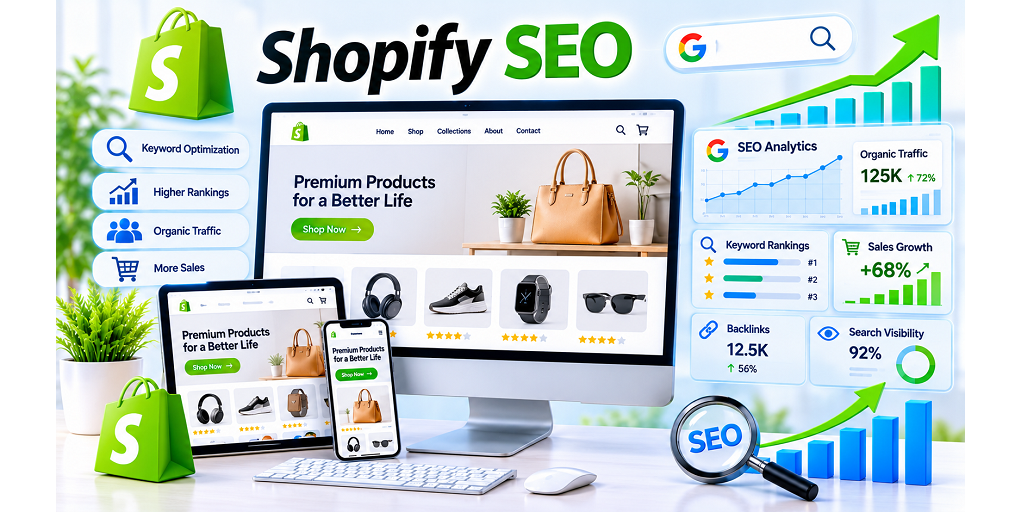
- Shopify SEO starts with fixing platform-specific issues: duplicate product URLs, theme bloat, and app-injected scripts.
- Collections, product pages, and metafields drive most organic revenue, so optimize them first.
- Core Web Vitals targets (LCP under 2.5 seconds, INP under 200 ms) are measurable and fixable.
- Audit quarterly in Google Search Console and prioritize by revenue, not by page count.
What Is Shopify SEO and Where Should You Start?
Shopify SEO is the work of making a Shopify store crawlable, fast, and relevant so Google ranks its collection and product pages. Start with a technical audit, then fix titles, URLs, and speed on your top 20 revenue pages.
Shopify handles many basics automatically, including SSL, a generated sitemap.xml, and canonical tags. The remaining gaps are specific and predictable, which makes them efficient to correct.
Fix Shopify SEO Technical Issues First
Shopify creates several URL paths for one product. A product reachable at /collections/shoes/products/runner and /products/runner relies on a canonical tag to consolidate signals. Confirm your theme links to the canonical /products/ version in collection grids.
Other technical checks that matter on this platform:
- txt: Shopify allows edits through robots.txt.liquid. Block internal search (/search) and filtered tag URLs that waste crawl resources.
- Pagination: Make sure page 2 and beyond of a collection are crawlable and self-canonical.
- Redirects: Use the built-in URL redirects tool when deleting products, and redirect to the closest relevant collection.
- Apps: Remove uninstalled apps' leftover code from theme.liquid, since orphaned scripts slow rendering.
Google's documentation on Core Web Vitals defines the thresholds to measure against: Largest Contentful Paint under 2.5 seconds, Interaction to Next Paint under 200 milliseconds, and Cumulative Layout Shift under 0.1.
Optimize Collections and Product Pages for Shopify SEO
Collection pages usually capture broader, higher-volume queries such as "women's trail running shoes." Product pages capture specific, purchase-ready queries. Treat them differently.
ElementCollection PageProduct PageTarget queryCategory term with commercial intentModel, brand, or specific attributeTitle tagCategory + differentiator, under 60 charactersProduct name + key attributeContent100–200 words above the grid, with a short guide belowUnique description, specifications, sizingSchemaBreadcrumbListProduct with price, availability, reviewsCommon Shopify flawEmpty description fieldManufacturer copy reused across stores
Write unique descriptions for your best sellers first. Compress images to WebP, add descriptive alt text, and keep file names meaningful. Use metafields to display specifications in crawlable HTML rather than inside tabs that load via JavaScript.
Speed, Themes, and Ongoing Shopify SEO Measurement
Choose a lightweight theme such as Dawn, Shopify's reference theme, and limit apps to those with clear revenue impact. Each app that injects JavaScript can add 50–300 ms to load time. Lazy-load images below the fold, but never the main product image, because that delays LCP.
Measure monthly in Google Search Console. Track impressions and clicks by page type, review the Page Indexing report for "Crawled, currently not indexed" URLs, and compare field data in the Core Web Vitals report. In 2026, also check whether product pages appear in AI-generated shopping summaries, since clean structured data and accurate feeds influence that visibility.
Conclusion
Shopify gives stores a solid foundation, but rankings come from resolving duplicate paths, thin collection copy, and script-heavy themes. Agencies such as Genius eCommerce, which works exclusively on eCommerce platforms including Shopify, typically begin with a technical audit so fixes are ranked by revenue potential.
Shopify SEO Guide: How to Optimize Your Store for Google FAQ
Is Shopify good for SEO?
Yes. Shopify includes SSL, automatic sitemaps, canonical tags, and editable titles and meta descriptions. Its weaknesses are duplicate URL paths, limited URL structure control, and app-related speed problems.
How long does Shopify SEO take to show results?
Technical fixes can show indexing improvements within 2–4 weeks. Ranking and revenue gains from content and collection optimization usually take 3–6 months.
Do Shopify apps hurt SEO?
Some do. Apps that inject JavaScript or CSS can slow load times and hurt Core Web Vitals. Audit installed apps quarterly and remove any that do not produce measurable revenue.
For more information about WordPress SEO and Magento SEO Please visit: Genius Ecommerce.

 English
 Arabic
 Spanish
 Portuguese
 Deutsch
 Turkish
 Dutch
 Italiano
 Russian
 Romaian
 Portuguese (Brazil)
 Greek
