

Dharamshala Jaipur Culinary Travel Villa Kitchen Guide
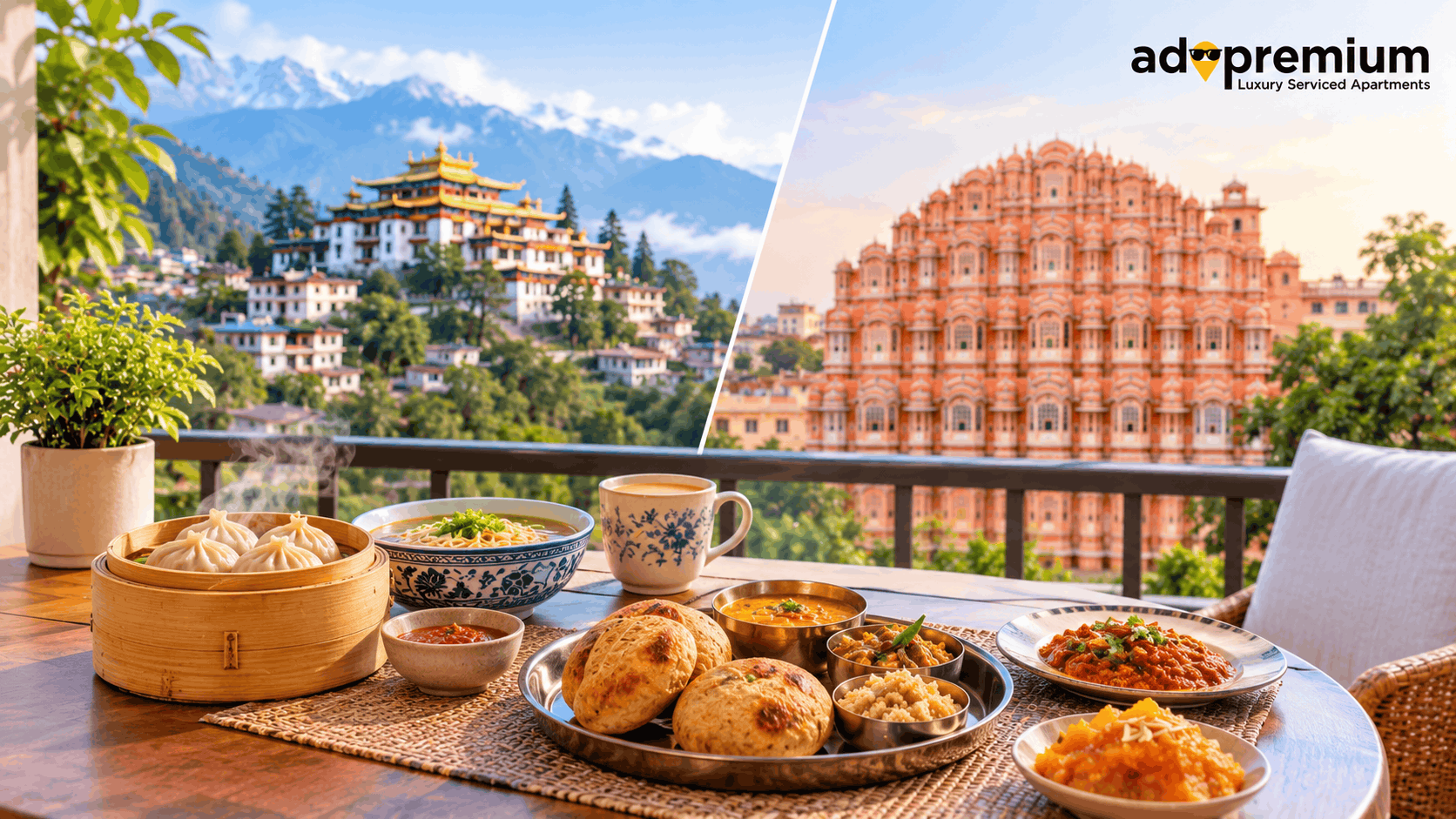
Eating Your Way Through Dharamshala and Jaipur – And Why the Villa Kitchen Matters
Ask people to describe their best trip and food comes up far more often than monuments. The meal at a family-run place that no guidebook mentioned. The market breakfast eaten standing up. The dish that was so specific to a place that it could not be replicated anywhere else. Food is how many travellers actually remember a destination, and it is also one of the clearest ways to understand a place's history, geography, and people.
Dharamshala and Jaipur are among the most rewarding food destinations in North India, for completely different reasons. One is shaped by mountains, migration, and exile. The other by desert, royalty, and a tradition of cooking for scarcity and celebration alike. This guide looks at what each offers, and at why staying in a private villa with a working kitchen adds a dimension that restaurants alone cannot.
Dharamshala – A Cuisine Shaped by Mountains and Migration
Dharamshala's food reflects the people who live there. The Tibetan community has brought dishes that have become part of daily life in McLeod Ganj: momos in several forms, thukpa and other noodle soups, tingmo steamed bread, and butter tea. These are warming, simple foods suited to a cold climate, and the best versions are often found in small family-run kitchens rather than polished restaurants.
Alongside this sits the traditional food of the Kangra region and wider Himachal. Dham, the festive meal served on leaf plates at celebrations, is built around lentils, rajma, and yoghurt-based dishes, cooked slowly and served in a set sequence. Local produce changes with the seasons, and the surrounding hills supply vegetables, herbs, and dairy that shape what is available in kitchens and markets.
The character of Dharamshala's food is gentle and restorative, which suits the destination's slower pace. Travellers who eat here tend to do so in small, frequent, unhurried meals rather than large formal dinners, and a lot of the enjoyment lies in the simple act of sitting with a hot bowl while the mountains appear and disappear in the cloud.
A private home base makes this even better. Those who book villas in dharamshala with a functioning kitchen can bring back fresh vegetables from the local market, cook a simple breakfast in the morning light, and keep tea available through long afternoons without leaving the house. The kitchen becomes part of the retreat rather than a convenience.
Jaipur – A Cuisine of Royal Kitchens and Desert Resourcefulness
Jaipur's food carries two traditions at once. The first comes from the Rajput courts, where hunting and feasting shaped dishes such as laal maas, a fiery meat preparation, and elaborate sweets and savouries prepared for ceremonial occasions. The second comes from the desert itself, where water was scarce and cooks learned to make extraordinary flavour from dried beans, gram flour, spices, and ghee.
Dal baati churma, the region's most famous dish, comes from this second tradition: hard baked wheat balls dipped in ghee, served with lentils and a sweet crumbled accompaniment. Gatte ki sabzi, ker sangri, and pyaaz kachori show how much invention the desert kitchen produced from limited ingredients. Street food in the old city, from morning kachoris to evening sweets such as ghewar during the festival season, is a large part of how locals eat, and it rewards early starts and curiosity.
Jaipur is a city of strong flavours and generous richness, and it suits travellers who like to eat widely and explore the old lanes. Many choose to stay in luxury villas in jaipur positioned close enough to the walled city and its markets to make early morning food outings easy, while still having a quiet, private place to return to afterwards.
How a Villa Kitchen Changes Culinary Travel
Restaurants are an essential part of eating well while travelling, but a villa kitchen adds several things that restaurants cannot.
Market-led cooking. Visiting a local market and then cooking what looks best turns shopping into part of the trip. In Dharamshala this might mean seasonal vegetables and fresh dairy. In Jaipur it could mean spices, dried goods, and sweets to take home.
Flexibility around timing. Travelling groups rarely share the same appetite at the same hour. A kitchen lets some people have an early breakfast, others a late one, and children eat when they need to.
Dietary comfort. For guests with specific dietary requirements, such as strict vegetarianism, allergies, or religious restrictions, being able to prepare food directly removes a significant source of worry on a long trip.
Cooking together. For many families and groups, preparing a meal together is one of the best parts of a holiday. A villa kitchen makes it possible without turning the stay into work, especially when staff or a visiting cook can help.
Quiet recovery. After a day of rich restaurant food, a simple home-cooked meal is often exactly what a body wants.
Pairing the Right Food Trip With the Right Destination
The two destinations suit different kinds of food travellers. Dharamshala is for people who enjoy simple, warming meals in a calm setting and are happy to let food be part of the slower rhythm of the trip. Jaipur is for people who want to explore bold flavours, historic recipes, and the energy of old-city food streets.
Some travellers combine the two across a year, using Jaipur's cooler winter months for a feast-driven trip and Dharamshala's milder seasons for a quieter, restorative one. In both cases, a private villa with a decent kitchen widens the options.
Adopremium offers villa stays in both destinations with the kitchen facilities and private space that make food-led trips practical, so that travellers can decide for themselves how much to cook and how much to eat out.
A Simple Way to Plan Food-Led Travel
Before going, make a short list of two or three dishes or food experiences that define each place, and then leave the rest open. Ask the villa team where residents shop and eat. Plan one market visit and one meal at a place chosen by local recommendation. Keep at least one evening for cooking something simple at the villa.
The best food memories from travel rarely come from the most expensive meal. They come from the ones that felt connected to the place. Dharamshala and Jaipur both deliver that feeling generously, and staying somewhere with a kitchen makes it easier to be part of it rather than just a customer of it.

 English
 Arabic
 French
 Spanish
 Portuguese
 Turkish
 Dutch
 Italiano
 Russian
 Romaian
 Portuguese (Brazil)
 Greek
