

What Makes a Mobile Data Cable Reliable? A Complete Industry Guide
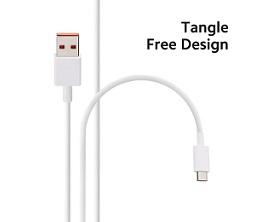
Mobile data cables have become an essential part of everyday life. From charging smartphones and transferring files to connecting devices with laptops, tablets, and other electronic equipment, these small accessories play an important role in modern technology. As smartphone usage continues to grow, the demand for durable, efficient, and compatible charging cables has increased across retail, corporate, and electronics markets.
However, not every cable offers the same level of performance. Differences in materials, internal wiring, connectors, manufacturing standards, and quality testing can significantly affect a cable's reliability. For distributors, retailers, and electronics brands, choosing the right manufacturing partner is therefore an important business decision.
Understanding how mobile data cables are designed and manufactured can help businesses make better purchasing decisions and offer products that meet customer expectations.
Understanding the Technology Behind Mobile Data Cables
A mobile data cable is designed to perform two primary functions: power transmission and data transfer. Depending on its specifications, a cable may support basic charging, high-speed data transfer, or both.
Most modern cables consist of several essential components:
-
Outer insulation: Protects internal wires from physical damage, moisture, and everyday wear.
-
Conductive wires: Carry electrical power and data signals between connected devices.
-
Connectors: Provide the physical connection between the cable and electronic devices.
-
Internal shielding: Helps reduce electromagnetic interference in compatible cable designs.
-
Reinforcement: Improves flexibility and resistance to bending or repeated handling.
The quality of these components determines how well a cable performs over time. A poorly constructed cable may charge slowly, disconnect frequently, or stop working after regular use.
How Mobile Data Cables Are Manufactured
Cable manufacturing involves multiple stages, and each stage contributes to the final product's performance.
1. Material Selection
The process begins with selecting suitable raw materials. Copper is commonly used for conductive wiring because of its electrical conductivity. The outer jacket may use PVC, TPE, or braided materials, depending on the product's intended application and price category.
Material selection should consider flexibility, durability, electrical performance, and production requirements.
2. Wire Processing and Insulation
Conductive wires are prepared according to the required specifications. They are then insulated to prevent short circuits and protect against electrical leakage.
The thickness and consistency of insulation matter because inadequate protection can affect both product safety and durability.
3. Connector Assembly
Connectors are attached to the cable according to the required interface, such as USB-A, USB-C, or Lightning-compatible designs.
Proper connector assembly is essential for maintaining stable electrical contact and reliable data transmission.
4. Cable Moulding and Finishing
The cable undergoes moulding and finishing processes to secure its internal components and provide a finished exterior. Additional reinforcement near connector joints can help reduce damage caused by repeated bending.
5. Quality Inspection and Testing
Before packaging, cables should undergo appropriate quality checks. These may include continuity testing, charging performance evaluation, connector inspection, and durability testing.
A structured inspection process helps identify manufacturing defects before products reach customers.
Important Factors to Consider When Selecting a Mobile Data Cable Manufacturer
For businesses sourcing cables in bulk, the manufacturer's capabilities matter as much as the product specifications.
Here are some important considerations.
1. Manufacturing Quality and Consistency
A reliable manufacturer should maintain consistent production standards across different batches. Even small variations in wire thickness, connector fitting, or insulation quality can affect performance.
Businesses should ask about quality-control procedures and whether products are tested before dispatch.
2. Device Compatibility
Different smartphones and electronic devices support different charging and data-transfer requirements.
USB-A to USB-C, USB-C to USB-C, and other cable configurations serve different purposes. Buyers should confirm compatibility requirements before placing bulk orders.
3. Charging Speed and Power Support
Charging performance depends on several factors, including cable construction, connector design, supported power ratings, and the capabilities of the connected charger and device.
For example, a cable designed for standard charging may not be suitable for a device that supports higher-wattage fast charging.
Always check the manufacturer's stated specifications rather than relying only on product appearance.
4. Durability and Flexibility
Cables are frequently bent, twisted, rolled, and carried in bags. Weak insulation and poorly reinforced connector joints can lead to premature failure.
Look for products designed to withstand regular handling. Reinforced joints, suitable outer materials, and appropriate flexibility can improve product life.
5. Customisation and Bulk Production
Businesses often require different cable lengths, connector combinations, packaging styles, and branding options.
A manufacturer with suitable customisation capabilities can help distributors and private-label businesses develop products that match their target market.
Common Mistakes Businesses Should Avoid
Selecting mobile data cables purely on the basis of price can create problems later. Some common mistakes include:
-
Ignoring technical specifications: Buying cables without checking supported charging power and data-transfer capabilities can lead to customer dissatisfaction.
-
Choosing low-quality connectors: Poor connector construction may result in loose connections and inconsistent performance.
-
Overlooking quality testing: Skipping product inspections increases the risk of defective inventory.
-
Ignoring compatibility: A cable may not support every device or charging standard.
-
Not evaluating manufacturing capacity: Suppliers should be able to handle the required order quantities and maintain consistent quality.
-
Focusing only on packaging: Attractive packaging cannot compensate for poor internal construction.
A better approach is to evaluate product specifications, manufacturing capabilities, quality procedures, and long-term supply reliability together.
Why Quality Mobile Data Cables Matter for Businesses
The mobile accessories market includes retailers, wholesalers, distributors, online sellers, and electronics brands. For these businesses, product reliability directly influences customer experience.
A dependable cable can offer several advantages:
Better customer satisfaction: Products that perform consistently are more likely to meet customer expectations.
Fewer product complaints: Proper manufacturing and testing can help reduce avoidable defects and returns.
Stronger brand reputation: Businesses selling reliable accessories can build greater customer confidence.
Better inventory management: Consistent manufacturing quality makes it easier to maintain predictable product standards across bulk orders.
Long-term business relationships: Working with a capable manufacturing partner can support regular supply and product development.
Choosing the Right Manufacturing Partner
Before finalising a supplier, businesses should request product samples, review technical specifications, understand minimum order quantities, and clarify delivery timelines.
It is also useful to discuss packaging requirements, custom branding, warranty policies, and after-sales support.
Businesses exploring manufacturing options can consider Mobile data cables manufacturer capabilities offered by Hive Electronics LLP. Reviewing the company's product range and manufacturing information can help buyers understand whether its offerings align with their sourcing requirements.
The objective should be to establish a relationship with a manufacturer that understands product requirements and can maintain dependable production standards.
Frequently Asked Questions
1. What materials are commonly used in mobile data cables?
Copper is widely used for conductive wiring, while PVC, TPE, and braided materials are commonly used for outer insulation and protection.
2. What is the difference between a charging cable and a data cable?
A charging cable primarily supports power transmission, whereas a data cable supports both charging and data transfer. However, actual capabilities depend on the cable's design and specifications.
3. How can businesses identify a good-quality data cable?
Check the cable's technical specifications, connector construction, insulation quality, charging capabilities, compatibility, and testing standards. Requesting samples is also helpful.
4. Can mobile data cables be customised for different businesses?
Yes. Depending on manufacturing capabilities, businesses may be able to customise cable lengths, connector types, packaging, colours, and branding.
5. Why is quality testing important in cable manufacturing?
Testing helps identify issues related to electrical continuity, charging performance, connector quality, and product durability before cables are supplied to customers.
Conclusion
Mobile data cables may look like simple accessories, but their performance depends on careful material selection, accurate assembly, suitable technical specifications, and consistent quality testing.
For retailers, distributors, and electronics brands, choosing a reliable manufacturing partner is an important step towards building a dependable product range. Rather than focusing exclusively on low purchasing costs, businesses should consider durability, compatibility, manufacturing consistency, and long-term supply capabilities.
A well-manufactured cable not only serves its immediate purpose but also contributes to customer satisfaction and business credibility in an increasingly competitive mobile accessories market.

 English
 Arabic
 French
 Portuguese
 Deutsch
 Turkish
 Dutch
 Italiano
 Russian
 Romaian
 Portuguese (Brazil)
 Greek
