

Disruptive Business Models - Transforming Industries Through Innovation
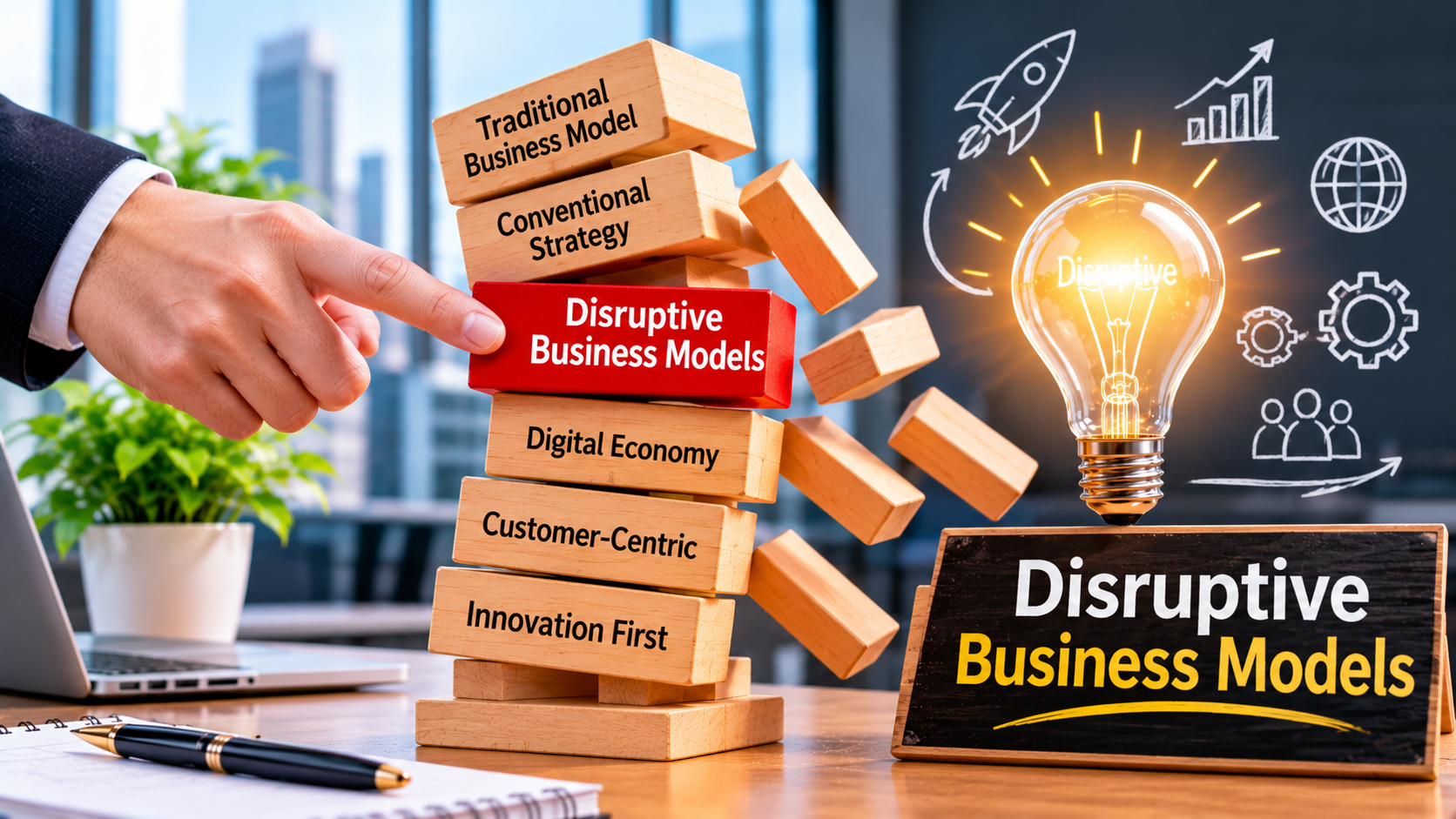
Modern industries are changing as technology, customer expectations, and competitive pressures influence how companies operate. Traditional organizations that once dominated their markets may face challenges from newer businesses offering convenient services, flexible pricing, and alternative ways to reach customers. These developments encourage companies to reconsider established practices and explore more effective operating strategies.
Innovation plays an important role in this transformation. Businesses are no longer required to depend entirely on conventional sales methods or physical distribution systems. Digital platforms, subscription services, and direct customer relationships have created opportunities for organizations of different sizes. Understanding these developments helps companies recognize market changes and prepare for future challenges.
Understanding Disruptive Business Models
A business model explains how an organization creates value, delivers products or services, and generates revenue. It includes customer relationships, distribution channels, operational processes, partnerships, and financial arrangements.
Disruptive Business Models introduce alternative approaches that challenge established industry practices. They often begin by addressing customer needs that traditional providers have overlooked. Instead of competing only through familiar methods, businesses may offer greater convenience, lower-cost alternatives, or improved access to products and services.
For example, online marketplaces allow customers to compare products from multiple sellers without visiting different stores. Subscription platforms provide ongoing access to entertainment, software, or educational resources through recurring payments. These approaches can gradually change customer expectations and influence how entire industries operate.
Why Traditional Industries Need New Approaches
Established businesses often develop procedures that have worked successfully for many years. However, customer preferences and market conditions do not remain constant. New technologies can make older processes expensive, slow, or less convenient.
Customers increasingly expect simple purchasing experiences, transparent pricing, responsive support, and flexible service options. Companies that fail to recognize these expectations may lose opportunities to competitors that provide more suitable solutions.
Reviewing existing operations helps organizations identify weaknesses and areas for improvement. Businesses can examine delivery systems, pricing structures, customer communication, and product accessibility. These evaluations make it easier to determine where changes could provide genuine value.
Adapting does not necessarily mean replacing every existing process. In many situations, combining established strengths with carefully selected improvements produces better results.
Major Types of Modern Business Models
Different industries use different operating structures according to their customers, products, and financial objectives. Several approaches have become increasingly common.
1. Subscription-Based Model
Customers pay recurring fees to access a product or service. Streaming platforms, software providers, and digital learning companies commonly use this structure. It can create predictable income while encouraging long-term customer relationships.
2. Marketplace Model
A digital platform connects buyers and sellers. The platform may earn revenue through transaction commissions, listing fees, or additional services. This approach can help smaller sellers reach customers without developing independent distribution networks.
3. Freemium Model
Businesses provide basic services at no cost while charging for advanced features. This strategy can attract a large user base and encourage customers to upgrade when they require additional functionality.
4. Direct-to-Consumer Model
Manufacturers and brands sell directly to customers instead of depending entirely on traditional retailers. Direct communication can help businesses understand customer preferences and manage the purchasing experience.
5. On-Demand Model
Customers request products or services whenever they need them. Delivery applications, transportation platforms, and online professional services frequently follow this approach.
How Disruptive Business Models Influence Different Industries
Innovation affects industries according to their specific requirements. Transportation companies have introduced digital platforms that connect passengers with service providers. Customers can compare options, arrange journeys, and complete payments through mobile applications.
Retail has also experienced significant changes. Online marketplaces allow customers to explore products from different sellers, compare prices, and arrange delivery. Small businesses can use these platforms to reach audiences beyond their immediate geographical locations.
In entertainment, streaming services have changed how people access films, television programs, and music. Instead of depending exclusively on traditional broadcasting schedules, customers can select content according to their preferences.
Financial services have expanded through digital banking, online payments, and mobile financial applications. These developments have made certain transactions more accessible while encouraging established institutions to improve their digital services.
Benefits for Businesses and Customers
Alternative operating strategies can provide several advantages when implemented responsibly. One important benefit is improved accessibility. Digital channels allow organizations to connect with customers who may not have convenient access to traditional physical outlets.
Customer convenience is another major advantage. Flexible payment options, simplified ordering, and responsive communication can improve the overall purchasing experience. Businesses that understand customer needs can develop services that encourage trust and repeat engagement.
Revenue diversification may also strengthen financial planning. Companies can explore subscriptions, service packages, licensing arrangements, and other income sources rather than relying on a single product category.
Operational efficiency is equally valuable. Automation and improved resource management can reduce repetitive tasks, support faster communication, and help employees concentrate on important responsibilities.
Challenges and Risks of Industry Disruption
Although innovation creates opportunities, introducing a different operating structure involves challenges. Financial investment is often necessary for technology, infrastructure, employee training, and marketing. Businesses should assess their available resources before committing to major changes.
Customer acceptance can also take time. People may hesitate to adopt unfamiliar services, particularly when they are comfortable with existing providers. Clear communication, reliable support, and practical demonstrations can help build confidence.
Competition is another important consideration. Successful ideas may attract similar businesses, reducing the advantage of an original offering. Organizations should continue improving their services instead of depending entirely on their initial achievements.
Data security, legal responsibilities, and service reliability must also remain priorities. Companies should protect customer information and follow applicable industry requirements.
Building a Sustainable Innovation Strategy
Developing an effective strategy begins with understanding the market. Organizations should research customer expectations, competitor activities, industry developments, and existing operational limitations.
The next step is identifying opportunities that match the company's resources and long-term objectives. Customer feedback and market research can help management determine which improvements are likely to provide meaningful benefits.
Testing ideas through smaller projects is a practical way to reduce uncertainty. Pilot programs allow businesses to evaluate customer responses, operating costs, and service performance before expanding an initiative.
Companies should also establish measurable goals. Revenue, profitability, customer retention, acquisition costs, and satisfaction levels can help management evaluate progress. A thoughtful approach to Disruptive Business Models allows organizations to adapt their operations while maintaining financial discipline and customer trust.
Frequently Asked Questions
1. What are Disruptive Business Models?
They are alternative ways of creating value, serving customers, and generating revenue that challenge established industry practices.
2. Why are disruptive approaches important for modern companies?
They help businesses respond to changing customer expectations, improve accessibility, explore new revenue opportunities, and remain competitive.
3. Can small businesses use innovative operating models?
Yes. Small businesses can introduce online sales, subscriptions, digital services, and direct customer relationships according to their budgets and objectives.
4. How does technology support industry disruption?
Technology enables digital platforms, automation, online transactions, data analysis, and convenient communication between businesses and customers.
5. How can companies manage the risks of introducing a new business model?
They should conduct market research, test ideas gradually, manage investment carefully, protect customer information, and monitor performance regularly.

 English
 Arabic
 French
 Spanish
 Portuguese
 Deutsch
 Turkish
 Dutch
 Russian
 Romaian
 Portuguese (Brazil)
 Greek
