

Business Model Innovation - Creating New Opportunities for Sustainable Growth
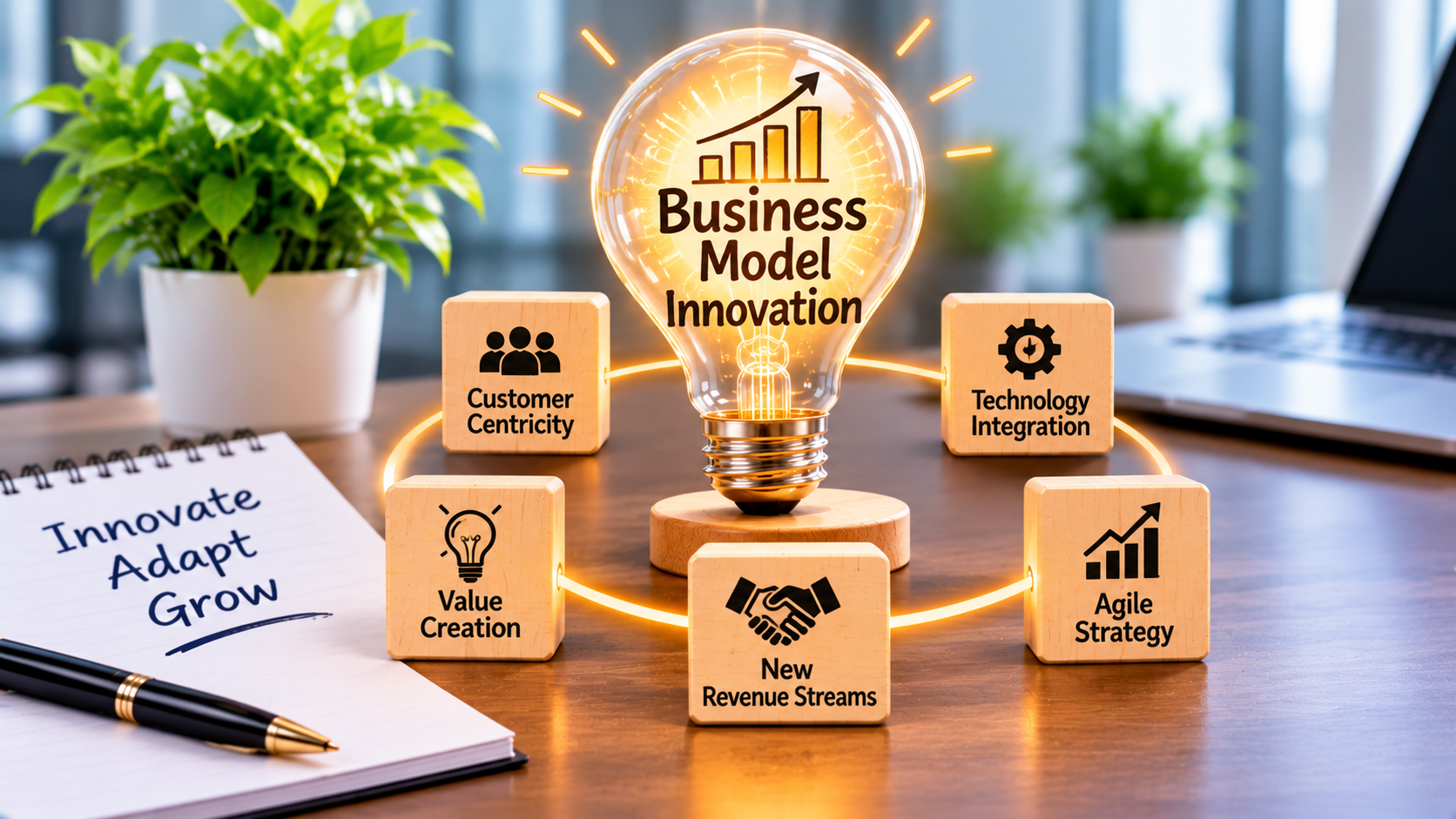
Modern businesses operate in an environment shaped by changing customer expectations, technological developments, and increasing competition. Companies that depend entirely on traditional operating methods may struggle to maintain their market position. To remain competitive, organizations need to review their strategies, understand customer requirements, and identify better ways to deliver value.
Innovation is not limited to developing new products or introducing advanced technology. It also involves improving how a company operates, serves customers, manages resources, and generates revenue. Businesses that regularly evaluate these areas can discover opportunities to improve performance and build stronger customer relationships.
Understanding Business Model Innovation
Every organization follows a structure that explains how it creates value, delivers products or services, and earns income. This structure includes customer segments, distribution channels, partnerships, operational activities, and revenue sources.
Business Model Innovation refers to changing or improving these elements to create a more effective approach to conducting business. Instead of concentrating only on product improvements, companies examine their overall operations to identify opportunities for better performance.
For example, a traditional retailer may introduce an online store to reach customers outside its local market. A professional service provider might offer monthly subscription packages instead of charging separately for every service. These changes can improve accessibility, provide greater convenience, and create additional income opportunities.
Why Businesses Need to Rethink Traditional Strategies
Market conditions rarely remain the same for extended periods. Consumer preferences, economic developments, emerging competitors, and digital technology can influence how people select products and services. Organizations that ignore these changes may gradually lose their competitive advantage.
Reviewing traditional operations helps management identify areas that require improvement. A company might discover that its delivery process is inefficient, its customer support system is outdated, or its pricing structure does not match audience expectations.
Adapting to these developments can help organizations remain relevant. Businesses that understand their customers can introduce practical solutions instead of simply following familiar industry practices.
A flexible strategy also makes long-term planning easier. Companies can evaluate new opportunities, adjust their operations, and respond to market challenges while maintaining their main business objectives.
Essential Elements of a Successful Business Structure
An effective business strategy depends on several interconnected components. Each element should contribute to the organization's overall direction.
1. Customer Value Proposition
A value proposition explains why customers should choose a particular business. Companies must understand the problems their audiences experience and provide solutions that offer meaningful benefits. Quality, convenience, affordability, and reliable support can all influence customer decisions.
2. Revenue Generation
Organizations should examine how they earn income and whether their existing revenue sources are sustainable. Product sales, subscriptions, licensing arrangements, service fees, and commissions are common options. The appropriate approach depends on the industry and customer preferences.
3. Distribution Channels
Customers need convenient ways to discover, purchase, and receive products or services. Websites, mobile applications, physical stores, distributors, and online marketplaces can help businesses reach different audiences.
4. Strategic Partnerships
Partnerships provide access to additional expertise, technology, suppliers, and distribution networks. Working with reliable organizations can strengthen business operations and reduce the need to develop every resource independently.
How Business Model Innovation Supports Business Growth
Organizations that reconsider their operating structures can discover opportunities that traditional methods may overlook. One important advantage is reaching new customer groups through alternative distribution channels. A local business, for instance, can use digital platforms to serve customers in different regions.
Revenue diversification is another potential benefit. Depending on one product or income source can create financial pressure when market demand changes. Introducing complementary services, membership programs, or recurring payment options may help companies develop additional revenue streams.
Operational efficiency can also improve through better planning and resource management. Automation, improved communication systems, and organized workflows can reduce unnecessary expenses. These improvements allow employees to concentrate on activities that require greater attention and expertise.
However, sustainable growth should not be measured through revenue alone. Customer satisfaction, retention, service quality, and profitability are equally important indicators of business performance.
The Role of Technology in Modern Business Development
Digital technology has become an important part of business operations. Companies use software, online platforms, and data systems to manage information, communicate with customers, and improve daily activities.
Cloud-based applications allow employees to access information and collaborate from different locations. Customer relationship management systems help organizations maintain customer records, monitor communication, and understand service requirements.
Data analytics provides useful insights into purchasing patterns and customer preferences. Businesses can use this information to improve marketing campaigns, evaluate product performance, and make more informed decisions.
Artificial intelligence is also creating opportunities through automated customer assistance, information analysis, and personalized recommendations. However, technology should address a clearly identified business requirement. Investing in tools without understanding their purpose may increase expenses without producing meaningful improvements.
Common Challenges During Business Transformation
Introducing a new operating approach requires planning, investment, and cooperation. Financial limitations can be a significant challenge, particularly for smaller organizations. Developing digital systems, upgrading infrastructure, and hiring qualified employees may require considerable resources.
Employee resistance can also affect implementation. Staff members may feel uncertain when familiar responsibilities or procedures change. Clear communication, practical training, and employee participation can make the transition more manageable.
Customer acceptance is another important consideration. People may hesitate to adopt unfamiliar services unless the advantages are clear. Businesses should gather feedback, test new ideas, and improve their offerings before expanding them.
Organizations must also consider competition, regulatory responsibilities, data protection, and service reliability. Careful preparation helps management reduce risks and maintain customer confidence.
Practical Steps for Developing a Sustainable Strategy
A successful improvement plan begins with evaluating the existing business structure. Management should review customer needs, revenue sources, operating expenses, distribution methods, and competitor activities.
The next step is identifying realistic opportunities. Market research, customer feedback, employee suggestions, and performance reports can reveal areas where improvements may create value.
Businesses should then test suitable ideas through smaller projects. Pilot programs help organizations understand customer responses, estimate costs, and evaluate operational results before making larger investments.
Setting measurable objectives is equally important. Companies can monitor revenue, profitability, customer retention, acquisition costs, and satisfaction levels to understand whether their strategies are producing positive outcomes.
A consistent commitment to Business Model Innovation encourages organizations to review performance and adjust their plans as market conditions evolve. Long-term success depends on balancing creative thinking with financial discipline, reliable operations, and genuine customer value.
Frequently Asked Questions
1. What does business model innovation mean?
It means changing or improving how an organization creates value, serves customers, manages resources, and generates revenue.
2. Why is an innovative business strategy important?
It helps companies respond to changing market conditions, improve efficiency, strengthen customer relationships, and explore additional revenue opportunities.
3. What are common examples of innovative business structures?
Subscription services, digital marketplaces, direct-to-consumer sales, freemium platforms, and on-demand services are common examples.
4. How does technology support business development?
Technology improves communication, automates repetitive tasks, supports data analysis, and helps companies deliver more convenient customer experiences.
5. How can a business measure the success of a new strategy?
Businesses can evaluate revenue, profitability, customer retention, operating expenses, customer feedback, and overall service quality.

 English
 Arabic
 French
 Spanish
 Portuguese
 Deutsch
 Turkish
 Dutch
 Italiano
 Russian
 Romaian
 Portuguese (Brazil)
