

Financial Advisor Certification: Build Your Knowledge for a Career in Financial Advice
Financial advice plays an important role in helping individuals make informed decisions about their money, investments, savings, and long-term financial goals. As financial products and regulations become more complex, aspiring advisers need a strong understanding of financial planning, investment risk, taxation, and professional conduct.
A financial advisor certification can help learners develop foundational knowledge across these important areas. It provides a structured way to explore how financial advisers assess client needs, understand financial products, consider investment risks, and work within professional and regulatory expectations.
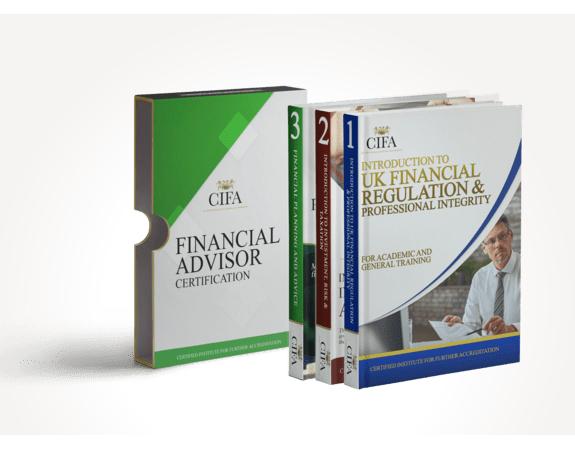
CIFA's Financial Advisor Certification (FAC) is designed for individuals who want to develop their understanding of the UK financial services industry. The programme combines three specialist courses covering financial planning and advice, UK financial regulation and professional integrity, and investment risk and taxation.
For aspiring advisers, finance graduates, banking professionals, and career changers, the programme offers an opportunity to build knowledge relevant to financial advisory work.
Why Financial Advisor Knowledge Is Important
Financial advisers work in an environment where clients may have different financial circumstances, priorities, and expectations. Some may want to plan for retirement, while others may be interested in investments, savings, or managing their financial commitments.
Providing appropriate financial guidance requires more than understanding financial products. Professionals must also appreciate the importance of client objectives, risk tolerance, regulatory requirements, and ethical responsibilities.
Financial advisory knowledge can help learners understand how to:
-
Review an individual's financial circumstances.
-
Recognise different financial goals and priorities.
-
Understand investment products and their associated risks.
-
Consider taxation when evaluating financial decisions.
-
Understand the UK financial regulatory environment.
-
Communicate financial information clearly.
-
Recognise the importance of ethical and professional conduct.
These areas form an important foundation for anyone interested in developing knowledge of financial planning and advisory services.
What Is the CIFA Financial Advisor Certification (FAC)?
The Financial Advisor Certification (FAC) is a digital learning bundle offered by CIFA. It brings together three courses that address different aspects of financial advisory knowledge.
The programme is structured around the following areas:
-
Financial Planning and Advice.
-
Introduction to UK Financial Regulation and Professional Integrity.
-
Introduction to Investment, Risk and Taxation.
Together, these subjects introduce learners to financial planning, regulatory awareness, investment risk, and the responsibilities associated with professional financial advice.
According to the CIFA programme page, the bundle includes 452 hours of study time and three courses. It is listed at Instructor Level 4 and is available as a digital product.
The Three Main Areas of the Financial Advisor Certification
1. Financial Planning and Advice
Financial planning is one of the central responsibilities associated with advisory services. It involves understanding a client's financial position, identifying objectives, and considering suitable approaches to achieving those objectives.
A financial plan may involve savings, investments, retirement preparation, budgeting, or longer-term wealth management.
This part of the programme introduces important financial planning concepts, including:
Financial goal setting: Understanding how individuals establish short-term, medium-term, and long-term financial objectives.
Budgeting: Recognising how income, expenditure, savings, and financial commitments influence an individual's financial position.
Retirement planning: Exploring the importance of preparing for future financial needs and considering retirement-related financial decisions.
Investment portfolio construction: Understanding how different investments may be combined and how portfolio decisions relate to objectives and risk tolerance.
Client assessment: Learning why financial advisers need to consider individual circumstances before discussing financial solutions.
The ability to understand financial objectives is essential because financial decisions should reflect the needs and circumstances of the individual rather than follow a single approach for everyone.
2. Introduction to UK Financial Regulation and Professional Integrity
Financial services operate within a regulatory environment designed to support market integrity, consumer protection, and responsible professional conduct.
Anyone interested in financial advisory work should understand why regulations exist and how professional standards influence interactions with clients.
This part of the FAC programme introduces the UK financial regulatory framework, including the role of the Financial Conduct Authority (FCA).
Key areas include:
-
The structure of UK financial regulation.
-
The responsibilities of regulatory bodies.
-
Compliance expectations within financial services.
-
Ethical behaviour and professional integrity.
-
The importance of transparency in client relationships.
-
Professional responsibilities when dealing with financial information.
Professional integrity is particularly important in financial advice because clients rely on accurate information and responsible communication when considering financial decisions.
Understanding regulatory expectations can also help learners appreciate why advisers must work within applicable requirements and recognise the limits of their professional authority.
3. Introduction to Investment, Risk and Taxation
Investment decisions involve uncertainty. Different financial products carry different levels and types of risk, and the potential return from an investment should always be considered alongside the possibility of loss.
This programme component introduces learners to investment risk management and taxation principles.
Important areas include:
Market risk: Understanding how changes in market conditions can affect investment values.
Credit risk: Recognising the possibility that a borrower or issuer may fail to meet financial obligations.
Liquidity risk: Understanding the challenges that may arise when an investment cannot be sold quickly without affecting its value.
Risk assessment: Exploring why investment risks should be considered in relation to financial objectives and individual circumstances.
Taxation principles: Developing an understanding of how taxation can influence investment and financial planning decisions.
Tax-efficient strategies: Learning why tax considerations may form part of broader financial planning discussions.
A sound understanding of investment risk and taxation helps learners appreciate that financial decisions involve several connected considerations. Potential returns, personal objectives, risk tolerance, and tax implications all matter.
Who Should Consider a Financial Advisor Certification?
Financial advisory knowledge can be useful for people entering financial services as well as professionals who want to broaden their understanding of the industry.
Aspiring Financial Advisers
Individuals interested in becoming financial advisers can use structured learning to explore financial planning, investment risk, regulation, and professional responsibilities.
Finance Graduates
Graduates who want to develop specialist knowledge beyond general academic study may benefit from learning about practical financial advisory concepts.
Banking and Investment Professionals
People working in banking, investment-related services, or financial operations may find the programme useful for strengthening their understanding of financial planning and advisory topics.
Financial Planners and Consultants
Professionals already involved in financial planning or consulting may use the course to review important areas such as taxation, investment risk, and regulatory awareness.
Career Changers
Individuals considering a move into financial services can use the programme to explore the knowledge areas associated with financial advisory work before deciding on further professional development.
Regulatory and Compliance Professionals
People working in compliance-related roles may benefit from understanding how regulation, professional integrity, investment risk, and financial advice connect within the financial services environment.
How Financial Advisers Use Risk Management in Practice
Risk management is an important part of responsible financial planning. Clients may have different attitudes towards risk depending on their age, financial commitments, investment experience, and long-term objectives.
For example, an individual saving for a goal in the near future may have different investment considerations from someone planning for retirement several decades away.
Financial advisers need to understand the relationship between risk and potential return. They also need to appreciate why investment decisions should reflect the client's circumstances and objectives.
Risk management knowledge can support understanding of:
-
Diversification and portfolio balance.
-
Market movements and investment volatility.
-
Credit and liquidity considerations.
-
The relationship between risk and potential returns.
-
Individual risk tolerance.
-
The importance of reviewing financial objectives.
The FAC programme introduces these concepts as part of its wider focus on investment and financial planning.
The Role of Ethics and Professional Integrity in Financial Advice
Trust is central to financial advisory relationships. Clients may share personal financial information and rely on professionals to explain complex matters clearly.
Ethical conduct helps maintain confidence in these relationships. Advisers should recognise the importance of honesty, transparency, confidentiality, and responsible communication.
Professional integrity also involves understanding potential conflicts of interest and recognising when further guidance or specialist support may be required.
Some important professional principles include:
Transparency: Providing clear and understandable information.
Honesty: Communicating financial matters accurately without misleading clients.
Confidentiality: Handling client information responsibly.
Accountability: Recognising professional responsibilities and the consequences of decisions.
Client-focused conduct: Taking account of client circumstances and objectives.
These principles are important throughout financial services and form a valuable part of professional development.
Why Choose CIFA's Financial Advisor Certification?
When selecting a financial advisory programme, learners should consider the course structure, learning format, subject coverage, assessment arrangements, and certification details.
CIFA's FAC bundle combines three courses into one structured digital programme.
Its main features include:
-
Three specialist courses: Financial Planning and Advice, UK Financial Regulation and Professional Integrity, and Investment, Risk and Taxation.
-
452 hours of study time: The total duration listed on the official bundle page.
-
Instructor Level 4: The programme is listed at this level on CIFA's website.
-
Digital learning: Course materials are provided through an online learning format.
-
Assessment: Learners complete the required examinations.
-
Digital certificate: A digital certificate is issued after successfully passing the required proctored examinations.
-
Digital profile: CIFA provides access to a digital profile.
The programme is designed to bring together several knowledge areas that are relevant to financial advisory development. Rather than focusing on one subject alone, it introduces learners to financial planning, regulation, investment risk, and taxation.
How to Prepare for Your Financial Advisor Certification
A structured study approach can make it easier to understand the different subjects within the programme.
Start with Financial Planning Fundamentals
Begin by understanding how financial goals, budgets, savings, investments, and retirement planning connect. These concepts provide useful context for the rest of the programme.
Build Your Regulatory Knowledge
Study the purpose of financial regulation and the importance of professional conduct. Pay attention to the responsibilities of regulatory bodies and the role of ethical standards in client relationships.
Understand Different Investment Risks
Learn how market, credit, and liquidity risks differ. Consider why investment risk should be assessed in relation to an individual's objectives and circumstances.
Review Taxation Concepts
Focus on understanding how taxation can influence financial planning and investment decisions. Build familiarity with the principles before moving towards more complex applications.
Use Practice Assessments
Mock examinations and revision exercises can help identify topics that need additional attention. Regular practice can also improve confidence when preparing for formal assessments.
Connect the Subjects
Financial planning, regulation, risk, and taxation are closely related. Try to understand how they influence one another rather than treating each topic as completely separate.
Career Development After Financial Advisory Training
Developing financial advisory knowledge can support professional growth and help learners understand the different areas of the financial services sector.
Depending on additional qualifications, experience, employer requirements, and applicable regulatory conditions, relevant career pathways may include:
-
Financial planning support.
-
Wealth management support.
-
Investment administration.
-
Banking and financial services operations.
-
Financial consultancy support.
-
Compliance and regulatory support.
-
Client relationship support.
It is important to understand that completing the FAC programme does not automatically provide authorisation to give regulated financial advice in the UK. Individuals seeking to perform regulated activities must meet the relevant qualification, competence, employer, and regulatory requirements.
The programme can provide structured knowledge, but learners should consider the additional steps required for their intended professional role.
Conclusion: Take a Structured Step Towards Financial Advisory Knowledge
Financial advisory work brings together financial planning, investment understanding, taxation, regulation, and professional ethics. Developing knowledge across these areas can help individuals understand the responsibilities and considerations involved in financial advice.
CIFA's Financial Advisor Certification (FAC) combines three specialist courses into a digital programme covering financial planning and advice, UK financial regulation and professional integrity, and investment risk and taxation.
With 452 hours of listed study time, Instructor Level 4 classification, and a structured assessment process, the programme offers an opportunity to develop a broad foundation in financial advisory subjects.
Whether you are a finance graduate, aspiring adviser, banking professional, or career changer, a financial advisor certification can be a useful step in exploring the knowledge required for a future in financial services.
Frequently Asked Questions
1. What is a financial advisor certification?
A financial advisor certification is a structured learning or assessment programme that develops knowledge relevant to financial planning, investment products, risk management, taxation, regulation, and professional conduct.
2. What does the CIFA Financial Advisor Certification include?
The FAC bundle includes three courses: Financial Planning and Advice, Introduction to UK Financial Regulation and Professional Integrity, and Introduction to Investment, Risk and Taxation.
3. How long is the CIFA Financial Advisor Certification programme?
CIFA lists 452 hours of total study time for the FAC bundle, which contains three courses.
4. Who should enrol in the Financial Advisor Certification?
The programme may suit aspiring financial advisers, finance graduates, banking and investment professionals, financial planners, consultants, career changers, and regulatory compliance professionals.
5. What topics are covered in financial advisor training?
Common subjects include financial planning, budgeting, retirement planning, investment risk, taxation, UK financial regulation, compliance, professional integrity, and client communication.
6. Is the CIFA Financial Advisor Certification available online?
Yes. The FAC programme is listed as a digital product on CIFA's website, providing an online learning format.
7. Does the FAC certification allow me to provide regulated financial advice in the UK?
Completing the programme does not automatically authorise an individual to provide regulated financial advice. Specific roles and activities may require additional qualifications, competence assessments, employer approval, and regulatory authorisation.
8. Do learners receive a certificate after completing the FAC programme?
CIFA states that learners receive a digital certificate after successfully passing the required examinations, which are proctored.

 English
 French
 Spanish
 Portuguese
 Deutsch
 Turkish
 Dutch
 Italiano
 Russian
 Romaian
 Portuguese (Brazil)
 Greek
