

What Lighting Systems Are Recommended for Andrology Room Setup Services?
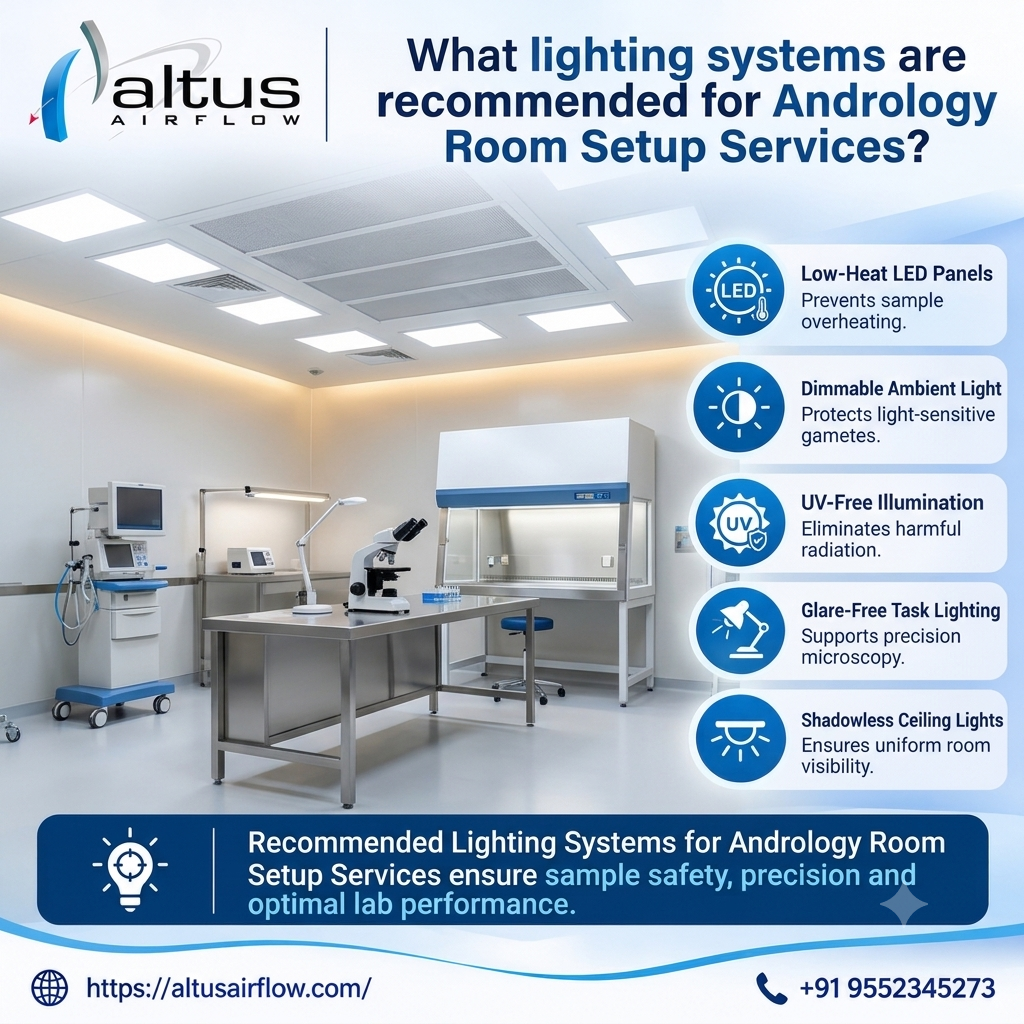
Introduction
Altus Airflow focuses on developing specialised laboratory environments that support accuracy, hygiene, and efficient reproductive healthcare workflows. Andrology Room Setup Services involve selecting lighting systems that provide clear visibility, comfortable working conditions, and reliable illumination for laboratory procedures. Recommended options include LED panel lights, adjustable task lighting, microscope-compatible illumination, and emergency lighting. Each system should be selected according to the room's activities, equipment requirements, and applicable safety standards. Proper lighting design also considers glare reduction, colour rendering, energy efficiency, and ease of maintenance.
1. Understanding Lighting Requirements in an Andrology Room
An andrology room requires carefully planned illumination because different activities demand different lighting conditions. Laboratory staff may perform sample preparation, semen analysis, microscopic examination, documentation, equipment operation, and cleaning. Each task needs sufficient visibility without creating unnecessary glare or visual discomfort.
General room lighting should provide consistent illumination across work areas. Task lighting can offer additional brightness for detailed activities, while specialised microscope illumination should be selected according to the microscope and examination method.
Lighting requirements should be identified during the laboratory planning stage. The layout, ceiling height, workbench positions, equipment locations, and natural light sources all influence fixture selection.
A lighting plan should also consider maintenance access and electrical safety. Fixtures must be suitable for the room's operating environment and should not interfere with ventilation outlets, ceiling services, or laboratory equipment.
2. LED Panel Lighting for General Illumination
LED panel lights are a practical choice for general illumination in modern andrology laboratories. They provide broad, relatively uniform light distribution and can be integrated into modular ceiling systems.
Compared with many conventional lighting technologies, LED panels can offer lower energy consumption and longer operating life. This can reduce electricity use and the frequency of fixture replacement when suitable products are selected and maintained correctly.
LED panels are available in different sizes, colour temperatures, and output levels. The appropriate specification should be based on the room's dimensions, ceiling arrangement, work requirements, and lighting calculations.
Diffused LED panels can help reduce harsh brightness and uneven illumination. Their positioning should avoid reflections on glossy work surfaces and computer screens.
A well-planned general lighting system supports routine laboratory activities while maintaining a comfortable visual environment for staff.
3. Adjustable Task Lighting for Detailed Laboratory Work
Some laboratory activities require more focused illumination than general ceiling lights can provide. Adjustable task lights can help staff direct light towards specific work areas during detailed procedures.
These lights may be installed near laboratory benches, sample preparation stations, or documentation areas. Flexible arms or adjustable heads allow users to change the direction of illumination according to the task.
Task lighting should provide adequate brightness without creating excessive shadows or reflections. It should also be positioned so that it does not obstruct instruments, work surfaces, or staff movement.
An important consideration is ease of cleaning. Fixtures used near laboratory workstations should have suitable finishes and designs that allow routine cleaning according to the facility's hygiene procedures.
Task lighting should complement general room illumination rather than replace it. This combination can support different activities within the same laboratory.
4. Microscope-Compatible Lighting Systems
Microscopic examination is a key activity in many andrology laboratories. The microscope's illumination system must provide consistent light suitable for the instrument and the examination method.
Many modern microscopes use integrated LED illumination. These systems can offer stable output, adjustable intensity, and lower heat generation compared with some older illumination technologies.
The required lighting configuration depends on the microscope type and its optical design. Bright-field examination, phase-contrast microscopy, and other techniques may require different illumination arrangements.
External room lighting should also be considered. Direct reflections or excessive ambient brightness can affect visual comfort during microscope use. However, room lighting should not be reduced to a level that creates unsafe working conditions.
Microscope lighting should be selected in consultation with laboratory specialists and equipment manufacturers to ensure compatibility with the intended applications.
5. Selecting the Right Colour Temperature
Colour temperature influences how laboratory lighting appears to the human eye. It is measured in Kelvin (K) and is commonly described using terms such as warm white, neutral white, and cool white.
For laboratory environments, neutral or cool-white lighting is often considered because it provides a clear working appearance. However, the most suitable colour temperature depends on staff preferences, visual tasks, equipment requirements, and the overall lighting design.
Consistent colour temperature across the room can help avoid noticeable differences between work areas. Sudden changes in light appearance may affect visual comfort, particularly when staff move between different laboratory stations.
The lighting designer should also consider colour rendering. A suitable Colour Rendering Index (CRI) helps objects and materials appear more natural under artificial light.
The selected specification should support the laboratory's work without introducing unnecessary brightness or visual fatigue.
6. Glare-Free Lighting for Visual Comfort
Glare can make detailed laboratory activities uncomfortable and may affect a person's ability to view instruments, screens, and work surfaces clearly.
It can occur when a light source is too bright, poorly positioned, or reflected from glossy surfaces. Large windows, polished countertops, computer monitors, and microscope components may all contribute to unwanted reflections.
Glare can be reduced through diffused lighting, suitable fixture positioning, appropriate ceiling layouts, and careful selection of work-surface finishes.
Lighting should be arranged so that staff do not look directly into exposed high-intensity light sources while performing routine tasks. Adjustable blinds or other suitable daylight-control measures may also help where natural light is present.
An effective lighting design balances illumination levels with visual comfort rather than simply increasing brightness.
7. Dimmable Lighting and Zoned Controls
Different laboratory activities may require different illumination levels. Dimmable lighting allows staff to adjust brightness according to the task, provided the selected fixtures and control systems are compatible.
For example, general room illumination may be maintained during routine preparation and cleaning, while a specific workstation may require focused task lighting. Microscope examination may have its own instrument-level illumination controls.
Lighting zones can separate work areas, storage spaces, circulation routes, and equipment locations. This gives staff greater control and may reduce unnecessary energy consumption in areas that are not being used.
Control switches should be clearly labelled and positioned conveniently. Automated controls may also be considered where suitable, but they should not cause unexpected changes during sensitive laboratory activities.
The control strategy should be simple enough for staff to operate consistently.
8. Emergency and Backup Lighting
Emergency lighting is an important safety feature in healthcare and laboratory environments. If the normal electrical supply fails, designated emergency fixtures can help maintain visibility for safe movement and essential response activities.
The emergency lighting arrangement should follow applicable building and electrical safety requirements. It may include illuminated exit signs, emergency corridor lights, and suitable backup illumination for designated areas.
The need for backup lighting within the laboratory should be evaluated according to the room's activities and hospital emergency procedures. Critical laboratory equipment may also require an appropriate backup power arrangement, but emergency lighting and equipment backup are separate design considerations.
Emergency fixtures should be tested and maintained according to the manufacturer's recommendations and applicable regulations. Staff should understand the procedures to follow during a power interruption.
9. Lighting for Sample Preparation and Workbench Areas
Sample preparation areas require clear and consistent illumination so that laboratory personnel can carry out routine work accurately and comfortably.
Lighting should cover the full working surface without creating strong shadows from shelves, cabinets, or equipment. Under-cabinet LED fixtures may be considered where overhead lighting does not adequately illuminate the workbench.
The fixtures should be positioned to avoid reflections on containers, glassware, and other laboratory materials. Their installation should also account for cleaning access and the electrical requirements of the equipment nearby.
Lighting levels should be determined through a project-specific assessment. The objective is to provide appropriate visibility for the tasks being performed without excessive brightness.
10. Integrating Lighting with Modular Ceiling Systems
Modular laboratory ceilings can accommodate lighting fixtures alongside ventilation outlets, access panels, and other building services. Proper coordination is important to avoid conflicts between these components.
LED panels and selected recessed fixtures can be integrated into compatible ceiling systems. Their dimensions, mounting arrangements, electrical connections, and maintenance access should be reviewed before installation.
Lighting placement must also account for the room's airflow design. Fixtures should not obstruct ventilation outlets or interfere with the intended air distribution.
A coordinated ceiling plan can make the laboratory easier to maintain and help create a consistent interior appearance. It also reduces the likelihood of modifications being required after installation.
Andrology Room Setup Services should consider lighting as part of the complete room design rather than treating it as an isolated electrical requirement.
11. Energy-Efficient Lighting and Sustainability
Energy efficiency is an important consideration when selecting laboratory lighting. Since some laboratory areas may remain operational for extended periods, efficient fixtures can help manage electricity consumption.
LED technology is widely used because it can provide good illumination with relatively low energy demand. Occupancy sensors, daylight controls, and lighting zones may further reduce unnecessary use where appropriate.
Long-lasting fixtures can also reduce replacement frequency and maintenance requirements. However, energy efficiency should not come at the expense of required visibility, emergency preparedness, or laboratory workflow.
A lighting plan should evaluate fixture performance, power consumption, expected operating hours, maintenance needs, and compatibility with the room's electrical infrastructure.
12. Electrical Safety and Fixture Maintenance
Lighting installations must comply with applicable electrical safety requirements. Wiring, switches, drivers, control units, and distribution arrangements should be selected and installed by qualified professionals.
Fixtures should be appropriate for the laboratory environment and positioned away from locations where they could interfere with equipment operation or routine cleaning. Any special environmental or protection requirements should be assessed during design.
Preventive maintenance should include checking fixture operation, cleaning accessible surfaces, inspecting connections where appropriate, and replacing faulty components. Dimming systems and emergency lighting should also be tested according to their specifications.
A maintenance record helps the facility track inspections, repairs, and replacement activities. This supports reliable illumination throughout the laboratory's operational life.
13. Planning Lighting According to Laboratory Workflow
A successful lighting arrangement begins with understanding how staff use the room. The project team should identify the locations of sample preparation benches, microscopes, storage units, computers, cleaning stations, and circulation areas.
Lighting should be coordinated with these activities so that staff have appropriate visibility at each workstation. Fixtures should not create shadows over essential work surfaces or interfere with the placement of instruments.
The design should also consider future equipment changes. Flexible lighting arrangements and accessible electrical connections can make selected modifications easier when the laboratory's workflow evolves.
Staff consultation during planning can help identify practical concerns that may not be obvious from architectural drawings alone.
14. Choosing a Suitable Laboratory Setup Partner
Selecting an experienced project partner helps ensure that lighting is integrated with the laboratory's wider infrastructure. The team should understand the relationship between lighting, electrical distribution, modular ceilings, ventilation, equipment placement, and cleaning requirements.
The project process should include site assessment, lighting layout preparation, fixture selection, electrical coordination, installation, and final inspection.
Hospitals should review product specifications, warranties, maintenance arrangements, and compliance documentation before approving the lighting system. Coordination with laboratory users and equipment suppliers is also important.
Andrology Room Setup Services should deliver a complete and practical lighting arrangement that supports daily laboratory activities while meeting the facility's safety and operational requirements.
Conclusion
The recommended lighting systems for an andrology room include LED panel lights, adjustable task lighting, microscope-compatible illumination, dimmable fixtures, and emergency lighting. Their selection should be based on laboratory activities, visual comfort, equipment compatibility, energy efficiency, and electrical safety.
Andrology Room Setup Services should integrate lighting with the room's ceiling, ventilation, workbench, and utility layouts to create a consistent and maintainable environment. Altus Airflow focuses on specialised laboratory infrastructure and coordinated planning for functional healthcare spaces. By considering lighting requirements during the initial design stage, Altus Airflow can support laboratories in developing efficient environments that provide suitable illumination for routine and specialised work.
Frequently Asked Questions
1. What lighting systems are recommended for Andrology Room Setup Services?
Andrology Room Setup Services commonly include LED panel lighting, adjustable task lights, microscope-compatible illumination, dimmable fixtures, and emergency lighting.
2. Why are LED lights suitable for andrology laboratories?
LED lights provide efficient illumination, can have a long operating life, and are available in different colour temperatures and configurations.
3. Is special lighting required for microscope examination?
Yes. Microscopes should have compatible illumination systems selected according to the instrument and examination method.
4. What colour temperature is suitable for an andrology room?
Neutral or cool-white lighting may be suitable, but the final selection should consider laboratory tasks and staff visual comfort.
5. Why is glare control important in a laboratory?
Glare reduction improves visual comfort and helps staff view work surfaces, instruments, and screens more clearly.
Read Our Previous Blog ---------------> How does a Modular Cardiac OT Engineering Company support healthcare infrastructure development?

 English
 Arabic
 French
 Spanish
 Portuguese
 Deutsch
 Turkish
 Italiano
 Russian
 Romaian
 Portuguese (Brazil)
 Greek
