

Does Chemical Peel Treatment Help Remove Acne Scars?
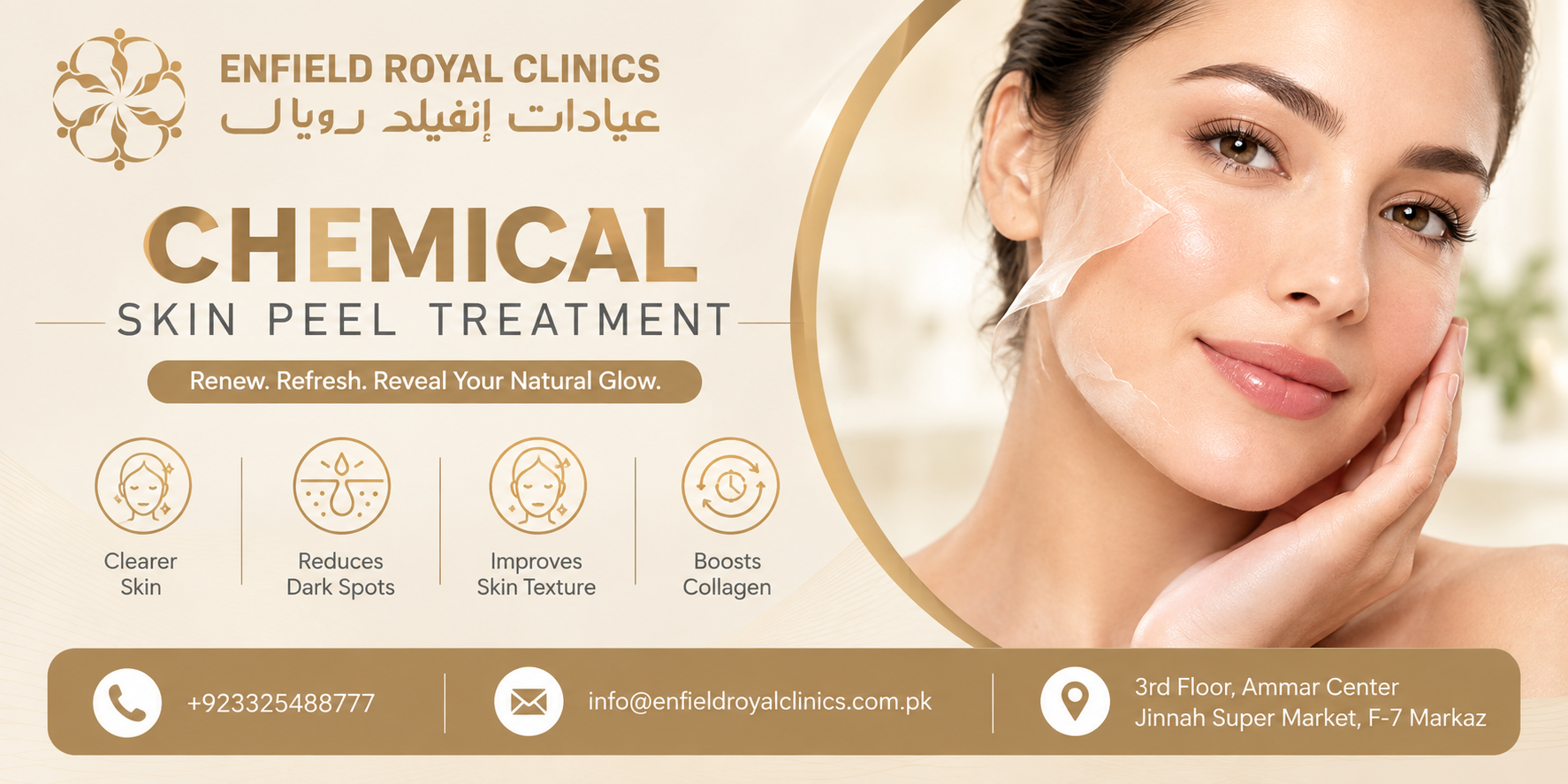
Acne is one of the most common skin concerns affecting teenagers and adults. Although breakouts may disappear over time, they can leave behind dark spots, uneven skin tone, and permanent scars. These marks can affect the skin's overall appearance and make the complexion look uneven. Many people try different skincare products to improve these concerns, but deeper acne scars may require professional skin treatments.
Chemical peel treatment is a popular non-surgical option for improving acne-related skin concerns. It uses specially formulated chemical solutions to exfoliate damaged outer skin cells, encourage skin renewal, and improve skin texture. Depending on the type and strength of the peel, it may help reduce the appearance of superficial acne scars, dark spots, and post-acne marks.
People considering Chemical peel treatment in Islamabad often want to know whether this procedure can completely remove acne scars or simply make them less noticeable. The results depend on the type of scarring, skin condition, and chemical formulation used. Understanding how the treatment works can help individuals decide whether it is the right option for their skincare goals.
1. How Does Chemical Peel Treatment Help With Acne Scars?
Chemical peel treatment works by applying a controlled chemical solution to the skin. The solution exfoliates damaged outer cells and encourages the skin's natural renewal process.
Acne can leave behind different types of marks. Some are caused by excess pigmentation after inflammation, while others involve changes in the skin's structure. Chemical peels are generally more effective for superficial marks and selected mild textural irregularities than for deep scars.
The treatment may help in several ways:
-
Removes accumulated dead skin cells.
-
Improves uneven skin texture.
-
Reduces the appearance of superficial acne marks.
-
Helps fade certain dark spots left by breakouts.
-
Encourages the development of fresher skin cells.
-
Improves overall skin brightness and smoothness.
Some medium-depth peels may also stimulate skin repair processes that support collagen formation. This can contribute to improvements in certain superficial textural irregularities.
However, chemical peels cannot guarantee complete removal of permanent acne scars. Their effectiveness depends on the depth and type of scarring.
2. Which Types of Acne Scars Can Chemical Peels Improve?
Not all acne scars look the same, and different types respond differently to chemical peel treatment. Identifying the type of scarring is an important step before selecting a suitable procedure.
Post-Acne Dark Spots
Dark spots often develop after acne inflammation. These marks are caused by increased pigmentation rather than permanent changes in skin structure. Chemical peels may help improve their appearance by removing pigmented surface cells and encouraging skin renewal.
Mild Atrophic Scars
Atrophic scars are depressed areas that develop when the skin loses collagen during the healing process. Certain superficial or medium-depth chemical peels may improve mild textural irregularities, although deeper depressions usually require additional treatments.
Uneven Skin Texture
Some people experience roughness and minor irregularities after repeated breakouts. Chemical exfoliation may help smooth the skin's surface and improve its overall appearance.
Superficial Acne Marks
These marks may include mild discoloration and shallow imperfections. Chemical peels can help make them less noticeable by improving skin tone and surface texture.
Deep ice-pick scars, rolling scars, and pronounced boxcar scars generally do not respond sufficiently to chemical peels alone. Other procedures, such as microneedling, subcision, or fractional laser resurfacing, may be considered depending on the scar type.
3. Which Chemical Peels Are Commonly Used for Acne Scars?
Different chemical peel ingredients target different skin concerns. The appropriate formulation depends on the individual's skin type, acne history, pigmentation, and severity of scarring.
Some commonly used chemical peels include:
Salicylic Acid Peel
Salicylic acid is a beta-hydroxy acid that can penetrate oily pores. It is commonly used for acne-prone skin because it helps remove excess oil, dead skin cells, and pore buildup. It may also improve the appearance of post-acne marks.
Glycolic Acid Peel
Glycolic acid belongs to the alpha-hydroxy acid family. It helps exfoliate the outer skin layer and may improve superficial acne marks, dullness, uneven texture, and mild pigmentation.
Lactic Acid Peel
Lactic acid is a gentler exfoliating option that may help improve mild discoloration and rough skin texture. It can be considered for selected individuals who need a less aggressive exfoliation approach.
Mandelic Acid Peel
Mandelic acid has a larger molecular structure than glycolic acid, which generally allows slower penetration. It may be considered for selected acne-prone and pigmentation-prone skin types.
TCA Peel
Trichloroacetic acid is used in different concentrations for medium-depth peeling. It may help improve selected textural concerns and certain acne scars. However, stronger TCA treatments require careful assessment because they carry a greater risk of complications.
A stronger chemical peel is not automatically a better option. The correct formulation and treatment depth are more important for achieving safe and appropriate results.
4. What Happens During a Chemical Peel Treatment Session?
Understanding the treatment process can help individuals feel more prepared before their appointment. Chemical peel treatment generally involves several steps.
Skin Evaluation: The process begins with an assessment of acne scars, skin type, pigmentation, sensitivity, and medical history. This helps determine whether a chemical peel is appropriate.
Skin Cleansing: The treatment area is thoroughly cleaned to remove oil, dirt, makeup, and other impurities.
Chemical Solution Application: The selected peel is carefully applied to the targeted skin area. The concentration and application time depend on the treatment plan.
Removal or Neutralisation: Depending on the chemical formulation, the solution is either neutralised or removed according to the product's instructions.
Post-Treatment Care: A suitable moisturiser and sunscreen are recommended to protect the skin and support recovery.
Some individuals experience mild tingling, warmth, or temporary stinging during treatment. Redness, dryness, and peeling may develop afterward, depending on the peel's depth.
5. How Many Sessions Are Needed to Improve Acne Scars?
The number of chemical peel sessions depends on the severity of acne marks, skin condition, and type of peel used. Some individuals notice improvements after a single superficial treatment, while others need multiple sessions to achieve their desired results.
For mild acne marks and uneven pigmentation, a series of superficial peels may gradually improve the complexion. More noticeable textural concerns may require a longer treatment plan or additional procedures.
Several factors influence the results:
-
Type and depth of acne scars.
-
Chemical ingredients and concentration.
-
Natural skin healing ability.
-
Existing pigmentation concerns.
-
Consistency with recommended aftercare.
-
Spacing between treatment sessions.
Treatments should be scheduled with sufficient recovery time between sessions. Repeating chemical peels too frequently can damage the skin barrier and increase irritation or pigmentation risks.
It is also important to control active acne before focusing on permanent scarring. New breakouts can continue to produce additional marks and scars.
6. What Are the Possible Side Effects and Recovery Requirements?
Chemical peel treatment is generally well tolerated when an appropriate formulation is selected. However, temporary side effects and certain complications are possible.
Common temporary effects include:
-
Redness and mild irritation.
-
Dryness and skin peeling.
-
Temporary sensitivity.
-
Mild swelling.
-
A tight or warm sensation.
More serious complications can include burns, infection, scarring, and changes in skin pigmentation, particularly after deeper peels or inappropriate treatment.
Proper aftercare is essential for protecting recovering skin.
Important aftercare recommendations include:
-
Apply broad-spectrum sunscreen with SPF 30 or higher.
-
Use a gentle cleanser and moisturiser.
-
Avoid picking or pulling peeling skin.
-
Stay away from excessive sun exposure.
-
Avoid harsh exfoliants and retinoids until advised.
-
Follow the recommended recovery instructions.
Individuals with active acne infections, open wounds, irritated skin, or a history of abnormal scarring may need to postpone treatment. People with darker skin tones also require careful peel selection because inflammation can trigger post-inflammatory hyperpigmentation.
7. Is Chemical Peel Treatment the Right Choice for Everyone With Acne Scars?
Chemical peel treatment can be helpful, but it is not the ideal solution for every type of acne scar. Individuals with superficial dark marks, mild uneven texture, and post-acne pigmentation may benefit more than those with deep or depressed scars.
For deeper scarring, other treatments may provide better results.
-
Microneedling: Encourages collagen production and may improve selected atrophic acne scars.
-
Subcision: Helps release fibrous bands responsible for certain depressed or rolling scars.
-
Fractional laser resurfacing: Targets selected skin layers to improve textural irregularities.
-
TCA CROSS: A specialised technique sometimes used for narrow, deep ice-pick scars.
These procedures have different benefits, risks, and recovery requirements. A professional assessment helps determine whether chemical peels alone or a combination of treatments is more suitable.
People exploring Chemical peel treatment in Islamabad should focus on choosing a treatment that matches their specific acne scars rather than expecting one procedure to address every concern.
For more information visit Enfield royal clinic in islamabad
Frequently Asked Questions (FAQs)
1. Can chemical peel treatment completely remove acne scars?
Chemical peels may improve superficial acne marks, pigmentation, and mild textural irregularities. However, they generally cannot completely remove deep or permanent acne scars. Additional procedures may be needed for more significant scarring.
2. How long does it take to see results from chemical peel treatment?
Some individuals notice brighter and smoother skin within several days after a superficial peel. Improvements in acne marks and pigmentation may develop gradually over multiple sessions.
3. Is chemical peel treatment painful for acne scars?
Most superficial peels cause mild tingling, warmth, or temporary stinging. Stronger peels may cause more discomfort and require additional recovery time.
4. Which chemical peel is best for acne marks?
Glycolic acid, salicylic acid, and mandelic acid peels may be considered depending on the individual's skin type and concerns. The most suitable option should be selected after a professional skin assessment.
5. Can chemical peel treatment help with active acne?
Yes, certain chemical peels can help manage mild acne by reducing clogged pores and excess oil buildup. However, moderate or severe acne may require additional medical treatment.
6. Can acne scars return after chemical peel treatment?
Improved superficial acne marks may become less noticeable, but existing scars can remain partially visible. New acne breakouts may also create additional marks or scars. Consistent acne management and skincare help maintain improvements.
Conclusion
Chemical peel treatment can be an effective option for improving superficial acne marks, uneven pigmentation, dullness, and mild skin texture concerns. By exfoliating damaged outer skin cells and supporting natural skin renewal, it can help create a smoother and more even-looking complexion.
However, its effectiveness depends on the type and depth of acne scarring. Deep or depressed scars may require additional procedures for more noticeable improvement. Individuals considering Chemical peel treatment in Islamabad should seek a professional skin assessment to identify the most suitable treatment approach. Proper peel selection, realistic expectations, and consistent aftercare are essential for achieving healthier-looking skin.

 English
 Arabic
 French
 Spanish
 Portuguese
 Deutsch
 Turkish
 Italiano
 Russian
 Romaian
 Portuguese (Brazil)
 Greek
