

How Sapphire FUE Enhances Precision for a Hair Transplant in Dubai
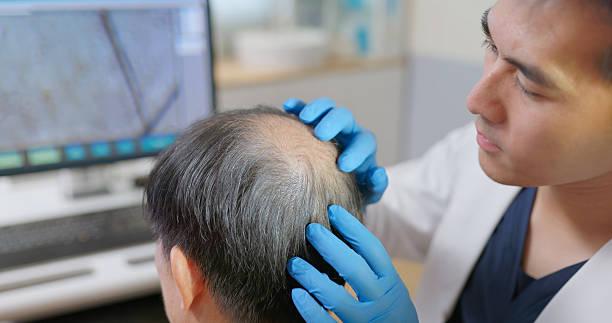
Modern hair restoration focuses on more than moving follicles from one part of the scalp to another. The placement of each graft, the direction of growth, and the condition of the surrounding tissue all contribute to the final appearance. For patients exploring a Hair Transplant in Dubai, Sapphire FUE is one approach that uses specially shaped sapphire blades during recipient-site creation.
The technique is based on the principles of Follicular Unit Extraction, with a difference in the instrument used to create recipient channels. Understanding how it works, where precision matters, and what limitations remain can help patients evaluate whether it is suitable for their needs.
Understanding the Sapphire FUE Technique
Sapphire FUE is a variation of the FUE hair transplantation process. Individual follicular units are harvested from the donor area, while sapphire-tipped blades may be used to create recipient sites for implantation.
What Makes Sapphire Blades Different
Sapphire blades are made using synthetic sapphire material. They can be manufactured in different shapes and sizes for surgical use.
In Sapphire FUE, the blade is used to create small openings in the recipient area. These openings provide a pathway for graft placement.
The dimensions and arrangement of the recipient sites are selected according to the patient's hair characteristics, scalp condition, and surgical plan.
How Sapphire FUE Differs From Conventional FUE
The main difference is the instrument used for recipient-site creation. Conventional FUE procedures may use other surgical blades or instruments, while Sapphire FUE uses sapphire-tipped blades for this stage.
The follicle extraction process remains based on individual graft harvesting.
The technique does not change the biological behaviour of the transplanted follicles. Graft survival and final growth still depend on factors such as careful harvesting, handling, implantation, and healing.
How Precision Influences Hair Transplant Results
Precision is important because natural hair does not grow in uniform rows. Follicles emerge at different angles and directions depending on their location on the scalp.
Recipient-Site Angle and Direction
The surgeon must plan each recipient site to match the natural growth pattern. The frontal hairline often requires a flatter angle, while other scalp regions may need different directions.
Incorrect positioning can create an unnatural appearance, even when the number of grafts is high.
Sapphire blades provide an instrument for creating recipient channels, but the surgeon remains responsible for selecting their location, orientation, and depth.
Site Size and Graft Fit
Recipient openings should be appropriate for the size of the follicular graft. An opening that is too large or too small may affect graft placement and tissue handling.
The surgeon considers the number of hairs within each graft and the characteristics of the recipient scalp.
The aim is to create suitable sites without unnecessary trauma to the surrounding tissue.
Distribution Across the Scalp
Grafts must be distributed according to the desired coverage and available donor supply. Placing too many follicles in one region can reduce the options available for other areas.
A thoughtful plan considers immediate cosmetic improvement as well as the potential progression of hair loss.
Potential Advantages of Sapphire FUE
The technique may offer practical advantages in selected surgical plans, although outcomes vary.
Controlled Recipient-Channel Creation
Sapphire blades can be selected according to the planned site dimensions. This may help the surgeon create consistent openings when the instrument is used appropriately.
However, precision depends on technique and experience rather than blade material alone.
Support for Detailed Hairline Planning
The frontal hairline is visually important. It requires careful placement of single-hair grafts near the front, with larger follicular units generally used further behind where appropriate.
Sapphire FUE can be incorporated into this detailed placement process, but a natural result depends on design, graft selection, and surgical judgement.
Consideration of Tissue Handling
The surgeon's objective is to create recipient sites while limiting unnecessary injury to surrounding tissue.
The actual tissue response depends on the patient's scalp, instrument dimensions, surgical technique, and number of sites created. Sapphire material should not be treated as a guarantee of less swelling, faster healing, or better graft survival.
Sapphire FUE Compared With Other Hair Transplant Approaches
Different techniques describe different parts of the surgical process. Understanding these distinctions can prevent confusion when comparing treatment options.
| Technique | Main feature | Important consideration |
|---|---|---|
| Conventional FUE | Individual follicle extraction and implantation into prepared sites | Instrument choice and surgical technique vary |
| Sapphire FUE | Sapphire blades used for recipient-site creation | Blade material does not guarantee a particular result |
| DHI | Grafts placed using a specialised implanter | Placement approach depends on case suitability |
| FUT | Follicles collected from a strip of donor scalp | Leaves a linear donor scar |
Sapphire FUE and DHI are not necessarily mutually exclusive concepts in every clinic's terminology. Ask the surgeon to explain exactly how grafts will be harvested and implanted.
Who May Be Suitable for Sapphire FUE
Suitability depends on the underlying cause of hair loss, donor supply, scalp condition, and expected treatment goals.
Patients With Pattern Hair Loss
Some people with established male or female pattern hair loss may be candidates if they have sufficient healthy donor follicles and realistic expectations.
The surgeon should assess whether hair loss is stable enough for surgery and whether medical management is also needed.
Patients Seeking Hairline or Density Restoration
Sapphire FUE may be considered for selected frontal, mid-scalp, or other recipient areas.
The planned graft distribution should account for existing hair, hair thickness, and future changes. A high-density design is not always appropriate if donor supply is limited.
When Another Approach May Be More Appropriate
Patients with active scalp disease, unexplained rapid shedding, limited donor density, or certain scarring conditions may need further evaluation before surgery.
A different technique or non-surgical treatment may be more suitable depending on the diagnosis.
Factors That Influence Graft Survival
The quality of a hair transplant cannot be judged by the recipient blade alone. Graft survival is affected by several connected stages.
Careful Donor Extraction
Follicles must be collected without unnecessary damage. Extraction depth, punch size, spacing, and donor-area planning are important.
Over-harvesting can create visible thinning and compromise future restoration options.
Graft Preparation and Handling
After extraction, grafts need appropriate handling and storage. Excessive drying, mechanical trauma, or prolonged time outside the body can affect their viability.
The surgical team should follow suitable procedures to protect grafts before implantation.
Accurate Implantation
Recipient-site creation and graft placement must work together. Grafts should be positioned at appropriate angles and depths, while avoiding unnecessary trauma.
The surgeon's experience and the team's handling practices are central to this process.
What to Ask Before Choosing Sapphire FUE
During consultation, patients can ask:
-
Why is Sapphire FUE being recommended for my scalp?
-
Which instruments will be used for extraction and implantation?
-
How will the recipient-site angles be selected?
-
How many grafts can be safely harvested?
-
Who performs each stage of the procedure?
-
What are the possible complications?
-
What recovery instructions will I need to follow?
These questions help clarify the actual surgical process and whether it matches the patient's needs.
Clinic Note: Sapphire FUE describes the use of sapphire blades during recipient-site creation. It does not guarantee higher graft survival, scar-free healing, or greater density. A safe and natural-looking result depends on individual planning and careful surgical execution.
FAQs About Sapphire FUE
Is Sapphire FUE different from regular FUE?
The main difference is the blade material used to create recipient sites. Both techniques use individual follicular extraction as part of the procedure.
Does Sapphire FUE improve graft survival?
The blade itself does not guarantee improved graft survival. Extraction quality, graft handling, storage, implantation, and healing all influence the outcome.
Does Sapphire FUE leave scars?
FUE harvesting can leave small circular marks in the donor area. Recipient-site healing can also vary, and no technique should be described as completely scar-free.
Is Sapphire FUE suitable for crown restoration?
It may be considered for selected crown cases, but the surgeon must account for the natural whorl pattern, donor supply, and desired coverage.
Does Sapphire FUE guarantee faster recovery?
No. Recovery depends on the extent of surgery, individual healing, and post-operative care. Patients should follow the specific instructions provided by their surgical team.
Discuss Sapphire FUE at Tajmeels Clinic
Selecting a hair transplant method requires a clear understanding of the surgical steps and the patient's donor and recipient areas. Tajmeels Clinic in Dubai provides an opportunity to discuss Sapphire FUE and other hair restoration options according to individual needs. A professional assessment can help clarify the expected graft plan, surgical approach, and recovery considerations.

 English
 Arabic
 French
 Spanish
 Portuguese
 Deutsch
 Turkish
 Dutch
 Italiano
 Romaian
 Portuguese (Brazil)
 Greek
