

How Many Sutures Are Needed per Facial Zone for a Thread Lift in Dubai?
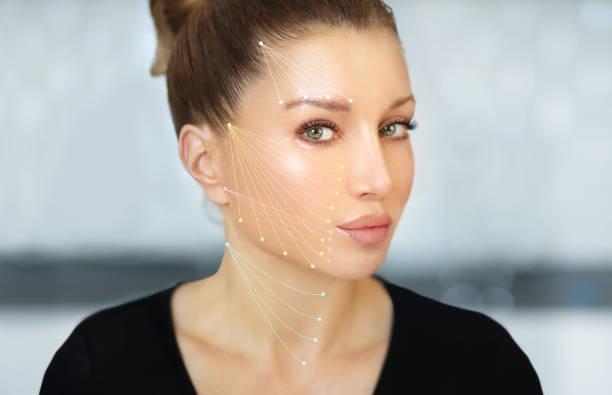
One of the common questions patients ask before a facial thread lift concerns the number of sutures required to achieve a visible improvement. There is no universal thread count because facial anatomy, the degree of tissue laxity, treatment goals, and the selected thread system differ from person to person. During a consultation for a Thread Lift in Dubai, the practitioner assesses these factors before deciding whether treatment is suitable and how it should be planned.
The number of sutures should never be treated as a measure of treatment quality on its own. A carefully selected placement strategy is more important than simply using more threads.
Why Thread Count Varies Between Patients
Facial thread lifting is an anatomical procedure rather than a standardised cosmetic application. Two people with similar concerns may require different treatment plans because their skin thickness, facial fat distribution, tissue support, and degree of laxity are not identical.
Several factors influence the number of sutures considered:
-
Treatment area: The cheek, mid-face, jawline, and brow have different anatomical requirements.
-
Degree of sagging: Mild tissue descent may require a different approach from more noticeable laxity.
-
Facial structure: Bone support, fat compartments, and tissue thickness influence planning.
-
Thread design: Different thread systems have specific structures, indications, and placement requirements.
-
Desired outcome: Subtle support and broader tissue repositioning are different treatment objectives.
-
Safety considerations: The practitioner must consider suitable placement, spacing, and tissue response.
The final plan should follow the selected product's instructions and the practitioner's clinical judgement.
Understanding Suture Planning for a Thread Lift in Dubai
Before deciding on a thread count, the practitioner identifies which facial tissues contribute to the patient's concern. The assessment may involve examining the face at rest, during expression, and from different angles.
For Silhouette Soft, the practitioner considers how the bidirectional cones will engage selected tissue and how the planned thread direction relates to the facial contour.
Why More Sutures Do Not Always Mean Better Results
Using additional sutures does not automatically create a stronger or more natural lift. Excessive or poorly planned placement can increase tissue manipulation and may contribute to complications.
The objective is to achieve appropriate support while respecting facial anatomy. A suitable plan considers the number of threads alongside their direction, position, and tension.
How Different Facial Zones Affect Thread Planning
Each facial region has its own structural characteristics. The following overview explains the considerations involved without suggesting a fixed number of sutures for every patient.
Mid-Face and Cheek Area
The mid-face includes important soft-tissue compartments that influence cheek contour and the transition toward the lower face.
When mild cheek descent is present, the practitioner may assess whether selected tissues can be supported with an appropriate thread direction. Planning takes into account cheek volume, tissue thickness, skin quality, and the patient's natural facial proportions.
A thread lift does not replace lost volume. If hollowing or volume deficiency is the main concern, a different treatment discussion may be more relevant.
Lower Face and Jawline
The lower face may show early jowling or a gradual loss of jawline definition. Thread planning in this area requires attention to tissue weight, skin laxity, and the relationship between the cheek and jawline.
The practitioner considers whether tissue support could improve the contour without creating excessive tension. Significant skin excess or heavy tissue descent may be better evaluated for surgical options.
Brow and Temple Region
The brow and temple area has delicate anatomy and requires careful assessment. A practitioner must consider the patient's natural brow position, skin characteristics, and surrounding structures before deciding whether a thread-based approach is appropriate.
Not every brow concern is caused by tissue descent. Eyebrow shape, muscle activity, and skeletal anatomy can also influence appearance.
Neck and Lower-Face Transition
The neck is not automatically suitable for the same thread placement approach used in the mid-face or jawline. Skin thickness, tissue movement, and the degree of laxity vary considerably.
A practitioner should assess whether the concern is mild enough for a minimally invasive approach. More pronounced neck laxity may require a different treatment strategy.
The Importance of Thread Direction and Placement
Suture count is only one part of the treatment plan. Direction and placement determine how the thread engages the tissue and where support is intended.
Understanding Vectors
A vector describes the planned direction of tissue support. Practitioners assess facial contours and select directions that correspond to the areas requiring repositioning.
The aim is to maintain balanced facial proportions rather than pull every area upward or outward. Poorly selected vectors may produce an unnatural appearance or uneven tissue tension.
Placement Depth and Tissue Characteristics
The appropriate placement plane depends on the thread system, treatment area, and anatomical assessment. Placement that is too superficial or otherwise unsuitable may increase the likelihood of visible threads, dimpling, or other complications.
The practitioner must understand the relevant tissue layers and follow the device-specific instructions.
Read More: DHI Direct Hair Implant in Dubai for Mature Hairline Preservation
What Happens During a Suture Assessment
A consultation helps establish whether thread lifting is appropriate and what a realistic plan may involve.
The assessment commonly includes:
-
Medical history review: Discussing previous procedures, medications, allergies, and relevant health conditions.
-
Facial examination: Identifying the areas of laxity and assessing tissue quality.
-
Goal discussion: Clarifying which changes the patient hopes to achieve.
-
Thread selection: Considering the available thread system and its appropriate indications.
-
Treatment mapping: Planning suitable placement directions and symmetry.
-
Consent and risk discussion: Explaining possible complications, recovery, and alternatives.
Patients should have an opportunity to ask why a particular number of sutures is recommended and how the plan relates to their anatomy.
Can Suture Count Affect the Cost of Treatment?
The number and type of sutures may influence the overall cost, but pricing can also depend on the treatment areas, product, practitioner, clinical setting, and complexity of the procedure.
A quotation should explain what is included rather than presenting a thread count without context. Patients should also ask whether follow-up care and any necessary review appointments are part of the treatment plan.
Choosing a provider solely because they offer the highest number of threads for a fixed price may not be a reliable way to assess treatment quality.
Recovery and Follow-Up
After a thread lift, patients may experience temporary swelling, bruising, tenderness, tightness, or unevenness. Some degree of puckering or dimpling can occur, and the practitioner should explain what is expected during recovery.
Follow-up allows the clinical team to assess healing and review any concerns. Patients should avoid manipulating the treated area and follow the specific aftercare instructions provided.
Persistent or worsening pain, increasing redness, fever, unusual discharge, visible thread material, or sudden facial changes should be reported promptly.
Clinic Note: The appropriate suture count is based on anatomy, treatment objectives, and product-specific guidance. A personalized plan should prioritize safe placement and balanced facial support rather than a predetermined number of threads.
Frequently Asked Questions
Is there a standard number of sutures for a thread lift?
No. The number varies according to the treatment area, facial anatomy, degree of laxity, thread system, and intended outcome.
Does using more threads create a stronger lift?
Not necessarily. The placement direction, tissue engagement, and suitability of the treatment are important. More sutures do not guarantee a better result.
Can the same number of sutures be used on both sides of the face?
Not always. Natural facial asymmetry and differences in tissue support may affect planning. Any difference should be based on clinical assessment and discussed with the patient.
Does thread count determine the price?
It can be one pricing factor, but the thread type, treatment areas, practitioner, and complexity also influence the total cost.
Can a patient request fewer or more sutures?
Patients can discuss their preferences, but the practitioner must determine whether the requested approach is clinically appropriate. Treatment should not be altered simply to meet a preferred number.
Personalized Thread Lift Planning at Tajmeels Clinic
The number of sutures required for facial rejuvenation cannot be determined accurately without examining the patient's anatomy and treatment goals. Tajmeels Clinic emphasizes individualized assessment and clear discussions about suitable options, expected outcomes, and potential risks. A consultation can help establish whether a thread lift is appropriate and explain the reasoning behind the proposed treatment plan.

 English
 Arabic
 French
 Spanish
 Portuguese
 Deutsch
 Turkish
 Dutch
 Italiano
 Russian
 Romaian
 Portuguese (Brazil)
