

What Design Considerations Help An IVF Lab Design Company Maintain Stable Laboratory Conditions?
Introduction
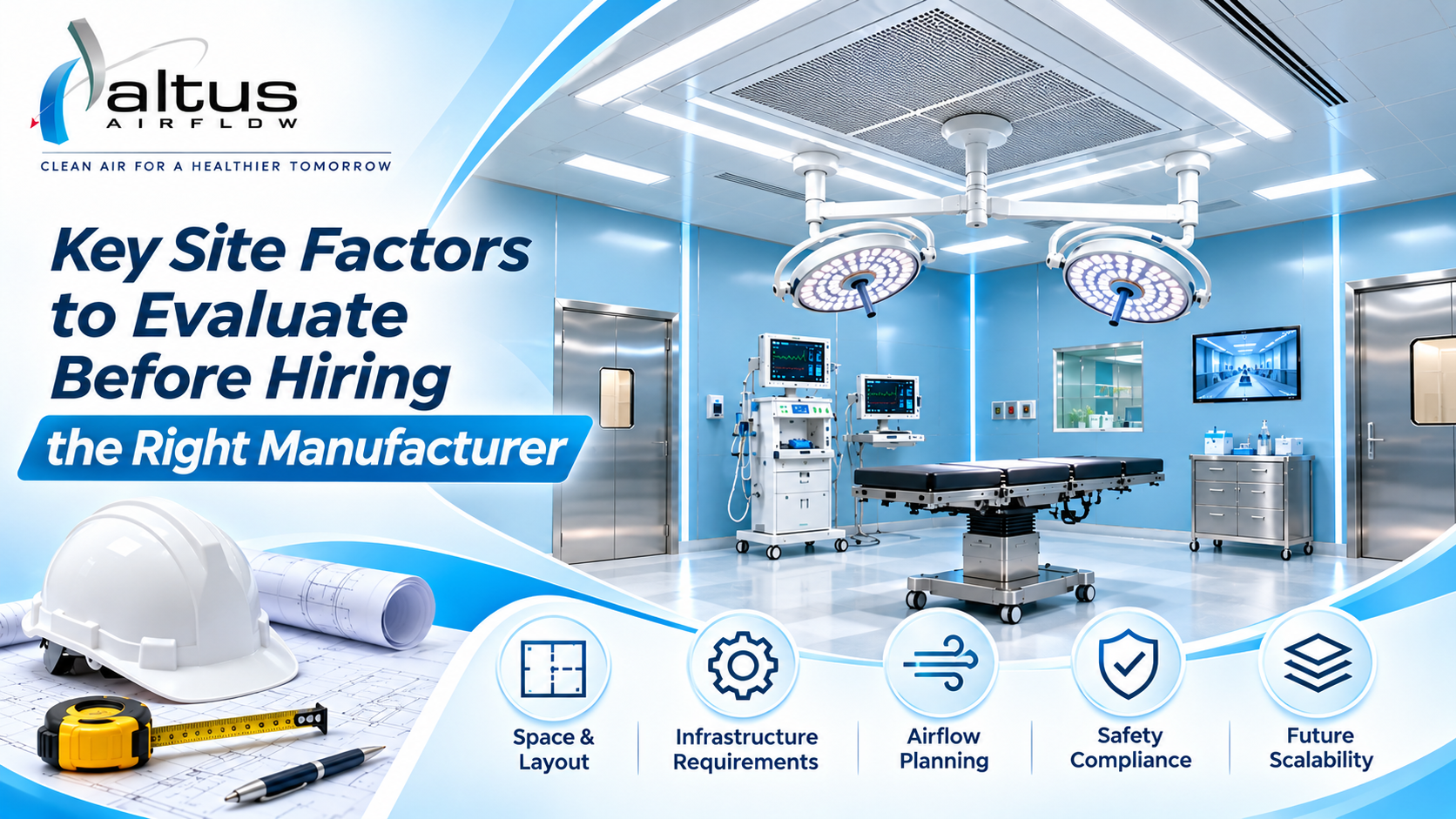
An IVF laboratory requires a carefully planned environment where temperature, humidity, air quality, pressure relationships, and equipment conditions are considered together. These factors should be addressed during the initial design stage so that the laboratory's building services support its intended functions.
An experienced IVF Lab Design Company considers laboratory zoning, cleanroom materials, HVAC capacity, filtration, monitoring, equipment placement, and maintenance access. The design should be based on laboratory requirements and applicable technical guidance.
1. Understanding Laboratory Workflow
The design process begins by identifying laboratory activities, equipment, personnel movement, and material movement. Different rooms may have different environmental and operational requirements.
A workflow review helps determine the layout and the relationship between laboratory zones.
2. Planning Temperature Control
Temperature requirements should be defined for each relevant area according to equipment and operational needs. HVAC capacity should account for heat generated by equipment, lighting, occupants, and external conditions.
Suitable sensor locations and monitoring arrangements should be included in the design.
3. Managing Humidity
Humidity control should be considered alongside temperature and ventilation. The system should be designed to manage moisture levels while avoiding unwanted condensation.
Monitoring and maintenance procedures help identify variations that may require investigation.
4. Selecting Filtration and Airflow Systems
Filtration requirements should be established according to the intended use of each laboratory space. HEPA filtration may be incorporated where specified.
Air supply, return-air locations, ventilation rates, and airflow direction should be planned around room geometry and equipment placement.
5. Establishing Room Pressure Relationships
Pressure relationships between rooms and adjacent areas may form part of the laboratory environmental strategy. The design should define the intended arrangement and identify how it will be measured after installation.
Door positions and ventilation quantities should be considered during planning.
6. Choosing Suitable Cleanroom Materials
Wall, ceiling, flooring, and door finishes should be selected according to cleaning procedures, durability, and intended laboratory use. Joints and interfaces should be designed to support routine cleaning and maintenance.
7. Integrating Laboratory Equipment
Equipment can affect heat loads, airflow, electrical demand, and available service space. Equipment dimensions and technical specifications should therefore be collected before finalizing HVAC and utility layouts.
8. Providing Environmental Monitoring
Monitoring may include temperature, humidity, room pressure, and other parameters identified by the laboratory. Alarm limits and response procedures should be established by the responsible team.
9. Planning Validation and Maintenance
The design should allow access to filters, fans, sensors, and other serviceable components. Commissioning and validation activities may include airflow measurements, filter integrity checks, pressure verification, and sensor calibration.
A coordinated IVF Lab Design Company approach connects these design considerations with the laboratory's operating and maintenance procedures.
Conclusion
Stable IVF laboratory conditions depend on coordinated workflow planning, temperature and humidity control, suitable filtration, airflow distribution, room pressure management, appropriate materials, and monitoring. These requirements should be evaluated together during design and verified through suitable testing. Altus Airflow provides IVF laboratory design and airflow-related solutions for controlled environments.
Frequently Asked Questions
1. What environmental factors should be considered in IVF laboratory design?
Common considerations include temperature, humidity, filtration, airflow distribution, and room pressure relationships.
2. Why is laboratory zoning important?
It helps organize activities, personnel movement, equipment placement, and environmental requirements across different spaces.
3. How does equipment affect environmental design?
Equipment may generate heat, require dedicated electrical supplies, and influence airflow and service access.
4. What environmental parameters may be monitored?
Depending on the laboratory requirements, monitoring may include temperature, humidity, and room pressure.
5. Why is maintenance access included in the design?
It allows inspection and servicing of filters, fans, sensors, and HVAC components as part of routine maintenance.

 English
 Arabic
 French
 Spanish
 Portuguese
 Deutsch
 Turkish
 Dutch
 Italiano
 Russian
 Portuguese (Brazil)
 Greek
