

What Should Patients Know About Dental Crown Treatment?
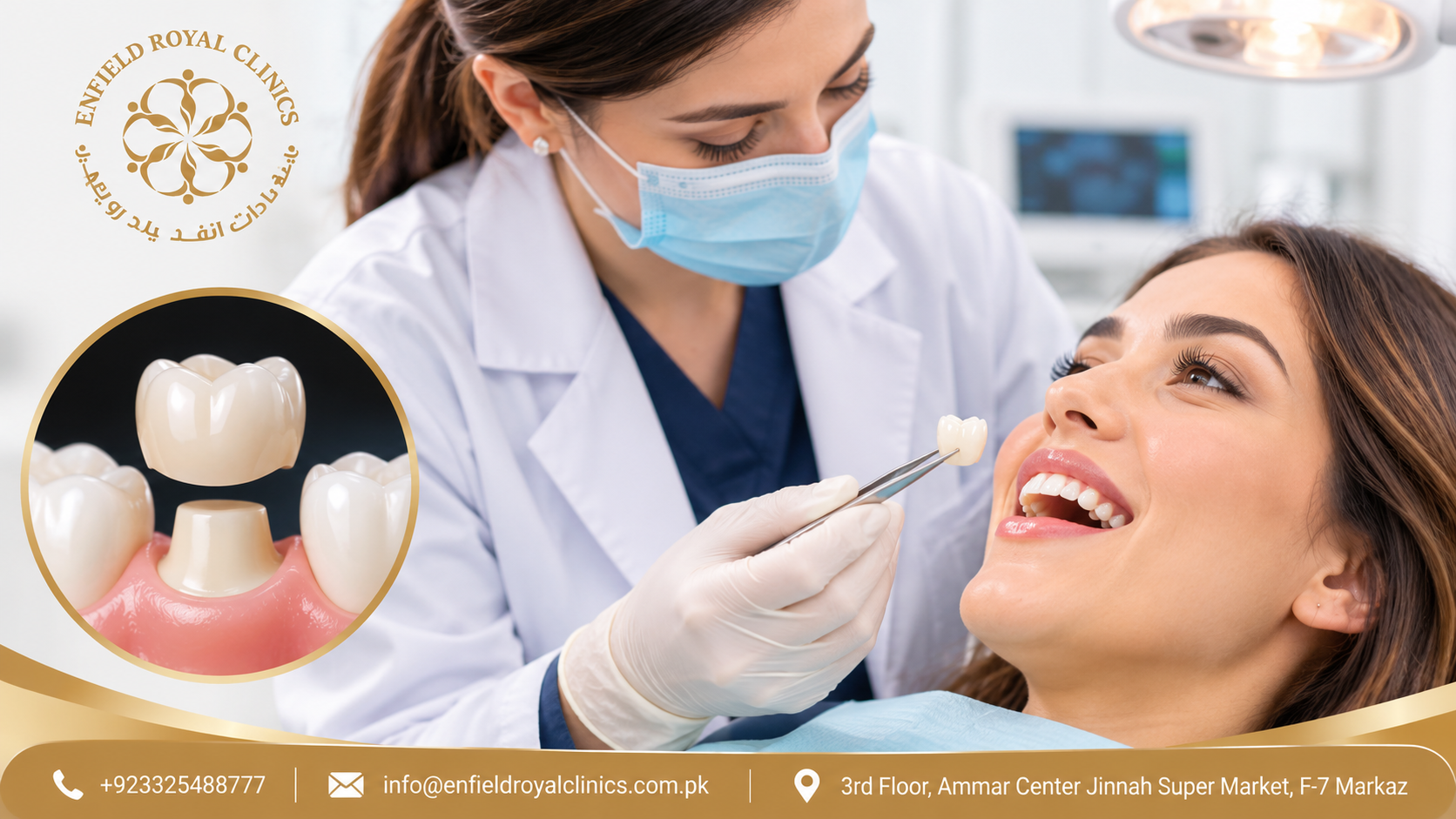
Healthy teeth are important for comfortable chewing, clear speech, and a confident smile. However, teeth can become weakened or damaged because of tooth decay, accidents, cracks, large fillings, or excessive grinding. When a tooth loses a significant amount of its natural structure, a regular filling may not provide enough support. Dental crown treatment offers a restorative solution that helps rebuild the tooth and protect the remaining structure.
Dental Crown Treatment in Islamabad is an option for patients who want to restore damaged teeth, improve their appearance, and maintain normal chewing function. A dental crown is a custom-made cap placed over a prepared tooth. It covers the visible portion, restores its shape and size, and provides additional support. Before choosing this treatment, patients should understand its benefits, procedure, available materials, possible limitations, and aftercare requirements.
What Is Dental Crown Treatment and When Is It Needed?
A dental crown is a protective covering designed to fit over a damaged or weakened tooth. It restores the tooth's shape, size, and appearance while helping it withstand everyday biting and chewing pressure.
Unlike a regular filling, which repairs a limited area, a crown covers most or all of the visible portion of a tooth above the gumline. This makes it useful when extensive damage has affected the tooth's natural strength.
Dental crowns may be recommended in several situations:
-
Extensive tooth decay: A large cavity may leave too little healthy structure for a regular filling.
-
Cracked or broken teeth: A crown can cover and support a damaged tooth when the fracture is suitable for restoration.
-
Large fillings: Teeth with extensive fillings may need additional protection against further damage.
-
Severe tooth wear: Grinding or clenching can gradually change a tooth's shape and weaken its structure.
-
After root canal treatment: A crown may be recommended when substantial tooth structure has been lost during treatment.
-
Cosmetic restoration: A crown can improve the appearance of a damaged, irregular, or deeply discoloured tooth when structural restoration is also required.
Not every damaged tooth needs a crown. The treatment depends on the extent of damage, the condition of the roots, and the amount of healthy tooth structure remaining.
What Types of Dental Crowns Are Available?
Patients can choose from different crown materials depending on the tooth's location, chewing pressure, appearance, and individual dental needs. Each material has particular advantages and limitations.
Porcelain Crowns: Porcelain crowns are designed to resemble natural teeth. Their tooth-coloured appearance makes them a popular option for visible front teeth, where a natural-looking result is important.
Zirconia Crowns: Zirconia is a strong ceramic material that offers a combination of durability and natural appearance. It may be suitable for front or back teeth depending on the design and bite requirements.
Metal Crowns: Metal crowns are known for their strength and resistance to wear. They may be considered for back teeth that experience significant chewing pressure. However, their metallic appearance may not suit patients who prefer tooth-coloured restorations.
Porcelain-Fused-to-Metal Crowns: These crowns combine a metal base with an outer porcelain layer. They offer structural support while providing a more natural appearance than fully metallic crowns. In some cases, the porcelain surface may chip or the metal edge may become visible near the gumline.
The most appropriate material depends on the patient's dental condition and expectations. A dental assessment helps determine which option offers the right balance of strength, appearance, and function.
What Should Patients Expect During the Dental Crown Procedure?
Understanding the treatment process can help patients feel more prepared. Dental crown placement generally involves several stages, although the exact process may vary according to the condition of the tooth and the type of restoration.
1. Initial Examination: The process begins with an examination of the affected tooth and surrounding gums. Dental X-rays may be taken to assess the roots, surrounding bone, and extent of damage. Any infection or other underlying problem must be addressed before the final crown is placed.
2. Tooth Preparation: If the tooth is suitable for a crown, it is carefully reshaped to create enough space for the restoration. Local anaesthesia is generally used to make the procedure more comfortable. Any decay or damaged structure requiring treatment is removed.
3. Dental Impression or Digital Scan: An impression or digital scan records the shape of the prepared tooth. This information is used to create a crown that fits properly and aligns with the surrounding teeth.
4. Temporary Crown Placement: A temporary crown may be placed to protect the prepared tooth while the permanent restoration is being made.
5. Permanent Crown Fitting: Once the final crown is ready, its fit, shape, colour, and bite alignment are checked. Necessary adjustments are made before it is securely attached.
The number of visits and overall treatment time can differ depending on the patient's needs and the method used to prepare the crown.
What Are the Benefits and Possible Limitations of Dental Crowns?
Dental crowns offer several advantages, which is why they are widely used in restorative dentistry. However, patients should also understand that crowns have limitations.
One important benefit is tooth protection. A crown covers vulnerable areas of a weakened tooth and helps reduce the risk of further damage during normal chewing. It can also restore the tooth's original shape, making biting and chewing more comfortable.
Another advantage is improved appearance. Tooth-coloured materials such as porcelain and zirconia can be designed to blend with nearby teeth. This may help improve the appearance of teeth affected by fractures, wear, or deep discolouration.
Crowns may also help preserve natural teeth. When sufficient healthy structure remains, restoring a damaged tooth may help avoid extraction and maintain its position in the mouth.
However, crown placement usually requires reshaping some of the natural tooth. This makes it important to confirm that a crown is genuinely needed. Crowns can also chip, loosen, or wear down over time. In addition, the natural tooth underneath can still develop decay, particularly around the crown's edges.
A crown cannot guarantee that a tooth will never break again. Its success depends on the quality of placement, remaining tooth structure, bite pressure, and the patient's oral hygiene.
How Long Do Dental Crowns Last and How Can Patients Care for Them?
Dental crowns are designed for long-term use, but they are not usually permanent restorations. Many crowns last approximately 5 to 15 years, while some may remain functional for longer with suitable care.
Several factors influence their lifespan. These include the material, accuracy of fit, chewing habits, teeth grinding, and the condition of the tooth underneath. Crowns placed on back teeth may experience more pressure because of their role in chewing.
Patients can support the durability of their crowns by following a consistent oral hygiene routine:
-
Brush twice daily using fluoride toothpaste.
-
Floss every day, paying attention to the area around the crown.
-
Avoid biting ice, hard candies, and other extremely hard objects.
-
Do not use the teeth to open packaging or bite non-food items.
-
Attend regular dental checkups to monitor the crown and surrounding gums.
-
Discuss a custom night guard if frequent teeth grinding or clenching is present.
Although the crown material itself cannot develop a cavity, the natural tooth underneath it can still decay. Cleaning around the crown's edges is therefore essential.
Patients should seek an assessment if a crown becomes loose, chips, causes persistent sensitivity, or feels uncomfortable when biting. Early attention can help identify problems before they become more serious.
Who Is Suitable for Dental Crown Treatment?
Dental crown treatment can benefit many patients, but it is not suitable for every dental concern. The tooth needs a stable foundation and enough healthy structure to support the restoration.
Patients with extensive decay, large fillings, certain fractures, or significant tooth wear may be suitable candidates. However, active infection, untreated gum disease, or a fracture extending deep below the gumline may require additional treatment or a different approach.
For patients whose main concern is simple tooth staining, professional whitening may be more appropriate. Minor chips or small cosmetic imperfections may sometimes be treated with dental bonding. Crowns generally require more preparation, so they are best considered when a tooth needs substantial restoration.
A dental examination helps assess the roots, gums, bite alignment, and remaining tooth structure. This allows the treatment plan to be based on the patient's actual dental condition rather than appearance alone.
For people considering Dental Crown Treatment in Islamabad, understanding these factors can make it easier to discuss suitable options and realistic expectations before beginning treatment.
Frequently Asked Questions
1. Is dental crown treatment a painful procedure?
Local anaesthesia is generally used during tooth preparation to reduce discomfort. Some temporary sensitivity or mild soreness may occur after treatment, but persistent pain should be assessed.
2. How many appointments are needed for a dental crown?
Traditional crown treatment often involves more than one appointment, including tooth preparation and permanent crown placement. The exact number depends on the condition of the tooth and the treatment method.
3. Can a dental crown look like a natural tooth?
Yes. Porcelain and zirconia crowns can be designed to match the colour, shape, and size of surrounding teeth, creating a natural-looking result.
4. Can a crowned tooth still develop cavities?
Yes. The crown itself cannot develop decay, but the natural tooth underneath it can. Regular brushing, flossing, and dental checkups help reduce this risk.
5. How long does a dental crown usually last?
Many crowns last around 5 to 15 years, although some may last longer. Their lifespan depends on material, placement, oral hygiene, and everyday habits.
6. What should patients avoid after getting a dental crown?
Patients should avoid chewing ice, hard candies, and extremely hard objects. They should also avoid using their teeth to open packages and maintain regular oral hygiene to protect the crown and underlying tooth.
Conclusion
Dental crown treatment is a useful restorative option for teeth affected by extensive decay, fractures, large fillings, or significant wear. It can rebuild tooth structure, improve chewing function, and create a more natural-looking smile. However, successful treatment depends on choosing the right material, preparing the tooth properly, and maintaining good oral hygiene afterward.
Dental Crown Treatment in Islamabad can help suitable patients protect damaged teeth and maintain their natural smiles for years. A professional dental assessment is essential for understanding whether a crown is the right choice and which restoration can provide the most appropriate results.

 English
 Arabic
 French
 Portuguese
 Deutsch
 Turkish
 Dutch
 Italiano
 Russian
 Romaian
 Portuguese (Brazil)
 Greek
