

Improving Electrical Installation Quality with Proper Cable Sleeving
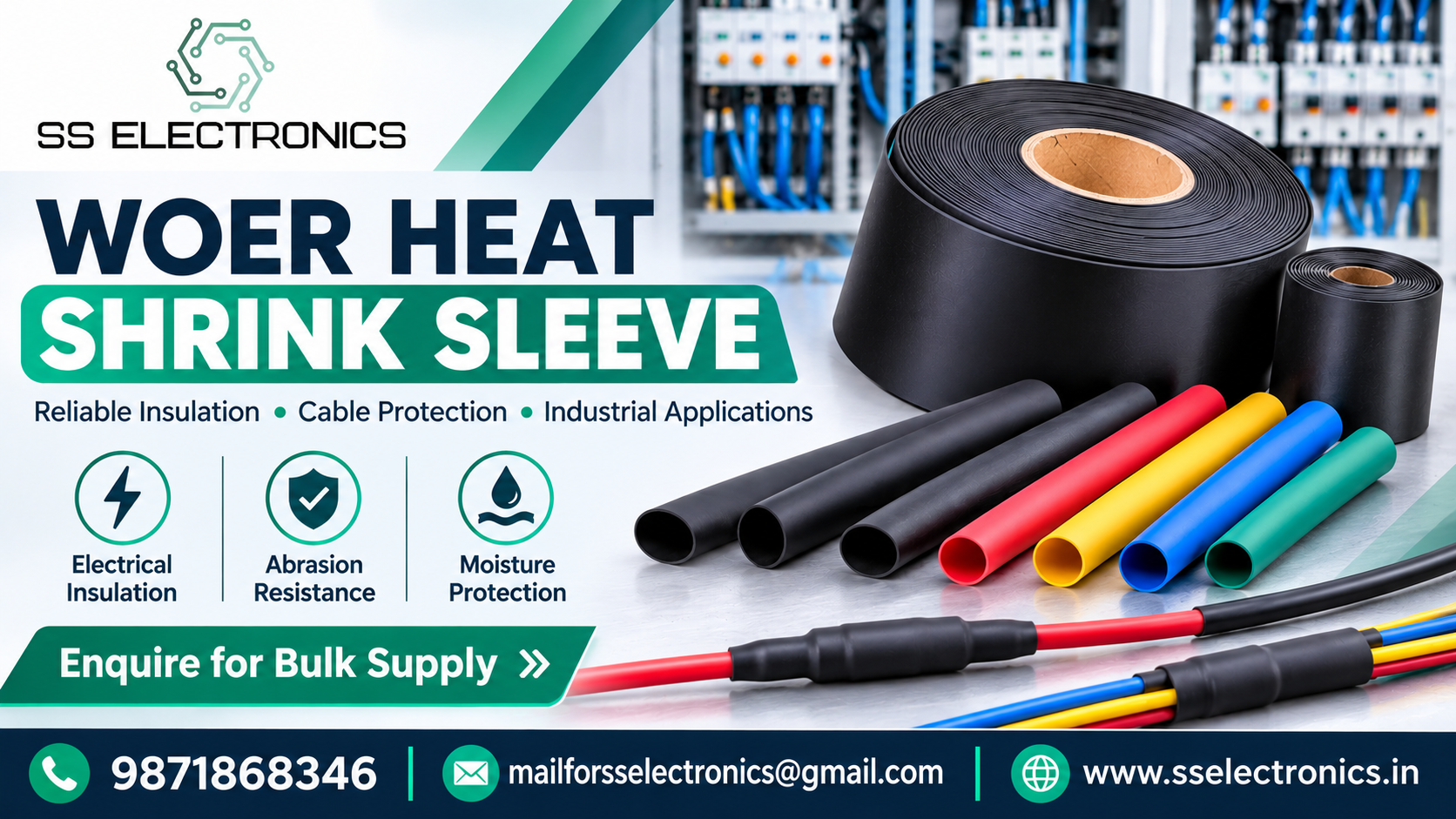
Electrical installations are found in almost every industrial and commercial environment. Manufacturing plants, warehouses, commercial buildings, infrastructure projects, and automation facilities depend on organized wiring systems to operate equipment and distribute electrical power. The quality of an installation depends not only on the main electrical components but also on the smaller accessories used to manage and protect cables.
Cable sleeving is one such consideration. Heat shrink sleeves are commonly used in suitable applications because they contract around compatible wires and components when heated. Their use can help improve cable organization, provide additional covering, and support identification practices.
Why Cable Management Matters
Electrical installations often contain numerous wires routed between control devices, distribution equipment, sensors, and machines. If cables are poorly arranged, inspection and maintenance can become more difficult. Technicians may also spend additional time identifying individual connections during troubleshooting.
Good cable management helps create a structured installation. Cables can be routed systematically, grouped where appropriate, and identified according to the electrical design. Suitable sleeving products can contribute to this process by covering selected sections and creating a cleaner finish.
In industrial facilities, maintenance teams regularly inspect electrical systems. Organized wiring makes it easier to locate specific connections and understand cable routes. It can also support more consistent installation practices across multiple panels and equipment units.
Understanding Heat Shrink Sleeves
A heat shrink sleeve is manufactured from a material that contracts when exposed to a specified heating process. Before installation, the sleeve is expanded so that it can be positioned over a cable, wire, connector, or other compatible component. Once heated, it recovers towards its specified dimensions.
The resulting fit depends on the sleeve's shrink ratio and recovered diameter. These specifications are important when selecting a product for cables with connectors or sections of varying thickness.
Different products may have different material properties and performance ratings. Some are intended for general-purpose electrical covering, while other variants may be designed for more demanding conditions. Buyers should always check the manufacturer's technical documentation before selecting a product.
Applications in Electrical Panels and Distribution Systems
Electrical panels are used to control and distribute power across industrial and commercial installations. They contain several components connected through wiring systems, and proper cable arrangement is important for safe access and maintenance.
Suitable heat shrink sleeves may be used on selected cable sections for identification, additional covering, or assembly finishing. Colour-coded options can support circuit identification when used according to the approved wiring plan.
Distribution systems may also include cable joints, terminations, and equipment interfaces. The protective requirements for these areas vary according to voltage, environmental exposure, and installation design. A sleeve should only be used where its specifications meet the requirements of the complete assembly.
Businesses exploring the Woer Heat Shrink Sleeve category can evaluate available options for suitable wiring and cable management applications. Product dimensions, material composition, shrink ratio, and temperature ratings should be checked before use.
Benefits for Industrial Maintenance Teams
Industrial maintenance departments need practical ways to inspect and manage electrical installations. Proper cable identification can help reduce confusion when tracing connections and performing repairs. Sleeving can support this process when the correct colour and identification method are used.
A consistent approach to cable covering can also improve the appearance of electrical assemblies. This is useful in control panels, machine wiring, and equipment manufacturing, where multiple cable sections may need a uniform finish.
However, heat shrink sleeves should not be considered a substitute for correct cable selection, proper termination methods, or approved electrical insulation systems. The complete installation must meet relevant safety and engineering requirements.
Selecting Sleeving Products for Different Conditions
The intended environment should guide product selection. Indoor control cabinets may require different sleeve characteristics from outdoor installations or industrial equipment exposed to moisture, oils, abrasion, and changing temperatures.
The first step is to measure the cable and identify the section that needs covering. Buyers should then compare the expanded diameter, recovered diameter, shrink ratio, and wall thickness of available products.
Material flexibility and temperature ratings are also important. A sleeve used near equipment that generates heat must be suitable for the expected operating conditions. Similarly, a product exposed to chemicals or mechanical wear should have documented properties appropriate to that environment.
Procurement teams should also consider installation requirements. The available heating equipment, working space, and manufacturer's recommended recovery procedure can influence which product is practical for a particular assembly.
Working with Suppliers and Planning Purchases
Industrial projects may require different sleeve sizes and product variants. Purchasing the wrong specification can result in delays, additional costs, and installation difficulties. Clear communication between technical teams and procurement departments helps prevent these issues.
When approaching Woer Heat Shrink Sleeve Suppliers, buyers should share the intended application, cable dimensions, environmental conditions, and required product quantities. This information helps establish which specifications need to be evaluated.
Businesses should also confirm product documentation, packaging details, availability, and delivery schedules. For recurring requirements, maintaining a list of approved specifications can simplify repeat orders and support inventory planning.
Conclusion
Proper cable sleeving can contribute to organized and well-maintained electrical installations. Heat shrink sleeves are useful in compatible applications for covering selected cable sections, supporting identification, and improving the finish of wiring assemblies. Selecting the right product requires attention to dimensions, material properties, temperature limits, and installation procedures. By following manufacturer guidance and established electrical standards, businesses can make more informed decisions about cable protection accessories.
Frequently Asked Questions
1. What is cable sleeving used for?
Cable sleeving is used to cover, organize, identify, or provide additional protection to suitable wires and cable assemblies.
2. What makes heat shrink sleeves different from ordinary cable covers?
Heat shrink sleeves contract when heated, creating a closer fit around compatible cables or components.
3. Are heat shrink sleeves suitable for electrical distribution panels?
Suitable variants may be used for selected cable sections and identification purposes, subject to the panel's design and product ratings.
4. How important is the shrink ratio?
It determines how much the sleeve can contract and helps buyers choose a size that fits over the component before shrinking and recovers appropriately afterward.
5. Can sleeves be used in outdoor installations?
Some products are designed for particular outdoor conditions, but environmental and sealing ratings must be verified for the exact variant.
6. How should installed sleeves be inspected?
Check for complete recovery, correct positioning, gaps, wrinkles, splits, and signs of overheating or damage.
7. What should procurement teams verify before ordering?
They should confirm product dimensions, material, shrink ratio, temperature ratings, application suitability, documentation, quantity, and delivery requirements.

 English
 Arabic
 French
 Spanish
 Portuguese
 Deutsch
 Turkish
 Dutch
 Italiano
 Russian
 Romaian
 Portuguese (Brazil)
