

Microalgae DHA Market: Sustainable Sourcing Shapes Future Nutrition Trends
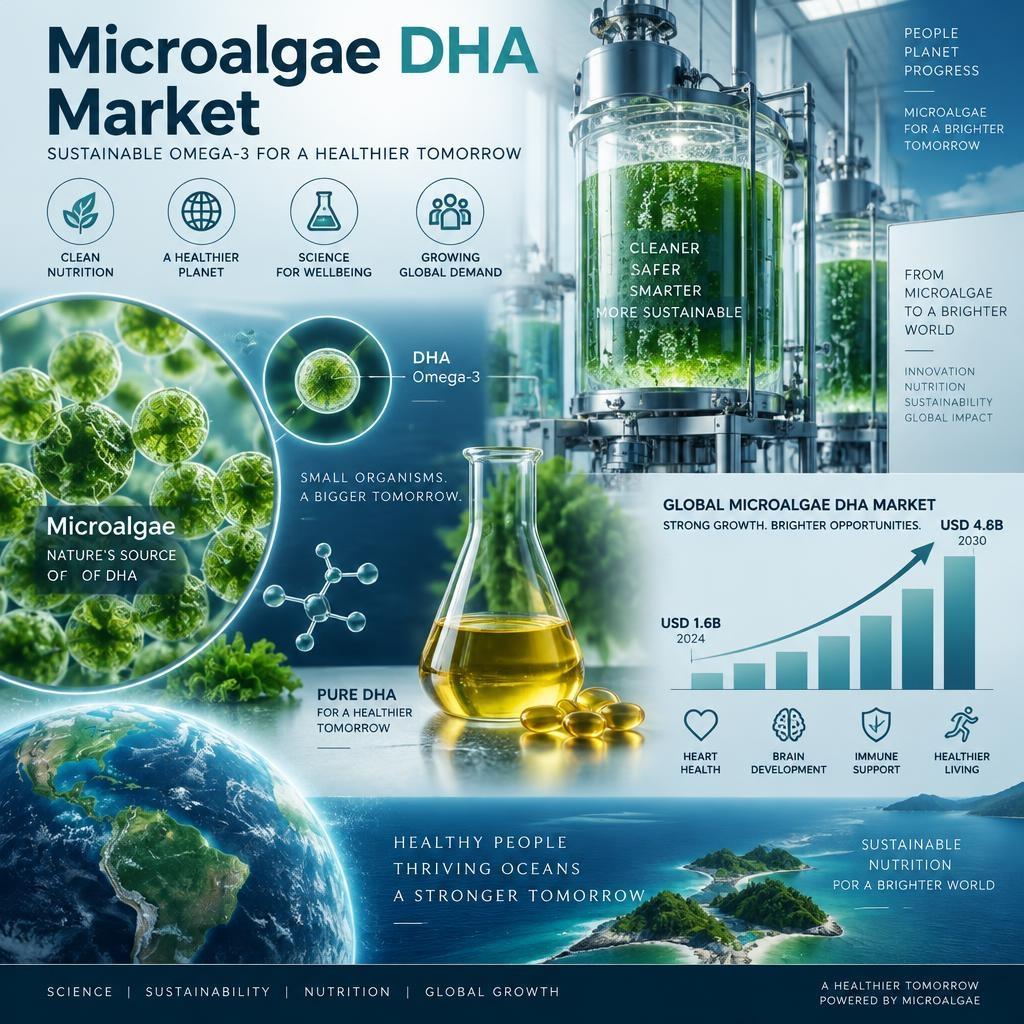
Sustainability is becoming an important consideration in the global food and nutritional ingredients industry. Manufacturers are exploring alternative raw materials, improved production processes, and responsible sourcing strategies to meet changing consumer expectations. Within this evolving environment, the Microalgae Docosahexaenoic Acid (DHA) Market is receiving attention because microalgae offer an alternative source of an important omega-3 fatty acid. DHA is widely recognized for its nutritional relevance, particularly in relation to brain function, visual development, and overall health.
The increasing interest in sustainable omega-3 DHA sources is encouraging manufacturers to explore algae-based ingredients for different nutritional applications. Unlike conventional fish-derived oils, microalgae-derived DHA can be produced through controlled cultivation systems. This creates opportunities for businesses interested in developing vegetarian-friendly ingredients while supporting alternative sourcing strategies across the nutritional supplement and food manufacturing industries.
Sustainability and Alternative Ingredient Sourcing
Traditional marine ingredients have played an important role in the omega-3 industry. However, growing attention to marine resource management has encouraged manufacturers to examine alternative sources of essential fatty acids.
Microalgae are particularly interesting because they naturally produce valuable fatty acids, including DHA. Selected organisms can be cultivated in controlled environments, allowing producers to manage important production conditions.
This approach provides an alternative to sourcing DHA directly from harvested fish. It also supports the development of ingredients suitable for consumers who avoid animal-derived marine products.
For manufacturers, alternative sourcing can contribute to product differentiation. Businesses can introduce nutritional products that address the preferences of consumers interested in sustainability, vegetarian diets, and ingredient transparency.
Role of Responsible Microalgae Cultivation
Cultivation practices are central to the production of microalgae-derived DHA. Producers must select suitable microorganisms and establish production environments that support consistent biomass development.
Controlled cultivation systems allow manufacturers to manage nutrient availability, environmental conditions, and other factors influencing production.
Different cultivation approaches can be selected depending on the characteristics of the microalgal species and the intended commercial application.
Responsible resource management is also important. Producers may evaluate energy requirements, water utilization, nutrient inputs, and waste management when designing cultivation facilities.
These considerations can influence manufacturing efficiency and the overall sustainability profile of the finished ingredient.
Consumer Interest in Environmentally Conscious Nutrition
Consumers are becoming more attentive to the ingredients used in nutritional products. Product origin, manufacturing practices, and environmental considerations can influence purchasing decisions.
This trend is creating opportunities for companies offering microalgae-derived DHA. Consumers following vegetarian or vegan lifestyles may find algae-based omega-3 products particularly relevant.
Environmental awareness may also encourage consumers to examine alternatives to conventional marine-derived ingredients.
However, manufacturers need to communicate sustainability claims responsibly. Clear labeling and transparent information about ingredient sourcing can help establish consumer confidence.
Businesses should ensure that environmental statements are supported by appropriate evidence and reflect actual production practices.
Applications Across the Nutritional Industry
The versatility of microalgae-derived DHA creates opportunities across several industries.
Dietary Supplements: Supplement companies can incorporate microalgae DHA into capsules, softgels, liquid oils, and other nutritional formats. These products can appeal to consumers seeking omega-3 ingredients without fish oil.
Functional Foods: Food manufacturers can explore DHA fortification in beverages, nutritional powders, specialty snacks, and plant-based food products. Formulation compatibility remains important when incorporating sensitive fatty acids.
Infant Nutrition: DHA is an important ingredient in specialized infant nutritional formulations. Microalgae-derived DHA provides manufacturers with an alternative source for products that require carefully selected nutritional ingredients.
Animal Feed: Microalgae-derived oils may also be used in specialized animal nutrition applications. Aquaculture is an area where alternative nutritional ingredients can support feed formulation development.
Personal Care: Certain cosmetic manufacturers explore algae-derived ingredients for specialized formulations. Their suitability depends on ingredient properties, formulation objectives, and product requirements.
Technology and Sustainable Manufacturing
Technological improvements can support the development of more efficient production processes. Manufacturers are exploring cultivation systems, biomass harvesting techniques, extraction methods, and purification technologies.
Fermentation-based manufacturing is one approach used for producing DHA-rich microalgal oils. Controlled production environments can help businesses manage important cultivation conditions.
Extraction and purification processes are equally important because the recovered oil must meet the quality expectations of its intended application.
Packaging and storage also contribute to sustainable manufacturing strategies. Appropriate packaging can protect sensitive oils from oxidation and help maintain product quality throughout distribution.
Businesses may also examine waste reduction and resource utilization when improving production operations.
Challenges in Sustainable DHA Production
Although microalgae-derived DHA offers several opportunities, sustainable manufacturing requires careful planning.
Cultivation facilities can involve specialized equipment and operational expenses. Energy consumption, production inputs, and downstream processing requirements can influence manufacturing efficiency.
Another challenge involves maintaining consistent ingredient quality. Variations in cultivation conditions and processing methods may affect the characteristics of the finished oil.
Companies must establish appropriate quality management systems and maintain traceability throughout their supply chains.
Additionally, sustainability claims should not be based solely on the use of microalgae. Manufacturers should consider the environmental characteristics of their complete production and distribution processes.
Future Outlook for Sustainable Nutrition
The development of sustainable nutritional ingredients is creating opportunities for innovation throughout the food and supplement industries.
Microalgae-derived DHA may benefit from increasing interest in alternative omega-3 sources and vegetarian-friendly product formulations.
Future developments could involve improved cultivation technologies, more efficient extraction methods, and innovative applications in fortified foods and specialized supplements.
Partnerships between biotechnology businesses, ingredient manufacturers, and consumer brands may also support the development of new products.
Companies that prioritize responsible sourcing, product quality, and transparent communication may find opportunities to differentiate themselves in the evolving nutritional ingredients industry.
Conclusion
The Microalgae DHA Market is closely connected with changing expectations surrounding sustainable nutrition and alternative ingredient sourcing. Microalgae provide manufacturers with an opportunity to develop DHA-rich ingredients through controlled cultivation rather than depending exclusively on conventional marine sources.
Growing interest in plant-based products, functional foods, and nutritional supplements may continue creating opportunities for the industry. Sustainable manufacturing practices, technological innovation, and ingredient transparency will remain important factors in its continued development.
Frequently Asked Questions
Q1. Why is sustainable sourcing important in the Microalgae DHA Market?
Sustainable sourcing allows manufacturers to explore alternative DHA production methods, reduce direct dependence on fish-derived ingredients, and address consumer interest in responsible nutritional ingredient sourcing.
Q2. How can microalgae cultivation support sustainable nutrition?
Microalgae can be cultivated in controlled production environments. This provides manufacturers with opportunities to manage cultivation conditions and develop alternative omega-3 ingredients for food, supplements, and other nutritional applications.

 English
 Arabic
 French
 Spanish
 Portuguese
 Deutsch
 Turkish
 Dutch
 Russian
 Romaian
 Portuguese (Brazil)
 Greek
