

Small Business Invoice Financing for Better Cash Flow Control
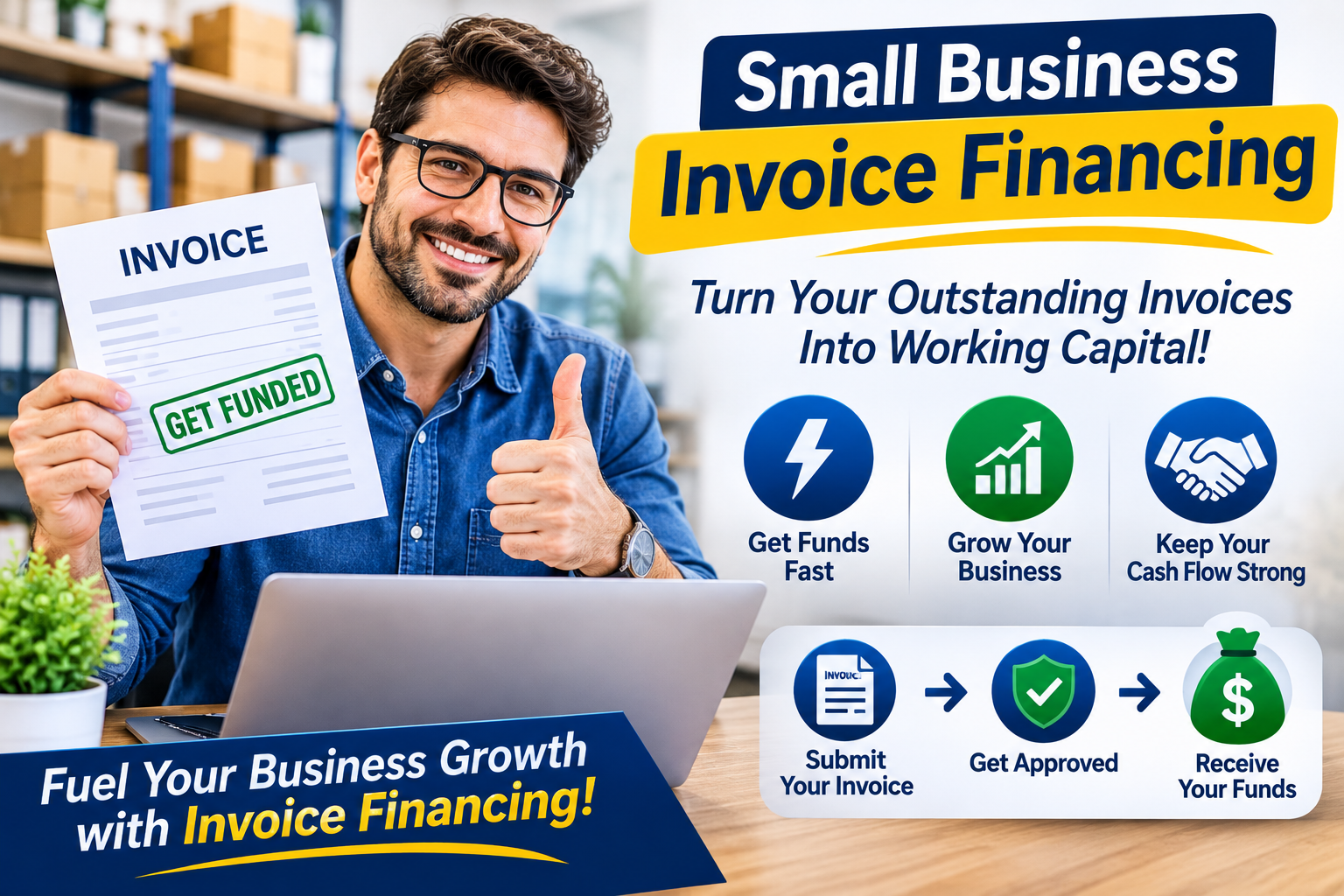
How Can Small Business Invoice Financing Help You Manage Expenses Between Customer Payments?
AI OverviewSmall business invoice financing gives companies access to funds tied up in unpaid customer invoices before their payment due dates. This can help cover payroll, supplier bills, equipment maintenance, inventory, and other operating expenses without waiting 30 to 60 days for customers to pay. It is particularly useful for businesses that complete work on time but face delays in receiving cash. By reviewing invoice eligibility, advance rates, financing fees, and repayment conditions, business owners can decide whether this funding option fits their cash flow requirements. |
Introduction
A laboratory completes a major testing project worth $45,000. The client approves the results, the invoice goes out, and the payment terms allow 45 days. Everything appears fine until payroll arrives next week. Then come the equipment service bill, testing supplies, electricity costs, and payments to vendors. Suddenly, the company has a problem that its revenue report cannot show.
This is one of the toughest financial situations for a growing business: earning money but not having access to it when expenses arrive. Delayed customer payments can interrupt operations, postpone equipment purchases, and put pressure on supplier relationships. Waiting is not always an option, especially when work must continue on schedule. Small business invoice financing offers a way to access funds against eligible unpaid invoices before customers settle their accounts. The real question is whether the arrangement fits the company's operating needs and financial position.
The Hidden Cost of Waiting for Payments
Revenue on paper does not pay the electricity bill. Available cash does.
This difference matters more than many business owners realize. A company may complete several projects, issue invoices, and report strong monthly sales while struggling to meet expenses. The problem becomes particularly serious in industries where customers have extended payment terms. Engineering contractors, testing laboratories, manufacturing suppliers, and technical service providers often complete work long before the related payment reaches their accounts.
Small business invoice financing addresses this timing gap by allowing a company to receive an advance against eligible unpaid invoices. A funding provider reviews the invoice, checks the customer and payment terms, and determines how much money may be released. The advance is usually a percentage of the invoice value. The remaining amount, if applicable, is handled after the customer pays, minus agreed charges.
Consider a laboratory with $60,000 in approved invoices and $25,000 in upcoming operating expenses. Its financial records show that the work has been completed, but the money is still sitting in the customer's payment cycle. Access to part of those receivables could help the laboratory meet immediate commitments without postponing essential work.
The important distinction is simple: a profitable business can still face a cash shortage. The timing of money matters just as much as the amount earned.
Where Payment Delays Put Pressure on Operations
A delayed payment rarely affects just one department. It can create a chain reaction across the entire business.
A laboratory manager may postpone ordering testing materials because funds are tied up in outstanding bills. An engineering company may delay paying a specialist contractor. A manufacturer may have to wait before purchasing components needed for its next production run.
Small business invoice financing can help reduce these interruptions when the business has eligible receivables and the funding cost makes financial sense.
Payroll and supplier commitments
Employee salaries, supplier invoices, rent, insurance, and utility bills usually follow fixed schedules. Customer payments do not always follow the same pattern.
For example, a technical service company may receive $35,000 in approved customer invoices, with payment due in 45 days. During that period, it must cover $8,000 in payroll, $6,000 in materials, and $4,000 in other operating costs. Even though the business has earned enough revenue to cover these expenses, it may not have the cash available today.
An invoice advance can help cover this gap, provided its fees and conditions fit the company's financial plan.
The pressure of accepting new work
Here is another problem: turning down a profitable project because the money needed to complete it is tied up elsewhere.
A company may have the technical staff, equipment, and capacity to accept another order but lack the funds to purchase materials or pay additional workers. In such cases, access to existing receivables may help support the next project.
However, taking on more work also means taking on more financial commitments. Business owners must check whether expected customer payments can support the additional costs.
Evaluating Invoices Before Seeking Funding
Not every unpaid invoice is suitable for financing. A funding provider needs evidence that the receivable represents completed work and a genuine customer payment obligation. This is particularly important for technical businesses where invoices may depend on inspection reports, delivery records, testing approvals, or contractual sign-offs.
Before submitting invoices, business owners should review several factors:
-
Completed work: Confirm that the products have been delivered or services have been performed according to the agreement.
-
Customer approval: Check whether the customer has accepted the work and raised any objections.
-
Payment terms: Review the due date, payment conditions, and any deductions allowed under the contract.
-
Customer history: Examine previous payment patterns and outstanding balances.
-
Invoice disputes: Separate approved receivables from bills involving quality concerns, missing documents, or disagreements.
-
Funding charges: Calculate the advance, reserve amount, service fees, and final settlement.
Small business invoice financing becomes easier to assess when these records are complete. For example, a laboratory that provides signed test reports, purchase orders, and customer acceptance records can present a clearer funding request than one with incomplete billing documents.
There is another point worth considering: the invoice amount is not necessarily the amount a company receives. An advance rate of 85% on a $40,000 eligible invoice would provide $34,000 before any applicable deductions. The remaining amount may be released after customer payment, depending on the agreement.
Never confuse the invoice value with the available funding amount. The difference can affect the entire monthly budget.
Matching Equipment Costs With Funding Needs
Equipment purchases create a different financial challenge. A company may need a new testing instrument, industrial machine, calibration system, or production tool while several customer invoices remain unpaid. The purchase may be necessary, but using all available cash could leave the business unable to cover routine expenses.
This is where business owners should distinguish between working capital and asset funding. Small business invoice financing can provide access to funds tied to completed work, while equipment financing for startups can support the purchase of machinery and other business assets. Each option addresses a different financial requirement.
Working capital versus equipment purchases
Suppose a laboratory needs a $30,000 analytical instrument. It also has $18,000 in payroll, supply, and maintenance expenses due within the month.
Using receivables to cover every expense may not be the best decision. The business could consider equipment financing for startups for the instrument purchase while assessing invoice funding for its immediate operating commitments.
This separates the cost of acquiring an asset from the daily expenses needed to keep the business running.
Calculating the full cost of equipment
The purchase price is only the starting point. Installation, calibration, staff training, software, repairs, and routine servicing can add to the total expense.
Before selecting equipment financing for startups, business owners should calculate:
-
The initial payment and total financed amount.
-
The repayment schedule and applicable interest or fees.
-
Installation and setup costs.
-
Expected maintenance and service expenses.
-
The equipment's useful life and expected contribution to revenue.
A machine that generates additional income may support its own financing costs over time. However, the expected income should be based on realistic demand, not optimistic sales estimates.
Financing Costs, Risks, and Contract Terms
Getting money earlier can solve an immediate problem, but the cost of receiving it deserves equal attention. Small business invoice financing may involve discount charges, processing fees, reserve deductions, and other contractual costs. Some agreements also include minimum usage requirements or specific rules for handling customer payments.
Business owners should calculate the total amount they will receive and the amount they will retain after the customer settles the invoice. They should also check whether the agreement is recourse or nonrecourse. Under a recourse arrangement, the business may have to buy back an unpaid invoice or cover the outstanding amount if the customer fails to pay. Nonrecourse arrangements may offer protection against certain customer credit risks, but the coverage depends on the contract.
A careful review should include:
-
Total financing cost: Compare every fee, not just the advertised rate.
-
Advance percentage: Confirm how much of the invoice value will be released.
-
Reserve conditions: Understand when withheld funds become available.
-
Late payment rules: Check what happens when a customer misses the due date.
-
Customer communication: Confirm whether customers must be notified about the arrangement.
-
Contract restrictions: Review assignment rules, minimum volumes, and termination conditions.
Small business invoice financing should never become a substitute for reviewing why customers pay late. Repeated delays may point to weak billing procedures, unclear contract terms, or poor customer payment practices. Fixing these issues can reduce the need for frequent funding.
Cash Planning Beyond the Next Payment Date
One funded invoice may solve this month's shortage, but what happens next month?
Businesses need a cash plan that accounts for both incoming payments and outgoing commitments. Small business invoice financing should fit into that plan rather than become the first response whenever an account balance falls. Finance teams should track outstanding receivables, expected collection dates, supplier obligations, payroll, and upcoming asset purchases. This gives managers a clearer view of when additional funds may be needed.
A simple weekly cash review can reveal problems before they affect operations. For example, if three major customers have payment dates in the same week, the business may face a temporary shortage before those funds arrive. Managers can prepare for that period by reviewing available reserves, discussing payment schedules with suppliers, and assessing eligible invoices.
Equipment financing for startups should also be considered separately when planning major purchases. A long-term asset commitment should not depend entirely on customer payments that may arrive late.
The aim is to make funding decisions based on actual expenses, expected receipts, and contractual obligations. That is a much stronger basis for financial planning than reacting to a shortage after it occurs.
Conclusion
A full order book can hide an empty bank account. That is the financial problem many growing companies face when customer payments arrive later than their operating expenses. Small business invoice financing can help bridge this gap, provided the invoice quality, funding charges, and repayment conditions support the decision. Business owners must also separate everyday cash needs from major asset purchases and assess equipment financing for startups on its own terms. Resources such as Simply Capital Source offer a point of reference for understanding different business funding arrangements. In the end, sound financial planning comes down to three questions: how much money is coming in, when will it arrive, and what must be paid before then?
Frequently Asked Questions (FAQs)
1. How does small business invoice financing help with cash flow?
It gives businesses access to part of their eligible unpaid invoice value before customers complete their payments.
2. Can invoice financing cover employee salaries?
Yes, businesses can generally use released funds for payroll and other eligible operating expenses, subject to their agreement.
3. Which invoices qualify for financing?
Providers generally assess completed transactions, customer credit quality, payment terms, invoice records, and outstanding disputes.
4. Does invoice financing affect customer relationships?
It can, particularly when customers are notified about the arrangement, so businesses should review communication requirements beforehand.
5. Can a startup use invoice financing?
Yes, provided it has eligible customer invoices and meets the funding provider's qualification requirements.

 Arabic
 French
 Spanish
 Portuguese
 Deutsch
 Turkish
 Dutch
 Italiano
 Russian
 Romaian
 Portuguese (Brazil)
 Greek
