

What Challenges Do Businesses Face When Tokenizing Real-World Assets?
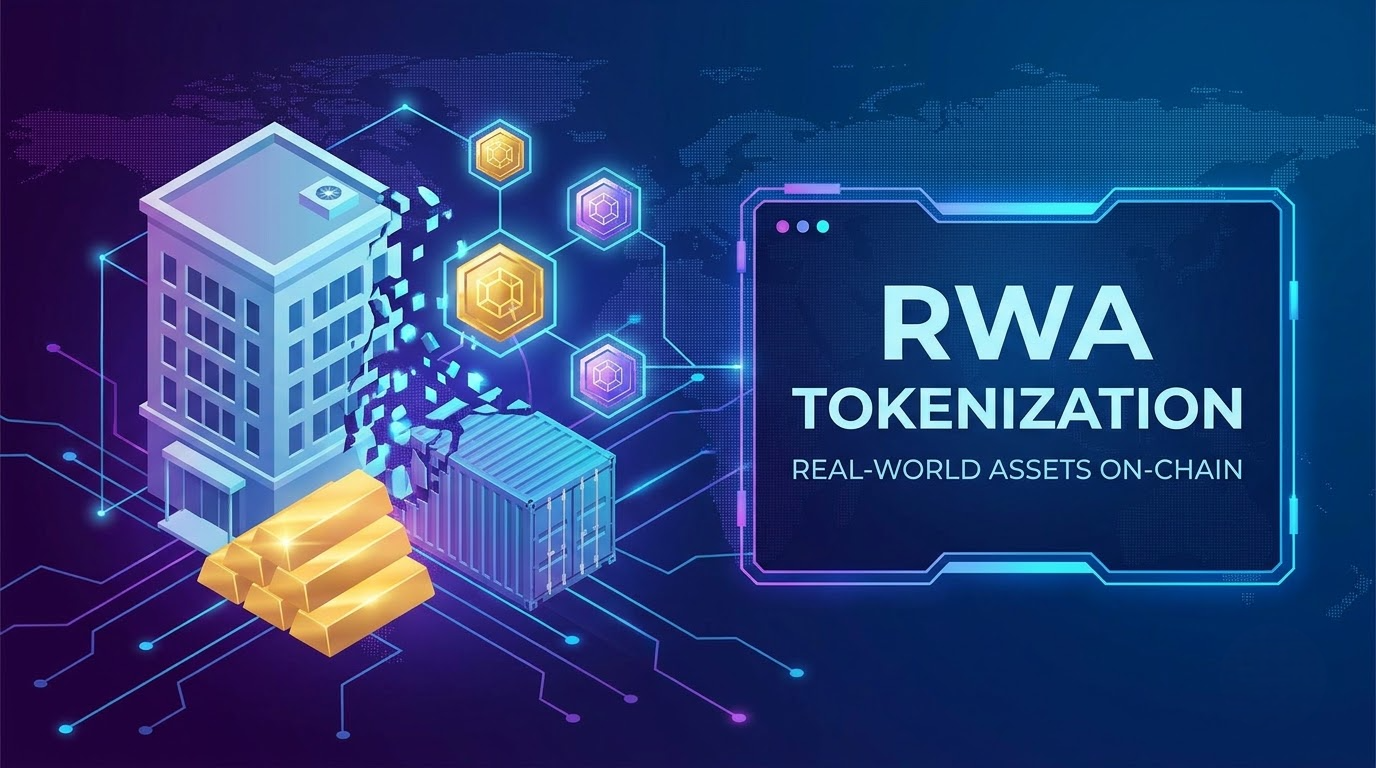
Real-world asset tokenization is increasingly being explored as a way to bring traditionally illiquid assets such as real estate, private credit, bonds, commodities, infrastructure, and investment funds into digital financial markets. By representing ownership rights or financial claims through blockchain-based tokens, businesses can potentially improve transaction efficiency, fractionalize ownership, automate certain processes, and create new channels for investment.
Yet, tokenizing an asset is considerably more complicated than simply creating a digital token and placing it on a blockchain. The fundamental challenge is that the asset already exists within a legal, financial, and operational system outside the blockchain. A token therefore has to maintain a credible connection with the underlying asset and provide enforceable rights to its holder.
This is why businesses entering the sector face challenges that extend well beyond blockchain development. Regulatory uncertainty, legal enforceability, asset custody, valuation, compliance, liquidity, cybersecurity, interoperability, investor protection, and integration with traditional financial infrastructure can all determine whether a tokenization project succeeds or fails.
The Bank for International Settlements has emphasized that tokenization can improve efficiency and enable new financial arrangements, but its successful implementation requires appropriate legal and governance frameworks, scalable infrastructure, and reliable settlement mechanisms.
1. Regulatory Uncertainty Is One of the Biggest Obstacles
One of the most significant challenges for businesses is determining how a tokenized asset will be classified under applicable financial laws. A token can represent many different economic interests. Depending on its structure, it might resemble a security, fund interest, debt instrument, ownership interest, payment instrument, or another regulated financial product.
The difficulty increases when a project operates across multiple jurisdictions. A token issued in one country may be marketed to investors in several others, each with different rules concerning securities, investor eligibility, anti-money-laundering requirements, taxation, custody, reporting, and digital assets.
Businesses therefore cannot assume that a tokenization model legally valid in one market will automatically work elsewhere. They must determine who legally owns the underlying asset, what rights token holders receive, how those rights are transferred, and what happens if the issuer becomes insolvent.
The Financial Stability Board has identified regulatory and legal uncertainty as one of the factors constraining wider tokenization adoption. It also recommends greater understanding of how tokenization fits within existing legal and regulatory frameworks and stronger cooperation between authorities across jurisdictions.
For businesses, this means legal architecture needs to be designed before the technical architecture. A sophisticated smart contract cannot compensate for an unclear legal claim.
2. Connecting the Digital Token to the Physical Asset
Another fundamental challenge is establishing a reliable connection between the blockchain token and the asset it supposedly represents.
Consider a company tokenizing a commercial property. The blockchain may accurately record who owns the tokens, but the blockchain itself does not prove that the company actually owns the building. Nor can a smart contract independently determine whether the property has been sold, damaged, revalued, mortgaged, or subject to a legal dispute.
This creates what is sometimes described as the "oracle problem." Information about the physical asset must enter the digital system through trusted data sources, custodians, registries, valuation providers, administrators, or other intermediaries.
The quality of the tokenized product is therefore dependent not only on blockchain technology but also on the quality of the information surrounding the underlying asset. The FSB specifically identifies reliance on external providers such as custodians and oracles as an important feature of tokenization arrangements because these providers can affect platform functioning and token valuation.
For this reason, businesses need clearly defined procedures for asset verification, valuation updates, ownership records, documentation, and exceptional events.
3. Legal Ownership and Investor Rights Must Be Clearly Defined
Tokenization becomes particularly complicated when the token does not represent direct legal ownership of an asset.
For example, a property could be placed inside a special-purpose vehicle, with investors purchasing tokens that represent an economic interest in that entity. Alternatively, a token might represent a contractual claim on revenue generated by the property rather than ownership of the property itself.
These distinctions matter enormously.
Investors need to understand whether they have voting rights, income rights, redemption rights, liquidation rights, or merely a contractual claim against an issuer. Businesses also need to determine how those rights are enforced if a dispute occurs.
The blockchain may provide a transparent transaction history, but transparency does not automatically create legal enforceability. A token holder may be able to prove that a wallet owns 10,000 tokens, but the legal system must recognize what those 10,000 tokens actually entitle the holder to receive.
This is one reason the BIS has argued that different tokenization applications face different legal and governance obstacles and that not every asset is equally suitable for tokenization.
4. Compliance Can Become More Complex, Not Less
Tokenization is often associated with automation, but regulated tokenization projects still require extensive compliance infrastructure.
Businesses may need to implement Know Your Customer procedures, anti-money-laundering controls, sanctions screening, investor accreditation or eligibility checks, transaction monitoring, reporting, tax documentation, and restrictions on transfers.
This can become complicated when tokens are designed to trade continuously. A traditional private asset might have a relatively small number of known investors, while a tokenized version could potentially involve transactions between numerous participants.
The business must therefore determine who is permitted to hold the token and how compliance rules can be enforced during transfers.
A tokenization platform may need mechanisms that prevent unauthorized wallets from receiving regulated tokens. This requires identity systems, permission controls, whitelisting, transfer restrictions, and compliance monitoring to work alongside blockchain infrastructure.
Consequently, businesses should view compliance as part of the product architecture rather than as an administrative function added after development.
5. Liquidity Is Promising but Far From Guaranteed
One of the most frequently promoted advantages of tokenization is increased liquidity. Fractional ownership can lower the minimum investment required, while blockchain-based settlement could make transactions faster.
However, creating tokens does not automatically create a liquid market.
Liquidity requires buyers and sellers, credible pricing, reliable market infrastructure, appropriate disclosures, and sufficient investor demand. A token representing a $20 million office building may be divisible into thousands of units, but those units can still be difficult to sell if there are few interested buyers.
Research from the BIS on tokenized U.S. real estate provides an important example. The study found that tokenized properties can experience increased trading activity during certain liquidity shocks, but the liquidity benefit was associated with platform buyback mechanisms. Those mechanisms can themselves create higher solvency risks for platforms.
This illustrates a critical point: tokenization can improve the technical transferability of an asset without necessarily creating genuine economic liquidity.
Businesses therefore need to think carefully about market-making, redemption mechanisms, secondary trading venues, investor demand, and liquidity management.
6. Valuing Tokenized Assets Can Be Difficult
Asset valuation is another major challenge, particularly for assets that do not trade frequently.
Publicly traded securities have continuously observable market prices. Real estate, private companies, infrastructure projects, collectibles, private credit instruments, and other alternative assets may rely on periodic valuations.
Once such assets are tokenized and traded more frequently, the token price can diverge from the valuation of the underlying asset.
Suppose a property is valued at $10 million and divided into 1 million tokens. The theoretical value might be $10 per token. But if market participants become pessimistic, the token could trade below that value. Conversely, speculative demand could push the token price above the underlying valuation.
The FSB highlights asset price and quality risks as one of the vulnerabilities associated with tokenization, particularly where smart contracts and external data providers influence pricing and valuation.
Businesses therefore require credible valuation methodologies, independent assessments, transparent reporting, and mechanisms for handling significant discrepancies between token prices and underlying asset values.
7. Interoperability With Existing Financial Systems Remains Difficult
Most businesses are not starting from scratch. They already use banking systems, accounting platforms, custody arrangements, enterprise software, securities infrastructure, payment networks, and regulatory reporting systems.
A tokenization platform must therefore communicate with existing infrastructure.
This creates a major technical challenge because blockchain networks do not automatically share the same standards, identity systems, data structures, or transaction rules. A token issued on one network may not easily move to another network, while traditional financial systems may not be designed to process blockchain-native assets.
The BIS has identified interoperability between existing account-based systems and emerging tokenized infrastructures as a major challenge. Fragmentation across legacy systems and new networks can also create obstacles to collateral mobility and increase operational complexity.
For businesses, choosing a blockchain should therefore involve more than comparing transaction speed or gas fees. The network must fit into the broader technology and financial ecosystem.
8. Smart Contract Security and Operational Risk
Smart contracts can automate token transfers, distributions, compliance rules, redemptions, voting, and other processes. However, automation introduces its own risks.
A programming error in a conventional application may be fixed through a software update. A vulnerability in an immutable smart contract can potentially result in unauthorized transfers, frozen assets, incorrect distributions, or other serious consequences.
The FSB identifies smart contract errors, private-key management, governance weaknesses, and the immutability of distributed-ledger transactions as important operational vulnerabilities.
Businesses must therefore invest in secure development practices, independent smart contract audits, penetration testing, access-control mechanisms, key management, emergency procedures, and carefully designed upgrade mechanisms.
Security also extends beyond smart contracts. Wallet infrastructure, custody systems, APIs, identity providers, oracles, bridges, and administrative accounts can all become attack surfaces.
9. Custody of the Underlying Asset Cannot Be Ignored
Tokenization creates a digital representation, but the underlying asset still requires conventional custody and administration.
For securities, this could involve regulated custodians. For real estate, it could involve property companies, legal entities, registries, and property managers. For commodities, physical storage and verification may be required.
Businesses must establish who holds the underlying asset, who maintains documentation, who verifies its existence, and how token holders can enforce their rights.
This becomes particularly important when tokens are marketed as being backed by physical assets. If the asset is inadequately documented, improperly segregated, or difficult to recover during insolvency, the digital representation provides limited protection.
The challenge is therefore not simply creating a trustworthy blockchain record. Businesses need a trustworthy off-chain asset-management structure to support it.
10. Investor Protection and Transparency Are Essential
Tokenization can broaden access to alternative investments, but broader access creates greater responsibility.
Investors need accurate information about the asset, issuer, fees, valuation methodology, risks, ownership structure, redemption terms, liquidity conditions, and potential conflicts of interest.
A tokenized property, for instance, should not be marketed merely as a digital representation of a valuable building. Investors should understand maintenance costs, debt obligations, rental assumptions, vacancy risks, valuation uncertainty, and the precise legal relationship between the token and the property.
The BIS has noted that tokenization can potentially broaden access through fractionalization, but it also emphasizes that governance, legal protections, and operational safeguards remain important.
Transparency therefore needs to extend beyond on-chain transactions. Investors need transparency about the underlying asset itself.
11. Cross-Border Operations Create Additional Complexity
Tokenization has a naturally global character. Blockchain networks can operate continuously across borders, but laws and financial regulations remain jurisdiction-specific.
A token may be transferable globally from a technical perspective while legally restricted to investors in a particular jurisdiction.
Businesses operating internationally must therefore address differences in securities regulation, taxation, investor eligibility, data privacy, custody requirements, settlement rules, and reporting obligations.
Cross-border interoperability is also a technological concern. The BIS notes that different networks can use different rules, identities, and data policies, making seamless movement between systems difficult and potentially requiring bridges or other connections that introduce additional operational risks.
This means international tokenization projects need both legal interoperability and technical interoperability.
12. Building the Right Infrastructure Can Be Expensive
Although blockchain can reduce certain transaction costs over time, establishing a compliant institutional-grade tokenization platform can require substantial investment.
Businesses may need blockchain infrastructure, smart contracts, custody technology, identity systems, compliance engines, oracle services, legal structures, asset-management systems, investor portals, payment infrastructure, security monitoring, and secondary-market integrations.
The challenge is finding the right balance between functionality, security, scalability, and cost.
A platform designed only for a small pilot may not be capable of supporting thousands of investors. Conversely, building enterprise-level infrastructure before proving product-market demand can result in unnecessary expenditure.
Businesses therefore benefit from a phased approach: establish the legal and asset structure, validate the tokenization model, launch a controlled pilot, evaluate investor behavior, and then scale the infrastructure.
How Businesses Can Overcome These Challenges
Successful tokenization requires businesses to treat the project as a combination of finance, law, technology, compliance, and asset management, rather than simply a blockchain development initiative.
A practical strategy should include:
- Begin with legal classification: Determine exactly what the token represents and what rights investors receive.
- Select appropriate assets: Assets with clear ownership structures, reliable valuation methods, and predictable cash flows are generally easier to structure.
- Build compliance into the platform: KYC, AML, transfer restrictions, investor eligibility, and monitoring should be incorporated from the beginning.
- Establish asset verification: Create reliable processes for proving ownership, valuation, custody, and ongoing asset status.
- Prioritize security: Conduct smart contract audits and establish strong key-management and access-control procedures.
- Plan for interoperability: Consider how the tokenized asset will interact with payment systems, custodians, exchanges, and other blockchain networks.
- Design liquidity realistically: Do not assume fractionalization automatically produces a secondary market.
- Provide investor transparency: Clearly communicate risks, rights, fees, valuation methods, and redemption conditions.
- Use scalable architecture: Build infrastructure that can expand without compromising security or compliance.
The objective should not be to put every possible asset on-chain. Instead, businesses should identify where tokenization genuinely solves an existing problem better than conventional infrastructure.
The Growing Opportunity Despite the Challenges
The difficulties surrounding tokenization should not obscure its potential. Tokenized government bonds, funds, private credit, real estate, and other financial assets are already being explored by financial institutions and technology providers.
The market remains relatively early, but institutional experimentation is increasing. For example, the BIS reported in 2025 that tokenized bonds had reached approximately $8 billion in issuance, while also noting that regulatory and infrastructure challenges still need to be addressed.
This emerging activity demonstrates an important shift: tokenization is moving from a purely conceptual blockchain use case toward experimentation within established financial markets.
The long-term opportunity will depend on whether businesses can create systems where digital tokens are not isolated blockchain objects but legally enforceable, properly valued, compliant, secure, and interoperable representations of real economic assets.
Conclusion
Real-world asset tokenization offers businesses an opportunity to modernize ownership, investment, settlement, and asset management, but the path to implementation is complex. Regulatory uncertainty, legal enforceability, asset verification, compliance, liquidity, valuation, interoperability, cybersecurity, custody, investor protection, and infrastructure costs can all become significant barriers. The most successful projects will therefore be those that combine blockchain technology with strong legal frameworks, reliable asset administration, institutional-grade security, and transparent governance. Businesses looking to turn this opportunity into a practical and scalable product can work with Blockchain App Factory, which provides best services for building secure, compliant, and scalable tokenization platforms tailored to different real-world asset use cases.
FAQs
1. What is the biggest challenge in real-world asset tokenization?
Regulatory and legal uncertainty is among the biggest challenges because businesses must establish exactly what the token represents and ensure that investor rights are legally enforceable.
2. Does tokenizing an asset automatically make it liquid?
No. Tokenization can make ownership easier to divide and transfer, but genuine liquidity still requires sufficient buyers, sellers, market infrastructure, reliable pricing, and investor demand.
3. Why is asset verification important in tokenization?
Blockchain can record token ownership, but it cannot independently prove that the underlying physical asset exists or remains legally owned by the issuer. Reliable off-chain verification is therefore essential.
4. Is smart contract security important for RWA projects?
Yes. Smart contracts may control transfers, distributions, compliance restrictions, and other critical functions. Vulnerabilities can therefore create significant financial and operational risks.
5. How can businesses successfully overcome tokenization challenges?
Businesses should combine legal planning, regulatory compliance, asset verification, secure blockchain development, smart contract auditing, reliable custody, interoperability planning, and transparent investor communication from the beginning.

 English
 Arabic
 French
 Spanish
 Portuguese
 Deutsch
 Turkish
 Dutch
Dutch
 Italiano
 Romaian
 Portuguese (Brazil)
 Greek
Greek
