

GPT-INDIA Portable Dust Collector: Flexible Dust Control for Changing Industrial Workspaces
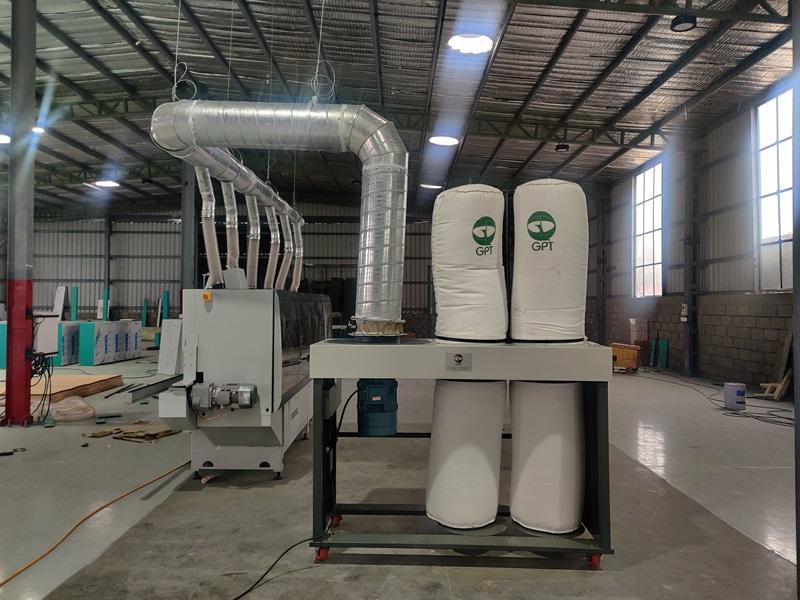
Industrial production areas are rarely static. Machines are relocated, production lines change, new workstations are added, and different processes may generate dust at different points throughout the day. A fixed dust collection arrangement can be highly effective for permanent equipment, but some manufacturing environments need a more flexible approach. This is where a Portable Dust Collector can provide a practical solution.
A portable unit allows dust to be collected closer to the point where it is generated without requiring a completely permanent extraction network for every workstation. It can be particularly useful for woodworking, fabrication, repair workshops, finishing operations, maintenance areas, and production facilities where dust-generating activities are distributed across different locations.
GPT-INDIA develops industrial dust collection and air pollution control equipment with attention to process requirements, airflow conditions, installation limitations, and operating requirements. A portable dust collection solution can be selected when mobility and targeted extraction are important parts of the application.
What Makes a Portable Dust Collector Different?
A conventional centralised dust collection system is normally connected to fixed machines through a permanent duct network. This arrangement can work well when equipment locations remain unchanged and multiple machines need simultaneous extraction.
A Portable Dust Collector takes a different approach. The collection equipment can be positioned closer to a particular machine or work area and moved when the production requirement changes.
This flexibility can be valuable in workshops where several machines operate at different times. Instead of designing a permanent extraction connection for every possible location, operators can use a mobile collection arrangement for selected processes.
The right choice depends on the production layout, dust generation rate, number of extraction points, required airflow, operating schedule, and available floor space.
Why Mobility Can Improve Dust Management
Dust control is most effective when contaminants are captured close to their source. However, not every industrial environment allows a permanent hood and duct connection to be installed at every workstation.
A mobile collector can bridge this gap.
When the dust-generating activity moves, the collector can be repositioned. When a particular machine is taken offline, the unit can potentially be used at another location, subject to its design and airflow requirements.
This makes portability particularly useful for maintenance departments, fabrication workshops, woodworking facilities, job shops, and production environments with changing layouts.
Instead of treating the factory layout as permanent, the dust-control arrangement can accommodate operational changes.
Portable Dust Collection for Woodworking
Woodworking is one of the areas where portable dust extraction can be especially useful. Cutting, drilling, routing, sanding, trimming, and machining can produce different quantities and forms of wood dust.
A collector can be connected to suitable extraction points according to the machine being operated.
For smaller workshops, a mobile arrangement can provide flexibility without occupying the space required for a large centralised installation. For larger facilities, portable units may supplement a central system at locations where permanent ducting is difficult or where occasional extraction is required.
The collector should still be selected according to the particle characteristics, required airflow, machine connection, and operating conditions.
The Role of a Cyclone Dust Collector
A Cyclone Dust Collector uses centrifugal action to separate particulate matter from an air stream before the air proceeds to the next stage of the collection process.
In applications containing relatively heavier particles, cyclone separation can help remove a portion of the dust load before finer filtration.
The use of a cyclone depends on the characteristics of the material and the overall system design. It should not be assumed that every portable application requires the same configuration.
Where a cyclone is appropriate, it can form part of a staged collection arrangement in which larger particles are separated first and finer particulate matter is subsequently handled by filtration.
Portable vs. Centralised Dust Collection
Neither portable nor centralised collection is automatically better for every factory.
A centralised dust collection system can be advantageous where several machines operate simultaneously and permanent ducting is practical. It can provide a common extraction network for a large production area.
A Portable Dust Collector becomes attractive when flexibility is more important. It can be useful for individual machines, temporary workstations, maintenance operations, smaller workshops, or locations where installing permanent ductwork would be difficult.
The decision should be based on how the facility actually operates rather than simply comparing equipment sizes.
Airflow Should Match the Application
Portability does not remove the need for proper airflow calculations.
Every dust-producing machine has a particular extraction requirement. If the collector does not provide adequate airflow at the required pressure, dust capture may be insufficient.
At the same time, simply selecting excessive airflow can increase energy consumption and may not provide meaningful additional benefits.
The extraction hood, hose or duct, bends, filters, collection chamber, and fan all contribute to system resistance. The collector therefore needs to be evaluated as a complete system.
This is particularly important when a portable unit is moved between different machines because each connection may have different airflow and pressure requirements.
Importance of Filter Selection
The filtration stage determines how effectively fine particles are separated from the extracted air.
Different dust types require different filtration considerations. Wood dust, metal particles, plastic dust, mineral material, and other industrial particulates can behave differently.
Filter media selection should consider particle size, dust loading, operating environment, temperature, moisture, and cleaning requirements.
A collector intended for one process should not automatically be assumed suitable for another simply because both processes generate visible dust.
Proper filter selection helps maintain airflow and can also contribute to longer filter service life.
Dust Collection and Workshop Productivity
Dust can interfere with more than air quality. Accumulated material around machinery can increase cleaning requirements and make the production area more difficult to manage.
A well-positioned dust collection unit can help control material at the source and reduce the amount of airborne dust spreading around the immediate work area.
For workshops with frequently changing activities, portability can make this easier because the extraction equipment can follow the work.
This does not mean that a portable unit replaces every form of industrial ventilation. General ventilation, local exhaust, process filtration, and housekeeping may all have separate roles depending on the application.
Space-Saving Advantages
Floor space is valuable in many industrial facilities. Large permanent equipment and duct networks can consume space that could otherwise be used for production, storage, or movement.
A portable collection arrangement can sometimes provide a more adaptable solution where a permanent installation is impractical.
However, equipment placement should still allow sufficient access for operation, inspection, cleaning, and maintenance. The collector should not be positioned where movement around the production area becomes unsafe or where service access is restricted.
Mobility is useful only when it works together with practical plant layout planning.
When Should Industries Consider Portable Collection?
A Portable Dust Collector may be considered when production involves individual dust-generating machines, temporary work areas, changing equipment positions, intermittent operations, or smaller extraction requirements.
It can also be useful as a supplementary collection unit when a larger centralised system already exists but certain workstations require additional local extraction.
The best application is therefore determined by the production pattern rather than by the label “portable.”
Selecting Portable Dust Collector Manufacturers
When comparing Portable Dust Collector manufacturers, buyers should evaluate more than mobility.
The manufacturer should understand the required airflow, static pressure, dust characteristics, filtration method, collection capacity, operating environment, and intended mobility.
Construction quality is also important because portable equipment may be moved more frequently than fixed systems. Wheels, frames, access arrangements, electrical components, filter housing, collection containers, and connections should be suitable for the intended operating conditions.
A technically experienced manufacturer can also help determine whether a portable system is genuinely appropriate or whether a centralised dust collection arrangement would be more effective.
Working With Portable Dust Collector Suppliers
The role of Portable Dust Collector suppliers should extend beyond supplying a standard machine.
A supplier should be able to understand what material is being collected, where it is generated, how frequently the collector will be used, what machines will be connected, and whether the unit will operate independently or as part of a larger extraction system.
For replacement or expansion requirements, compatibility with existing hoses, ducting, filters, and extraction points should also be considered.
This application-focused approach can help customers avoid selecting equipment based solely on advertised airflow or physical size.
Maintenance of a Portable Dust Collector
Portable equipment still requires regular maintenance.
Filters should be inspected for loading, damage, blinding, or excessive pressure drop. Collection containers should be emptied before they become excessively full. Hoses and connections should be checked for leaks or damage.
The fan and motor should also be inspected according to the manufacturer's maintenance recommendations.
If airflow begins to decline, the cause should be investigated. A blocked filter, damaged hose, leakage, excessive dust accumulation, or fan-related problem can all affect collection performance.
Regular maintenance helps keep a portable system ready for use whenever production requirements change.
Safety Considerations for Industrial Dust
Certain industrial dusts can present additional hazards depending on their physical and chemical characteristics. Fine combustible dusts, for example, may require specialised risk assessment and equipment selection.
The type of dust, concentration, process conditions, ignition sources, and applicable workplace requirements should be evaluated before selecting collection equipment.
A Portable Dust Collector should therefore never be selected solely because it is convenient to move. The collector must be suitable for the material being handled and the conditions in which it will operate.
Where dust presents a specific fire, explosion, toxicological, or chemical risk, specialised engineering assessment may be required.
GPT-INDIA Portable Dust Collection Solutions
GPT-INDIA, operated by Green Planet Technologies, provides industrial dust collection and air pollution control solutions for manufacturing environments with different process requirements.
Its equipment range includes Portable Dust Collectors, Dust Collectors, Cyclone Dust Collectors, Multicyclone Dust Collectors, Bag Filters, Pulse Jet Bag Filters, Filter Bags, Wood Dust Collectors, BIBO Dust Collectors, Wet Scrubbers, Fume Exhaust Systems, Activated Carbon Filters, Paint Booths, Air Washer Systems, Axial Flow Fans, and Centrifugal Blowers.
The company develops application-specific solutions rather than relying only on standard equipment selection. Airflow, dust characteristics, filtration requirements, installation conditions, and maintenance considerations can be evaluated when determining an appropriate system.
GPT-INDIA has manufacturing facilities associated with New Delhi and Sahibabad and supplies industrial environmental equipment for different manufacturing applications.
GPT-INDIA
59/2/1, Site 4, Industrial Area, Sahibabad, Distt. Ghaziabad – 201010, Uttar Pradesh, India
Phone: +91-9773500660
Email: info@gpt-india.com
Frequently Asked Questions
What is a Portable Dust Collector?
A Portable Dust Collector is a mobile dust collection unit designed to capture particulate matter from selected machines or work areas. Its mobility makes it suitable for applications where extraction points may change.
Where is a Portable Dust Collector commonly used?
Portable units can be used in woodworking workshops, fabrication areas, maintenance operations, job shops, individual machine stations, and other environments where flexible local dust extraction is required.
What is the purpose of a Cyclone Dust Collector?
A Cyclone Dust Collector uses centrifugal action to separate particulate matter from an air stream. It can be used as a pre-separation stage or as part of a larger dust collection arrangement depending on the application.
Is a portable collector better than a central dust collection system?
Not necessarily. A central system can be more suitable for multiple permanent machines, while a portable unit can be advantageous where flexibility, mobility, or intermittent extraction is more important.
How do I choose Portable Dust Collector manufacturers?
Consider the manufacturer's ability to evaluate airflow, static pressure, dust characteristics, filtration requirements, construction quality, mobility, maintenance needs, and the actual application.
What should I ask Portable Dust Collector suppliers before purchasing?
Provide details about the material being collected, machine type, required airflow, operating schedule, connection arrangement, available space, and whether the collector will be used at one or multiple locations. These details help determine a suitable configuration.
Conclusion
Dust collection does not always need to be tied to a permanent location. In workshops and manufacturing environments where machines, processes, or workstations change regularly, a Portable Dust Collector can provide a flexible way to bring extraction closer to the source.
The effectiveness of the system still depends on correct airflow, filtration, dust handling, fan selection, and maintenance. Where heavier particulate loading is involved, a Cyclone Dust Collector may also form part of a suitable staged collection arrangement.
For businesses comparing Portable Dust Collector suppliers or Portable Dust Collector manufacturers, technical suitability should remain the priority. GPT-INDIA focuses on application-based industrial dust collection solutions designed around the actual process, helping customers select equipment that fits both present requirements and changing production conditions.

 English
 Arabic
 French
 Spanish
 Portuguese
 Deutsch
 Turkish
 Dutch
Dutch
 Italiano
 Russian
 Romaian
 Greek
Greek