

Men's Gemstone Bracelet Guide: Amethyst, Blue Topaz, Garnet and Peridot Explained
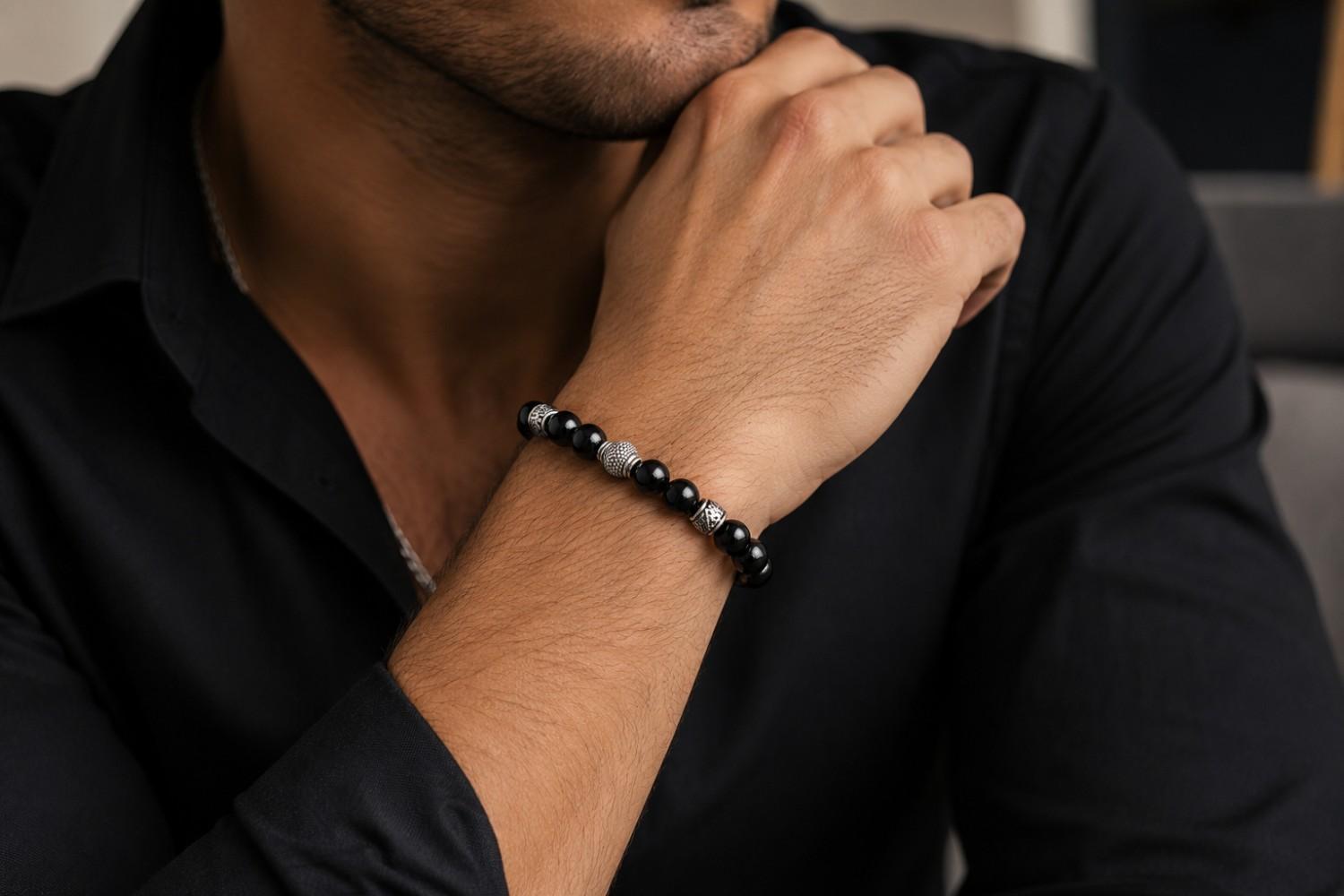
Most men buying their first gemstone bracelet do not know enough about the stones to make a confident choice. They see a blue stone and a purple stone and a green stone and pick based on color alone. That is not a bad instinct but it leaves out everything that actually matters — what the stone is made of, how it holds up with daily wear, what the color variation means within each type, and why certain stones work better in certain settings.
This guide covers the four natural gemstones used across the London and Reign bracelet collections at Aequa & Co. in enough depth to make the buying decision straightforward: amethyst, London blue topaz, garnet, and peridot. Each one is explained on its own terms — not as a trend, not as a symbol, just as a material with specific visual and physical properties worth understanding before you spend money on it.
Amethyst
Amethyst is a variety of quartz — silicon dioxide with trace amounts of iron that produce its purple color. It is one of the most abundant gemstones in the world, which historically kept its price low despite its visual appeal, though high-quality deep-color amethyst has become increasingly scarce and commands significantly higher prices than the pale commercial grade.
The color range within amethyst is wider than most buyers realize. At the pale end, amethyst reads as light lavender — subtle, barely there. At the deep end, it reaches a rich, saturated violet that borders on grape or burgundy in certain lighting. The most prized amethyst sits in the middle-to-deep range: a clear, vivid purple without visible color zoning or cloudiness.
On the Mohs hardness scale, amethyst sits at 7. This makes it durable enough for daily wear in a bracelet setting without significant risk of surface scratching from normal contact. It is harder than pearl, softer than sapphire. Solid metal settings — particularly sterling silver — suit amethyst well because the cool silver tone contrasts the warm purple without competing with it.
In the Aequa & Co. bracelet collection, amethyst appears across the Reign range. The Reign Maelstrom Bracelet in solid 925 sterling silver at $1,590 is the most significant amethyst bracelet in the collection — heavily set, architectural, and built around the Aequa Cut, the brand's proprietary amethyst setting. The Reign Arc Bracelet at $790 is a more restrained entry point in the same material.
The London Supreme Tennis Bracelet takes amethyst in a different direction — emerald-cut stones in a continuous channel setting in solid 925 sterling silver, 18K gold vermeil, or solid 14K/18K gold, starting from $899. The emerald cut maximizes color depth by reducing brilliance, which suits amethyst specifically because its color is the point, not the sparkle.
Amethyst works visually with black, navy, grey, and deep burgundy outfits. It reads as a strong, dark stone in good light and has enough saturation to hold its own against heavier metal pieces without needing to compete in size.
London Blue Topaz
Topaz in its pure form is colorless. The blue variety — the most commercially significant — gets its color through irradiation treatment, either natural or laboratory-induced. London blue topaz is the deepest and most saturated of the three commercial blue topaz grades, the others being Sky blue (pale and light) and Swiss blue (bright medium blue). London blue reads as a steely, inky blue — dark enough to appear almost teal in certain lighting, distinctly blue in others.
The color of London blue topaz is its primary commercial distinction from other blue gemstones. It occupies a visual space between sapphire and aquamarine — darker than aquamarine, less expensive than sapphire, and with a distinctive cool grey undertone that sits naturally against silver and white gold. The irradiation treatment is permanent and stable — it does not fade with light exposure or wear.
On hardness, topaz rates 8 on the Mohs scale, making it significantly harder than amethyst and well-suited to daily wear in a bracelet. It resists surface scratching well. The one vulnerability topaz has is cleavage — it can split along internal planes if struck sharply in the wrong direction, which is why secure settings matter more for topaz than for a 7-rated stone.
In the Aequa & Co. bracelet collection, London blue topaz appears in the London Legacy Tennis Bracelet in solid 925 sterling silver or 14K/18K white gold, starting at $1,299. The emerald-cut stones in a continuous channel setting display the stone's depth of color to maximum effect — the flat facets of the emerald cut create broad color flashes rather than the dispersed sparkle of a round brilliant cut, which suits London blue topaz because the color, not the brilliance, is the visual asset.
London blue topaz reads well with grey, black, white, and cool navy. It works against both silver and white gold naturally. Yellow gold is a more deliberate pairing — the contrast between warm gold and cool blue is striking but requires the rest of the look to balance it.
Garnet
Most people associate garnet with a dark wine red, and while that is the most common variety, garnet is actually a family of minerals that spans an unusually wide color range — from deep burgundy to orange to green. The garnet used in men's fine jewelry is overwhelmingly from the pyrope or almandine varieties, which produce the deep red-to-burgundy tones most associated with the stone.
Quality garnet at its best is deeply saturated — a rich, dark red that holds color even in low light. At lower grades, garnet can look muddy or brown-toned, which reduces its appeal significantly. The distinction between a well-saturated, clear garnet and a commercial-grade stone is visible to the naked eye.
Garnet rates 6.5 to 7.5 on the Mohs scale depending on the specific variety, putting it in similar territory to amethyst for practical daily wear purposes. It is a durable stone for bracelet use with standard care.
The visual character of garnet in jewelry is specifically about depth of color in low to medium light. Unlike blue topaz or lighter-toned gemstones that catch and reflect light actively, garnet absorbs light and returns it as color. In a well-cut emerald-cut setting, a deep garnet looks almost liquid — you see into it rather than off its surface. This quality makes it one of the more distinctive gemstones in men's jewelry precisely because it does not try to impress from across the room.
In the Aequa & Co. bracelet collection, garnet appears in the London Sovereign Tennis Bracelet in solid 925 sterling silver, 18K gold vermeil, or solid 14K/18K gold, starting from $999. The emerald-cut format and channel setting suit garnet for the same reason they suit amethyst — maximizing color depth over brilliance.
Garnet works visually with deep, dark, earthy outfits — burgundy, forest green, black, brown, camel. It does not need bright clothing to read well. Against a plain black shirt or a dark winter coat, a deep garnet bracelet has significant presence without being loud.
Peridot
Peridot is one of the few gemstones that occurs in only one color: olive green. It is formed from the mineral olivine, which gets its characteristic yellow-green tone from iron content. Unlike most colored gemstones that come in a range of saturations and hues, peridot is always distinctly yellow-green — the saturation varies from light lime to deeper olive, but the hue does not shift significantly.
This specificity is either peridot's appeal or its limitation depending on your wardrobe and aesthetic. For men who already wear earth tones — olive, khaki, forest green, brown, camel — peridot integrates naturally. For men who dress primarily in cool neutrals — black, grey, navy — peridot requires more deliberate styling because the warm yellow-green sits in a different color family.
Peridot rates 6.5 to 7 on the Mohs scale, making it the softest of the four stones covered here and slightly more susceptible to surface wear than topaz or harder amethyst. In a well-protected channel setting this is not a practical concern for daily bracelet wear, but it is worth knowing for care purposes — avoid harsh abrasives and store separately from harder gemstones.
The visual quality that distinguishes high-grade peridot is the saturation and clarity of the green. Pale or washed-out peridot reads as unremarkable. Deep, vivid, clean peridot has a distinctive brightness — it catches light differently from other green stones because olivine has a higher birefringence (double refraction), which creates a subtle depth and liveliness in well-cut stones.
In the Aequa & Co. bracelet collection, peridot appears in the London Dominion Tennis Bracelet in solid 925 sterling silver, 18K gold vermeil, or solid 14K/18K gold, starting from $999. The emerald-cut stones in a channel setting give the peridot maximum face-up color — the broad flat facets display the olive-green tone cleanly rather than breaking it into small flashes.
Peridot works best against warm, earthy, and natural tones. Military olive, sand, brown leather, dark denim, and warm grey all sit naturally alongside it. Against black it creates a clear color accent without competing. Against cool grey or blue-toned outfits it can read slightly disconnected from the palette.
Choosing Between the Four
The practical decision comes down to two factors: your wardrobe and your preferred visual register.
If you dress primarily in cool neutrals — black, grey, navy, white — London blue topaz or amethyst will integrate most naturally. Blue topaz is the cooler and more understated of the two. Amethyst is richer and more saturated.
If you dress in warm, earthy, or deep tones — burgundy, olive, brown, camel, dark green — garnet or peridot work more naturally with your palette. Garnet for depth and darkness, peridot for a lighter, warmer green accent.
On the question of setting metal: all four stones sit most naturally in sterling silver or white gold. Yellow gold works with garnet and peridot — the warm metal amplifies the warm stone — and works as a deliberate contrast with blue topaz and amethyst. The London collection offers both silver/white gold and yellow gold vermeil options across all four stones, which means the metal choice does not lock you into one stone.
On the question of occasion versus daily wear: the London tennis bracelets in all four stones are built for daily wear in solid metal settings. The Reign collection's amethyst pieces are heavier and more statement-oriented — better suited to occasions where the bracelet is the focal point of the look rather than one element in a stack.
Browse the complete men's gemstone bracelet collection at Aequa & Co. and find the stone that fits how you actually dress.

 English
 Arabic
 French
 Spanish
 Portuguese
 Deutsch
 Turkish
 Dutch
Dutch
 Italiano
 Russian
 Romaian
 Portuguese (Brazil)