

Real World Asset Tokenization: The Next Frontier for Enterprise Finance
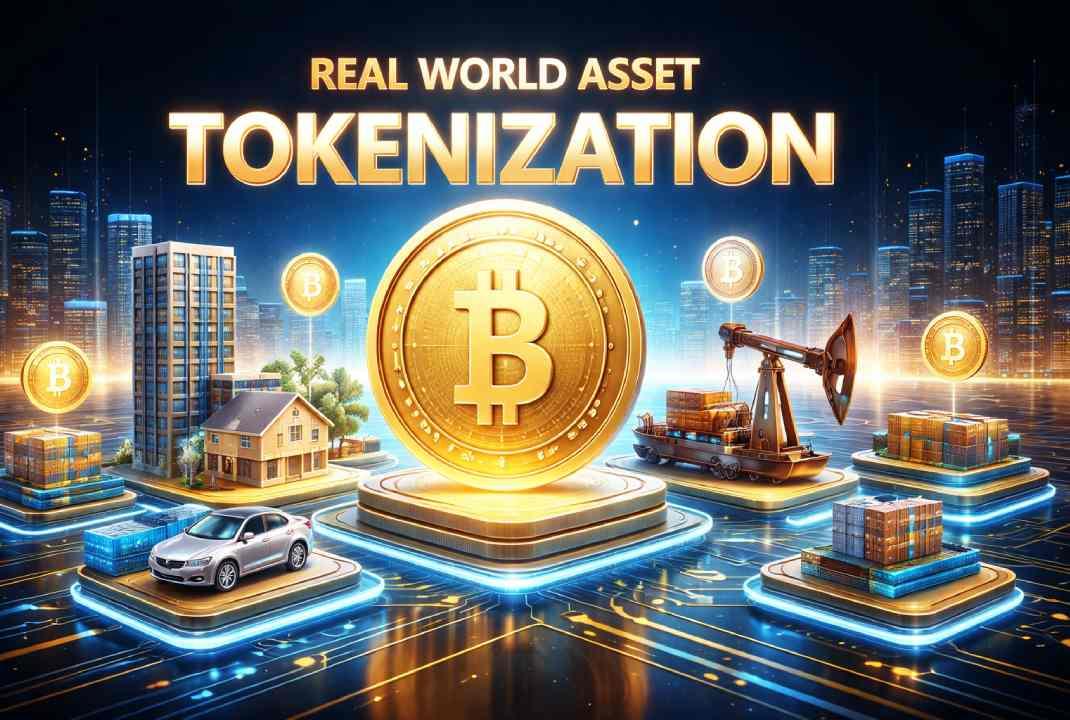
Real World Asset Tokenization is moving beyond experimental blockchain projects and into a more practical phase of financial infrastructure. Banks, asset managers, capital markets firms, and enterprises are increasingly examining how blockchain can represent and manage assets such as bonds, funds, real estate, private credit, commodities, invoices, and other financial claims. The shift is significant because tokenization is not simply about putting an asset on a blockchain. It can change how an asset is issued, transferred, settled, financed, serviced, and monitored.
In 2026, institutional interest is becoming more concrete. An EY-Parthenon/Coinbase survey found that 63% of institutional respondents were very interested in tokenized assets, while 64% of asset managers were very interested in tokenizing their own assets. At the same time, financial infrastructure providers are moving toward hybrid models that connect blockchain networks with existing financial systems. Broadridge reported that 84% of surveyed firms consider tokenization strategically important, while 69% expect to hybridize existing infrastructure rather than replace it entirely. This makes Real World Asset Tokenization an increasingly relevant enterprise finance strategy.
What Is Real World Asset Tokenization?
Real World Asset Tokenization is the process of creating a blockchain-based digital representation of an asset or a legally defined claim, ownership interest, or economic right associated with an asset.
The underlying asset could include:
- Real estate
- Corporate bonds
- Government securities
- Private credit
- Investment funds
- Gold and other commodities
- Trade finance assets
- Invoices and receivables
- Infrastructure
- Intellectual property
- Carbon-related assets
The token itself does not automatically establish legal ownership. The legal structure, contractual rights, custody arrangements, and applicable regulations determine what the token represents. The technology provides another layer: a programmable digital record that can potentially make ownership, transfers, compliance and asset servicing more automated. The IMF notes that tokenization can embed ownership, transfer and compliance functions into programmable tokens and can support atomic delivery-versus-payment settlement.
Why Enterprise Finance Is Looking at Tokenization
Traditional financial markets rely on multiple intermediaries and systems.
An asset may move through separate processes for:
Issuance → Trading → Clearing → Settlement → Custody → Reporting → Servicing
Each stage can involve different databases, reconciliations, intermediaries and operational controls. Tokenization introduces the possibility of connecting several of these functions through programmable digital infrastructure. This does not mean every financial process will move to a public blockchain. Instead, enterprises are increasingly exploring hybrid architectures where tokenized assets interact with existing banking, custody, compliance and settlement systems. That is one reason the current enterprise conversation around tokenization is less about replacing traditional finance and more about modernizing its infrastructure.
1. Tokenized Bonds Can Modernize Debt Markets
Corporate and government bonds are among the most natural candidates for tokenization. A tokenized bond can digitally represent a bond or an associated legal claim while using blockchain infrastructure for issuance, transfer, settlement and servicing.
Potential benefits include:
- Faster settlement
- Automated interest payments
- Programmable transfer restrictions
- Improved ownership records
- Reduced reconciliation
- Greater transparency
- More efficient lifecycle management
Recent developments show that this is moving beyond theory. In India, RBI and SEBI launched a Demat 2.0 pilot in September 2026 to test corporate bond tokenization using blockchain and CBDC-based settlement. The pilot involved major market infrastructure institutions and initially targeted institutional investors. This demonstrates how tokenization can become part of regulated financial-market infrastructure rather than operating as a separate crypto ecosystem.
2. Tokenized Funds Can Transform Asset Management
Investment funds represent another major enterprise use case. Instead of maintaining ownership and transaction records entirely through conventional systems, fund interests can be represented through blockchain-based tokens.
This can potentially streamline:
- Investor onboarding
- Ownership records
- Subscription and redemption processes
- Distribution calculations
- Transfer restrictions
- Reporting
- Fund administration
The market is already seeing institutional experimentation with tokenized money-market funds and other investment products. PwC expects tokenized fund assets under management to grow at a 41% CAGR and reach $715 billion globally by 2030, based on its 2025 survey of managers, investors and distributors. For asset managers, the opportunity is therefore not simply launching a blockchain version of an existing fund. It is potentially creating a more programmable operating model for the entire fund lifecycle.
3. Real Estate Can Become a Programmable Financial Asset
Real estate has traditionally been difficult to divide, transfer and finance efficiently.
A property may involve:
- Complex ownership structures
- Multiple legal documents
- Long settlement periods
- Significant transaction costs
- Limited liquidity
- Extensive due diligence
Real Estate Tokenization can represent defined ownership interests or economic rights associated with a property through digital tokens. Depending on the legal structure, tokenization can support models involving:
- Fractional ownership
- Rental-income participation
- Property-backed securities
- Development financing
- Debt interests
- Portfolio-level real estate products
For enterprises, this could make property interests easier to administer and integrate with digital financial infrastructure. However, tokenization does not automatically make real estate liquid. Liquidity still depends on legal rights, market demand, investor eligibility, trading infrastructure and regulatory permissions.
4. Private Credit Can Become More Efficient
Private credit is another area where tokenization could address operational friction. Loans and credit agreements typically involve extensive documentation, servicing, reporting and payment processes.
Tokenized private credit could potentially connect:
Borrower → Loan Agreement → Tokenized Claim → Investor → Payment
Smart contracts may automate selected functions such as payment schedules, eligibility rules and distributions.
This could make private credit more composable with digital financial infrastructure while giving investors a more standardized digital representation of their interests. The key opportunity is not simply creating a token. It is building a system where the token remains connected to the underlying legal agreement, servicing process and asset data.
5. Trade Finance and Receivables Can Become Digitally Transferable
Enterprises generate enormous volumes of invoices, purchase orders, warehouse receipts and other trade-related documents. These assets can represent economic value, but traditional financing processes can be slow and document-heavy. Tokenization could potentially represent receivables or other eligible claims digitally, allowing financing workflows to become more automated.
For example:
Invoice Created → Verified → Tokenized Claim → Financing → Payment → Settlement
This could help businesses unlock working capital without waiting for traditional payment cycles to complete. The broader opportunity is to connect real-world business activity with programmable financial infrastructure.
6. Tokenized Collateral Can Improve Capital Efficiency
One of the most interesting enterprise applications may be collateral management. Businesses and financial institutions frequently hold assets that could potentially support financing but remain operationally difficult to transfer, value or monitor. Tokenized assets can provide a standardized digital representation that may make collateral workflows more efficient.
Potential applications include:
- Securities collateral
- Treasury assets
- Tokenized funds
- Real estate interests
- Commodities
- Private credit
- Other eligible financial assets
Tokenized collateral can also interact with digital settlement systems and lending infrastructure. Broadridge, for example, reported that its distributed-ledger repo platform processed $8 trillion in transactions during July 2026, illustrating how DLT-based infrastructure is already being used in institutional funding markets.
7. Enterprise Treasury Could Become More Programmable
Corporate treasury departments manage cash, liquidity, payments, investments and financial risk. Tokenization can potentially connect these functions through programmable assets and digital settlement rails. An enterprise could eventually use tokenized financial instruments alongside stablecoins, bank deposits, CBDCs or conventional payment infrastructure, depending on the applicable jurisdiction and institutional setup.
This could support:
- Automated settlements
- 24/7 transaction processing
- Programmable payments
- Treasury liquidity management
- Digital collateral
- Cross-border financial workflows
The objective is not necessarily to eliminate banks. Instead, tokenization can provide enterprises with new programmable financial rails that connect to existing institutions.
8. Tokenization Can Bring Automation Into Asset Servicing
Asset servicing is often one of the most operationally intensive areas of finance. Corporate actions, distributions, interest payments, redemptions, compliance checks and ownership updates can require multiple systems and manual reconciliation. With programmable tokens, selected rules can potentially be embedded directly into the asset infrastructure.
For example:
Eligible Holder → Payment Due → Smart Contract Rule → Distribution → Updated Record
This could reduce repetitive administrative processes. However, smart contracts should complement not replace appropriate legal agreements, governance, controls and human oversight.
9. Enterprises Can Create New Asset-Based Financing Models
Tokenization can also expand how companies think about financing. Instead of financing only through conventional debt or equity, enterprises may be able to structure digital representations of specific economic interests in eligible assets.
Potential examples include:
- Revenue-backed financing
- Asset-backed securities
- Infrastructure financing
- Equipment financing
- Real estate financing
- Receivables financing
- Commodity-backed structures
This could give businesses more flexibility in designing capital structures. For asset-heavy enterprises, the ability to connect physical assets with programmable financial instruments could become particularly valuable.
10. Interoperability Will Determine Enterprise Adoption
Tokenization will not reach enterprise scale if every tokenized asset exists inside an isolated system.
A bank may use one blockchain.
A custodian may use another.
An asset manager may operate on a separate platform.
A payment system may use a different digital settlement rail.
Therefore, interoperability is becoming one of the most important requirements for enterprise tokenization.
Future infrastructure will need to connect:
Blockchains + Banks + Custodians + Exchanges + Payment Networks + Compliance Systems + Enterprise Software
The goal is not simply blockchain adoption. The goal is connected financial infrastructure.
What Enterprises Need Before Tokenizing Assets
Launching a tokenization project requires more than blockchain development.
Enterprises should evaluate several layers.
Legal Structure
The organization must determine exactly what the token represents and what rights holders receive.
Regulatory Compliance
Securities laws, AML/KYC requirements, investor eligibility, custody rules, tax obligations and reporting requirements may apply depending on the asset and jurisdiction.
Asset Verification
The connection between the physical or financial asset and the digital token must be clearly established.
Custody
Enterprises need secure arrangements for both the underlying asset and the digital representation.
Smart Contract Security
Token contracts should be designed, tested and audited carefully.
Identity and Access
Enterprise platforms need appropriate identity, permissioning and compliance controls.
Interoperability
The tokenized asset should be able to interact with the organization's existing financial infrastructure where required.
Secondary Liquidity
Creating a token does not automatically create a market. Enterprises need to consider how eligible holders can transfer or potentially trade the asset.
The Enterprise Tokenization Stack
A mature Real World Asset Tokenization Platform will likely contain several interconnected layers:
Asset Layer
The underlying real-world or financial asset.
Legal Layer
Contracts establishing ownership, claims and rights.
Tokenization Layer
Blockchain-based representation of the relevant rights.
Compliance Layer
KYC, AML, investor eligibility, transfer restrictions and reporting.
Settlement Layer
Payments, delivery-versus-payment and transaction finality.
Custody Layer
Protection of digital assets and underlying assets.
Application Layer
Investor portals, dashboards, reporting and asset-management tools.
Interoperability Layer
Connections with banks, custodians, exchanges, payment systems and enterprise software. This architecture illustrates why enterprise tokenization is becoming an infrastructure conversation rather than simply a cryptocurrency conversation.
Challenges That Could Slow Adoption
Despite the momentum, tokenization still faces significant barriers. Regulatory uncertainty remains a major concern. In EY's 2026 institutional survey, 67% of respondents identified regulatory uncertainty as a major hurdle for tokenized assets, while integration challenges and insufficient secondary liquidity were also significant concerns.
Other challenges include:
- Blockchain interoperability
- Legal recognition
- Custody
- Cybersecurity
- Smart contract vulnerabilities
- Data quality
- Valuation
- Liquidity
- Privacy
- Governance
- Integration with legacy systems
There is also a critical distinction between tokenizing an asset and creating a useful financial market around that asset. A token may provide better digital records and automation while still having limited liquidity.
The Shift From Tokenization Experiments to Financial Infrastructure
The enterprise opportunity is becoming clearer.
Tokenization is moving from the question:
"Can this asset be put on a blockchain?"
to:
"Which parts of the financial lifecycle become better when this asset is represented digitally?"
That is a much more important question. The strongest use cases are likely to emerge where tokenization solves measurable problems involving settlement, reconciliation, collateral, asset servicing, distribution, financing or access.
Current institutional activity supports this transition. Research from Frontiers in Blockchain describes growing institutional experimentation with tokenized bonds, funds and blockchain-based settlement infrastructure. Meanwhile, recent market data indicates that tokenized real-world assets are expanding across fixed income and other asset classes rather than remaining concentrated in a single niche.
Conclusion
Real World Asset Tokenization could become one of the next major layers of enterprise financial infrastructure. Its potential extends across real estate, bonds, funds, private credit, commodities, trade finance, collateral and other asset classes. The real opportunity is not simply turning physical or financial assets into tokens. It is creating a financial environment where assets can become programmable, transferable, auditable and integrated with digital settlement and compliance systems.
For enterprises, this could mean faster settlement, streamlined asset servicing, new financing structures, improved capital efficiency and more connected financial workflows. The next phase of tokenization will therefore be less about proving that assets can exist on blockchain and more about proving that blockchain-based asset infrastructure can deliver measurable enterprise value. That is what makes Real World Asset Tokenization a potential next frontier for enterprise finance.

 English
 French
 Spanish
 Portuguese
 Deutsch
 Turkish
 Dutch
Dutch
 Italiano
 Russian
 Romaian
 Portuguese (Brazil)
 Greek
Greek
