

Auto Engine Sound Insulation: Control Under-Hood Noise, Manage Heat, and Enhance Driving Comfort
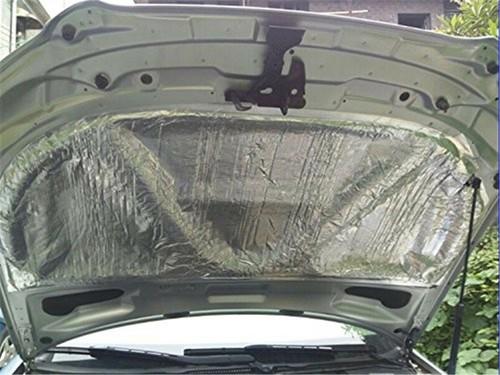
A vehicle's engine produces more than power—it also generates mechanical noise, vibration, and substantial heat that can influence the driving environment. Auto engine sound insulation can help manage these unwanted effects by controlling how engine-generated sound and vibration travel through the vehicle while complementary thermal materials help limit unwanted heat transfer. The result can be a quieter, more comfortable cabin without attempting to make the engine completely silent.
Under-hood conditions are especially demanding because several systems operate together in a confined space. Combustion, exhaust components, cooling fans, belts, pulleys, pumps, and other mechanical parts can contribute to the overall noise level. Meanwhile, radiant and conducted heat can affect nearby components and contribute to cabin temperature.
A successful treatment therefore requires more than simply covering the engine compartment. The better strategy is to identify the major sources of noise and heat, understand their transmission paths, and use materials suited to each application.
What Makes Engine Noise Reach the Cabin?
Engine noise can reach occupants through both airborne and structure-borne pathways. Sound can travel directly through the air within the engine compartment, while vibration can move through engine mounts, the chassis, firewall, and body panels.
The firewall is particularly important because it separates the engine bay from the passenger compartment. Openings for wiring, steering, HVAC systems, and other components can also provide pathways for sound and heat.
Because these routes behave differently, acoustic treatment should be planned around the actual transmission path rather than applied randomly throughout the engine bay.
Start With the Problem You Want to Solve
Before choosing insulation, determine what is most noticeable during driving. A low mechanical hum, sharp component noise, panel resonance, and vibration through the body may have different causes.
If metal panels are vibrating, a damping material may be useful for reducing resonance. If airborne sound is passing toward the cabin, an appropriate acoustic barrier or insulation layer may provide more relevant control.
This source-focused approach helps avoid the assumption that one product can solve every type of engine noise.
Why the Firewall Deserves Attention
The firewall is one of the most strategically important areas for controlling engine-related noise. It acts as a boundary between a high-noise environment and the cabin.
Reducing vibration in the firewall can help limit the amount of structural energy transferred into the passenger compartment. Proper acoustic treatment can also help manage airborne sound traveling through or around the barrier.
However, the firewall contains numerous critical systems. Any treatment must preserve access and clearance around wiring, pedals, steering components, HVAC connections, drainage points, and factory openings.
Managing Heat Requires a Separate Strategy
Engine noise and engine heat often exist side by side, but they are not the same problem. Thermal energy can move through conduction, convection, and radiation, while sound travels through air and structural vibration.
Heat shields are primarily intended to control radiant or conducted heat. Thermal insulation can slow heat transfer, while acoustic materials are designed for noise and vibration control.
In some applications, materials may provide more than one useful property, but the installation should always be based on the specific environmental requirements. A material that works well inside the cabin may not be appropriate close to a high-temperature exhaust component.
Choosing Materials for Under-Hood Conditions
Material selection becomes particularly important when working around an engine. Under-hood products must tolerate heat, vibration, moisture, and changing operating conditions.
Consider the expected temperature range, distance from major heat sources, adhesive performance, flexibility, thickness, and resistance to moisture or contamination. The closer a material is to exhaust components or other extreme heat sources, the more important temperature suitability becomes.
Never assume that a general-purpose soundproofing material is automatically suitable for every engine-bay location.
The Hood Can Influence Noise and Heat
The underside of the hood is another area that may contribute to the way engine noise and heat behave. Depending on the vehicle's construction, the hood can reflect or transmit sound generated below it.
A suitable hood treatment may help manage some of this energy. It can also provide thermal benefits when the product is specifically designed for that purpose.
Installation must remain secure and lightweight enough for the hood system. Materials should not interfere with hinges, latches, wiring, vents, or other components.
Reduce Vibration Before It Becomes Cabin Noise
Mechanical vibration can travel farther than many drivers realize. Engine mounts and structural components can transfer energy into the vehicle body, causing panels to resonate.
Damping is useful in situations where panel movement contributes to the perceived noise. By reducing the tendency of a panel to vibrate, damping can help lower the amount of sound it radiates.
This is different from simply absorbing sound in the air. A complete acoustic strategy may use both approaches, depending on the vehicle and the dominant noise source.
Keep Cooling Performance Intact
One of the most important considerations during under-hood insulation work is airflow. The engine and cooling system depend on carefully managed air movement to maintain appropriate operating temperatures.
Insulation should not obstruct cooling fans, radiators, ducts, vents, or other designed airflow pathways. It should also remain away from moving components and extreme heat sources unless specifically engineered for those locations.
If a vehicle already has an overheating issue, adding insulation should never replace proper mechanical diagnosis and repair.
Installation Is Part of the Acoustic Solution
Even high-quality materials can underperform if they are poorly installed. Surfaces should be prepared according to the product requirements, measurements should be accurate, and materials should be firmly secured.
Before cutting, map out wiring, hoses, brackets, fasteners, moving components, and service areas. Plan the installation so that future maintenance remains practical.
Once the material is installed, inspect the complete area. Check for loose edges, unwanted contact points, restricted movement, and potential exposure to excessive heat.
Don't Overlook Small Noise Pathways
Large panels naturally attract attention, but smaller openings and connections can also influence cabin noise. Wiring passages, HVAC openings, steering components, and other penetrations can create direct pathways between the engine bay and interior.
Where appropriate, these areas can be addressed with suitable sealing or acoustic treatments. However, factory openings should not be blocked without understanding their purpose.
A smarter installation preserves necessary ventilation, drainage, movement, and service access while reducing unnecessary sound transmission.
How a Quieter Engine Environment Benefits Drivers
Reducing intrusive engine noise can improve the overall perception of vehicle quality. Conversations may become easier, fatigue from constant background noise may be reduced, and music can become easier to hear without excessive volume.
The difference can be especially noticeable during highway driving or acceleration, when engine noise often becomes more prominent.
For vehicles with upgraded audio systems, reducing background noise can also complement speaker and amplifier improvements. Acoustic treatment does not replace proper audio tuning, but it can create a more controlled listening environment.
A Complete Vehicle May Need More Than Engine Treatment
Engine noise is only one component of cabin acoustics. Road surfaces, tires, wind, exhaust systems, suspension components, doors, and interior trim can all contribute to the final sound level.
If engine noise is the dominant issue, the firewall and engine compartment are logical areas to investigate first. If road noise remains after that work, treating the floor, doors, wheel wells, or other relevant areas may be more effective.
This targeted approach keeps the project focused and avoids unnecessary material use.
Mistakes That Can Reduce Results
One of the most common mistakes is choosing insulation based purely on thickness. Acoustic performance depends on material characteristics, placement, installation quality, and the type of sound being controlled.
Another mistake is using the same material everywhere without considering temperature. Engine compartments contain areas with dramatically different thermal conditions.
Poor adhesion, loose installation, blocked airflow, and reduced access to service components can also create problems. Finally, abnormal mechanical noises should never simply be covered up. A new vibration, unusual knocking sound, or sudden increase in engine noise should be investigated mechanically.
Create a Balanced Under-Hood Treatment
The most effective strategy combines several forms of control without confusing their individual purposes. Damping can address structural vibration, acoustic insulation can manage airborne sound, and heat-resistant barriers can help control thermal transfer.
Instead of covering every available surface, concentrate on the major transmission routes and areas where the vehicle's construction allows treatment to provide meaningful benefits.
This creates a cleaner installation, preserves serviceability, and can deliver better results than an excessive amount of material.
Final Thoughts
Auto engine sound insulation can be an effective part of a broader vehicle comfort strategy when it is designed around the actual sources of noise and heat. The objective is not complete silence, but better control over mechanical sound, vibration, and unwanted thermal transfer.
With suitable materials, careful placement, proper temperature considerations, and attention to airflow and clearance, the engine compartment can become a better-managed environment. The result is a quieter, more refined cabin that makes everyday driving more comfortable while preserving the vehicle's essential functions.

 English
 Arabic
 French
 Spanish
 Portuguese
 Deutsch
 Turkish
 Italiano
 Russian
 Romaian
 Portuguese (Brazil)
 Greek
Greek
