

How to Compare Laboratory Ovens by Temperature and Airflow?
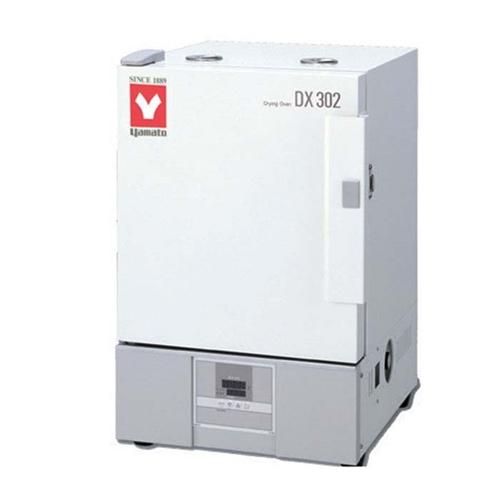
Choosing an oven for laboratory work involves more than checking the highest temperature listed in a specification sheet. You need to consider how accurately the oven maintains heat, how evenly temperature is distributed, and how air moves around your samples. By comparing temperature performance and airflow together, you can select an oven that better matches your application, workload, and process requirements.
Start With Your Required Temperature Range
Begin by identifying the temperatures you actually use. Write down your normal operating temperature, highest required temperature, lowest required temperature, and how long each process typically runs.
Avoid selecting an oven simply because its maximum temperature appears higher than your requirement. Instead, make sure your routine operating temperature falls comfortably within its rated range.
For example, if your process normally runs at 150°C, an oven rated significantly above that temperature may provide useful operating headroom. However, maximum temperature alone does not tell you how consistently the oven will maintain 150°C.
When comparing models, check:
- Operating temperature range
- Temperature accuracy
- Temperature stability
- Temperature uniformity
- Heat-up time
- Recovery time after opening the door
These specifications help you understand actual thermal performance rather than relying on the maximum temperature rating alone. Temperature uniformity can also change depending on chamber size, load, shelf arrangement, and airflow.
Compare Temperature Uniformity, Not Just Temperature
Temperature uniformity describes how closely the temperature matches at different locations inside the chamber. This matters when you need multiple samples to experience similar thermal conditions.
Suppose you place samples on three different shelves. If the oven has significant temperature differences between the top, middle, and bottom areas, your samples may not receive the same thermal treatment.
When comparing laboratory ovens for consistent sample heating and drying, look for documented uniformity specifications and check the conditions under which those specifications were measured.
Ask:
- Was uniformity tested with an empty or loaded chamber?
- At what temperature was it measured?
- How many measurement points were used?
- What load conditions were used?
- Is the stated value typical or guaranteed?
This information gives you a more useful comparison between models.
Understand Gravity and Forced Airflow
Airflow is one of the biggest differences between laboratory oven designs.
A gravity convection oven relies on natural movement of heated air. Warm air rises while cooler air moves downward. Because there is no fan actively circulating air, airflow is gentle and produces relatively low turbulence. This can be useful when working with lightweight or airflow-sensitive materials.
A forced-air or mechanical-convection oven uses a fan to circulate heated air through the chamber. Active circulation can improve temperature distribution and support faster heat transfer and recovery.
When you need laboratory oven solutions for uniform heating and controlled airflow, compare the convection method against the sensitivity of your samples.
Match Airflow Direction to Your Load
Do not stop at asking whether an oven has forced convection. Consider how the air moves through the chamber.
Horizontal airflow can work well when samples are arranged across shelves or placed on solid trays because air moves across the load. Vertical airflow may be particularly useful for drying applications where heated air moves upward through the chamber.
Your sample arrangement matters just as much as the airflow specification.
Before selecting an oven, consider:
- Sample shape and size
- Tray configuration
- Shelf spacing
- Load density
- Required drying rate
- Whether airflow could disturb lightweight materials
Avoid overcrowding shelves because blocked airflow can reduce effective heat distribution even when the oven itself has a strong circulation system.
Compare Heat-Up and Recovery Performance
Temperature range tells you what an oven can reach, but heat-up and recovery times tell you how efficiently it can operate during routine work.
Heat-up time refers to how long the oven takes to reach the desired temperature from ambient conditions. Recovery time refers to how quickly it returns to the setpoint after the door has been opened.
If you frequently load and unload samples, recovery performance can affect productivity. Forced convection ovens often provide faster heat-up and recovery because the fan actively distributes heated air.
For high-throughput applications, include these specifications in your comparison rather than evaluating temperature range alone.
Create a Simple Comparison Checklist
Before purchasing, create a side-by-side table for each model. Include:
|
Specification |
What to Compare |
|
Temperature range |
Does it cover your operating requirements? |
|
Temperature uniformity |
How evenly does it heat the chamber? |
|
Temperature stability |
How consistently does it maintain the setpoint? |
|
Convection type |
Gravity or forced air? |
|
Airflow direction |
Horizontal, vertical, or another configuration? |
|
Heat-up time |
How quickly does it reach temperature? |
|
Recovery time |
How quickly does it recover after door opening? |
|
Chamber capacity |
Does it accommodate your actual load? |
|
Shelving |
Is the arrangement suitable for your samples? |
|
Controls |
Are temperature settings and alarms appropriate? |
|
Safety |
Does it provide the protection your application requires? |
You can use this checklist to compare models objectively instead of choosing based on price or maximum temperature alone.
Consider the Application Before Making Your Final Choice
Your application should determine which specifications receive the most attention.
For gentle heating of lightweight materials, gravity convection may be appropriate because it produces lower air turbulence. For demanding drying processes or applications requiring more consistent chamber temperatures, forced convection may offer advantages through active air circulation.
If you are comparing laboratory ovens for precise temperature control and efficient sample drying, also consider chamber capacity, sample placement, operating frequency, and required documentation.
The goal is not to find an oven with the highest specification in every category. The goal is to find one whose temperature and airflow characteristics match your process.
Choose the Right Laboratory Oven With Confidence
When comparing ovens, evaluate temperature range, uniformity, stability, airflow type, airflow direction, heat-up time, and recovery performance together. A model that looks impressive on paper may not be suitable if its airflow pattern or thermal performance does not match your samples.
You can explore the available laboratory ovens for controlled heating, drying, and thermal processing from Global Lab Supply to compare options for different laboratory requirements.
If you need help determining which configuration fits your application, Global Lab Supply provides laboratory equipment and related solutions for professional environments.
You can also contact us for laboratory oven selection assistance when you need help reviewing specifications.
Frequently Asked Questions
Why is temperature uniformity important in a laboratory oven?
Temperature uniformity helps ensure that samples positioned in different areas of the chamber receive comparable thermal conditions. It is especially important when consistent heating or drying is required across multiple samples.
What is the difference between gravity and forced convection ovens?
Gravity convection uses natural air movement, while forced convection uses a fan to actively circulate heated air. Forced airflow can improve temperature distribution and recovery, while gravity convection provides gentler air movement.
Is higher airflow always better for laboratory drying?
No. The appropriate airflow depends on the material and process. Strong airflow can improve heat transfer, but delicate or lightweight samples may require gentler circulation to prevent disturbance.
What should you compare besides maximum oven temperature?
Compare temperature uniformity, stability, airflow type, airflow direction, heat-up time, recovery time, chamber capacity, controls, shelving, and safety features.
How can you choose the right laboratory oven for your application?
Start by defining your temperature range, load size, sample characteristics, drying requirements, operating frequency, and acceptable temperature variation. Then compare models using those requirements rather than relying only on maximum temperature or chamber size.
Original Source: https://globallabsupply.blogspot.com/2026/09/how-to-compare-laboratory-ovens-by.html

 English
 Arabic
 French
 Spanish
 Deutsch
 Turkish
 Dutch
Dutch
 Italiano
 Russian
 Romaian
 Portuguese (Brazil)
 Greek
Greek
