

Real Estate Tokenization: Turning Property Rights Into Flexible Digital Structures
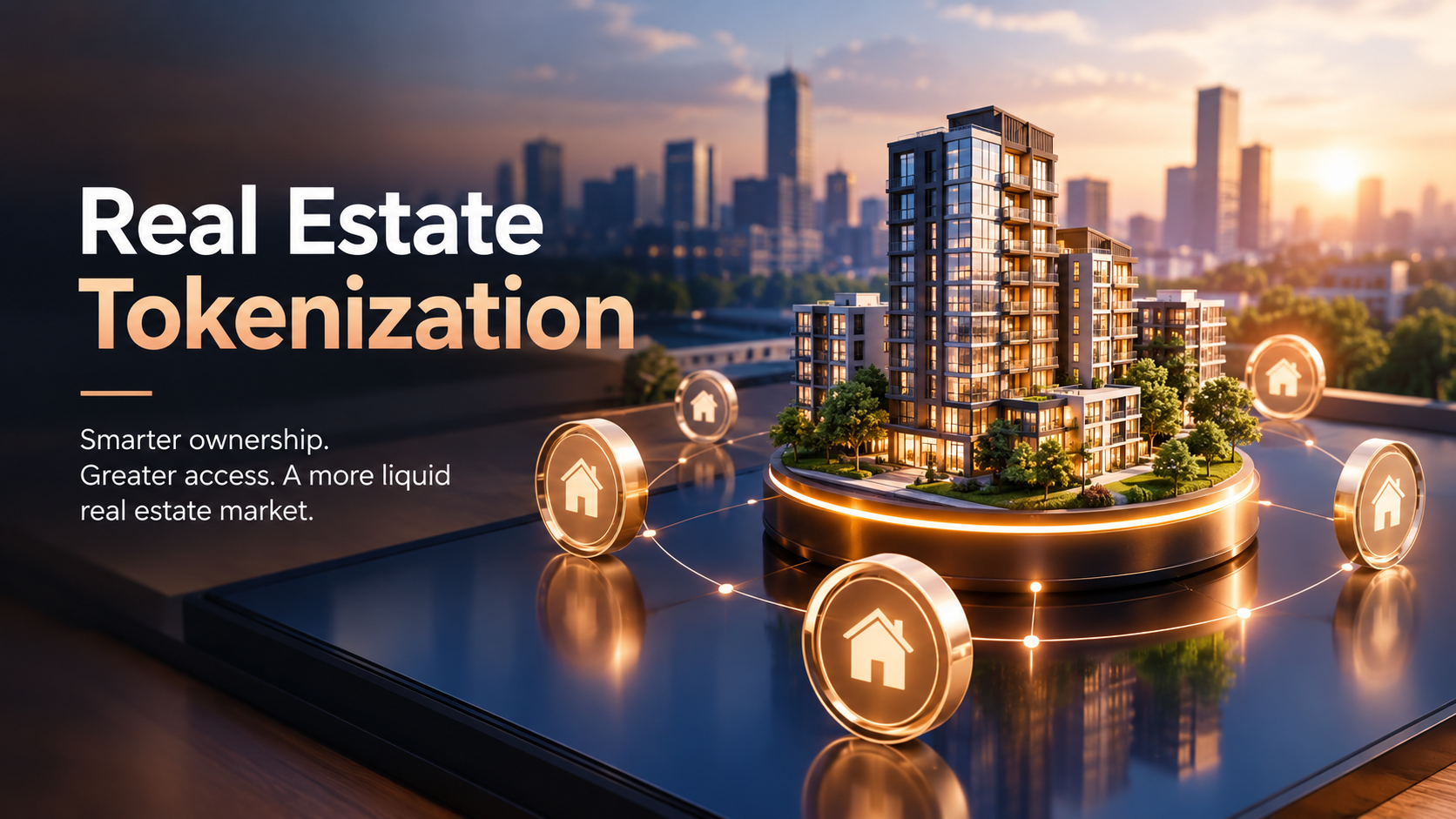
Real estate has traditionally been one of the most valuable but structurally rigid asset classes. A property can generate rental income, appreciate over time, support financing, and provide ownership rights, yet accessing these different forms of value often requires complex legal, financial, and administrative processes. Real estate tokenization introduces another way to organize these relationships.
Rather than treating a property as a single, indivisible asset, tokenization can represent specific ownership interests, economic rights, or claims associated with real estate through digital tokens. These tokens can then operate within a blockchain-based infrastructure where ownership records, transfer rules, compliance conditions, and certain transactions can be managed programmatically. The bigger idea is not simply to put property ownership on a blockchain. It is to make property rights more flexible, programmable, and digitally manageable.
What Is Real Estate Tokenization?
Real estate tokenization is the process of creating digital tokens that represent legally defined rights or interests connected to a property or real estate-related structure.
Depending on the legal and financial model, a token may represent:
- A fractional ownership interest
- An interest in a property-holding entity
- A beneficial interest
- Rental income rights
- Debt or mortgage exposure
- Fund participation
- Revenue-sharing rights
- Another contractual claim linked to real estate
This distinction is important.
A blockchain token by itself does not automatically create legal ownership of a property. The relationship between the token and the underlying real estate needs to be established through appropriate legal documentation, ownership structures, and applicable regulations. Therefore, property tokenization is both a technology and a financial-structuring exercise.
Why Property Rights Are Becoming More Flexible
Traditional real estate ownership generally combines multiple economic rights into one structure.
A property owner may simultaneously hold:
- The right to sell the property
- The right to receive rental income
- The potential benefit from appreciation
- The ability to use the property as collateral
- Certain management and governance rights
Real Estate Tokenization creates the possibility of representing some of these interests digitally and, depending on the structure, separately. For example, a property could potentially have a digital structure where:
Property → Legal Entity → Tokenized Interests → Investors
Instead of every participant needing to own the entire property directly, investors could hold defined interests in the structure that owns or controls the asset. This can make the financial architecture around real estate more modular.
From Property Ownership to Property Rights
The concept of tokenization becomes more interesting when the focus shifts from the property itself to the rights generated by the property. Consider an income-producing commercial building.
Its value can come from several sources:
- Property appreciation
- Rental income
- Leasing contracts
- Development potential
- Financing capacity
- Sale proceeds
A tokenization model could potentially be designed around one or more of these economic components. For example, a structure could represent an interest in rental income rather than simply dividing the property's title into smaller pieces. This creates a broader design space for real estate finance.
The question changes from:
“How can we divide this property?”
to:
“Which property rights or economic interests can be represented digitally?”
Fractional Real Estate Ownership Is Only One Model
Fractional ownership is often presented as the primary benefit of real estate tokenization. It is certainly an important application, but it is not the entire concept. A real estate tokenization platform can potentially support several different structures.
Fractional Ownership
A property or property-holding entity can be divided into multiple digital interests, allowing participants to hold smaller portions of the overall structure.
Rental Income Rights
Tokens can potentially represent defined claims on rental revenues, subject to the legal structure and contractual terms.
Real Estate Funds
Funds can issue digital representations of investor interests, potentially improving ownership administration and distribution processes.
Property Debt
Debt instruments associated with real estate can potentially be represented through tokens, allowing the platform to manage defined creditor interests.
Development Finance
Property developers could explore tokenized structures for raising capital around development projects, subject to applicable securities and financial regulations.
Revenue Participation
Certain structures could provide exposure to revenues generated by a property or real estate business rather than direct ownership. These models demonstrate why tokenization should not be reduced to simple fractional property ownership.
How Real Estate Tokenization Can Work
A typical tokenization process can involve several stages.
1. Asset Identification
The first step is identifying the property and determining whether its ownership, revenue profile, valuation, and documentation are suitable for tokenization.
Relevant assets might include:
- Residential buildings
- Commercial properties
- Hotels
- Multifamily properties
- Industrial facilities
- Office buildings
- Retail properties
- Data centers
- Development projects
- Land
2. Legal Structuring
The next step is determining what the token represents. This may involve creating or using a legal entity that owns the property and issuing interests connected to that entity. The legal structure establishes the relationship between:
Property → Ownership Entity → Token → Investor Rights
3. Property Due Diligence
Before tokens are issued, the underlying asset may require extensive due diligence.
This can include:
- Ownership verification
- Title documentation
- Property valuation
- Existing mortgages
- Lease agreements
- Tax obligations
- Insurance
- Property condition
- Regulatory restrictions
- Existing investor rights
This stage helps ensure that the digital representation corresponds to a properly documented real-world asset.
4. Token Design
The token model is then defined.
Developers and financial structuring teams may determine:
- Total token supply
- Token denomination
- Ownership rules
- Transfer restrictions
- Distribution mechanisms
- Investor eligibility
- Governance rights
- Redemption conditions
5. Smart Contract Development
Smart contracts can automate selected functions of the tokenized structure.
For example, they may manage:
- Token issuance
- Transfers
- Whitelisting
- Distribution calculations
- Compliance conditions
- Ownership records
- Corporate actions
6. Investor Onboarding
Investors may need to complete identity verification and eligibility checks before obtaining access to certain tokenized real estate offerings.
7. Issuance and Distribution
Once the necessary legal, compliance, and technical requirements are satisfied, tokens can be issued and distributed according to the offering structure.
8. Ongoing Management
Tokenization does not end when tokens are issued.
The platform may need to support:
- Rental distributions
- Investor reporting
- Property updates
- Compliance monitoring
- Transfers
- Corporate actions
- Valuation updates
- Redemption or exit processes
This ongoing layer is essential to creating a functional tokenized property ecosystem.
Tokenization Can Connect Ownership With Programmability
One of the major differences between conventional property records and blockchain-based structures is programmability. A traditional ownership record primarily establishes who owns what. A tokenized structure can potentially combine ownership information with predefined rules.
For example:
If an investor is approved → allow transfer.
If rental income is received → calculate eligible distribution.
If a transfer restriction applies → prevent unauthorized movement.
If a corporate action occurs → update eligible token holders.
This does not mean every process should be automated. Instead, blockchain infrastructure can provide programmable controls around selected parts of the asset lifecycle.
Real Estate Tokenization and Rental Income
Rental income is particularly interesting because it represents recurring cash flow.
A property may produce predictable revenue through:
- Residential rent
- Commercial leases
- Hotel operations
- Industrial leases
- Warehouse agreements
- Data-center contracts
A tokenization platform can potentially connect these cash flows with digital investor records.
For example:
Property generates rent → revenue is collected → eligible income is calculated → distribution is processed → investor records are updated
The exact process depends on the legal and operational structure, but tokenization can provide infrastructure for automating portions of the workflow. This could reduce manual reconciliation between property managers, administrators, issuers, and investors.
Real Estate Tokenization Can Support New Financing Structures
Another potential application is property financing.
Traditional property finance often depends on:
- Bank loans
- Private equity
- Mortgage financing
- Real estate funds
- Institutional capital
Tokenization can introduce another digital layer through which property-related interests can potentially be structured. For example, a developer might explore tokenized financing around a project where investors receive defined rights linked to the project's economic performance. The model could potentially create different classes of interests for different participants.
For example:
Senior Interest → Priority Cash Flow
Mezzanine Interest → Higher Risk / Defined Return Structure
Equity Interest → Residual Economic Exposure
The exact financial structure would need to comply with applicable laws and securities requirements, but tokenization can make these relationships easier to represent digitally.
On-Chain Ownership Records
Real estate ownership traditionally depends on centralized registries and legal documentation. Tokenization introduces blockchain-based records that can provide a transparent history of token transfers.
An on-chain record can potentially show:
- Token issuance
- Wallet ownership
- Transfer history
- Distribution events
- Contract interactions
However, the blockchain record and the legal ownership record are not necessarily the same thing. A robust blockchain real estate tokenization system therefore needs a clear bridge between on-chain records and off-chain legal rights. This is one of the most important considerations in real estate tokenization development.
Secondary Markets and Property Liquidity
Real estate is generally considered an illiquid asset because buying or selling property can involve significant time, documentation, transaction costs, and intermediaries. Tokenization can potentially make certain property interests easier to transfer. Instead of selling an entire building, a participant could potentially transfer a permitted tokenized interest. But tokenization does not automatically guarantee liquidity.
A functioning secondary market still requires:
- Buyers and sellers
- Regulatory compliance
- Appropriate trading infrastructure
- Transfer eligibility
- Market-making or liquidity mechanisms where applicable
- Accurate asset information
- Investor demand
Therefore, tokenization can create the technical ability to transfer digital interests, while actual liquidity depends on the surrounding market.
Tokenized Real Estate and Global Capital
Digital property interests can potentially make real estate opportunities easier to distribute across digitally connected investor networks. Instead of every investor interacting directly with property documentation, a compliant platform can provide a structured interface for:
- Asset discovery
- Investor verification
- Investment processing
- Ownership tracking
- Reporting
- Distributions
This could be particularly relevant for investment managers and property businesses seeking to build more scalable digital distribution systems. However, cross-border participation remains subject to local securities, property, tax, marketing, and investor-protection rules.
What a Real Estate Tokenization Platform Needs
A serious tokenization platform requires considerably more than a token contract. A typical architecture can include several layers.
Asset Management Layer
Stores information about properties, ownership structures, valuations, documents, and asset performance.
Legal and Compliance Layer
Handles:
- KYC
- AML
- Investor eligibility
- Transfer restrictions
- Jurisdiction rules
- Compliance records
Tokenization Layer
Manages:
- Token creation
- Supply
- Ownership
- Transfers
- Permissions
- Smart contracts
Investor Layer
Provides:
- Investor onboarding
- Portfolio views
- Transaction history
- Distribution records
- Statements
Payment Layer
Supports deposits, distributions, settlement, and other financial workflows.
Marketplace Layer
Where legally permitted, this can facilitate transfers or secondary-market activity.
Reporting Layer
Provides asset and investor reporting. Together, these components create a broader real estate tokenization platform development ecosystem.
Why Legal Structure Matters as Much as Technology
A common mistake is to begin with the blockchain. The better starting point is the legal and economic relationship. Before selecting a blockchain, businesses should determine:
- What asset is being represented?
- What rights does the token provide?
- Who owns the underlying property?
- Who controls the asset?
- Who can hold the token?
- Can the token be transferred?
- How are distributions calculated?
- What happens if the property is sold?
- How are investor rights enforced?
Only after these questions are addressed can technology be designed around the actual business model.
Challenges in Real Estate Tokenization
Despite its potential, property tokenization has several challenges.
Regulatory Complexity
Tokenized real estate interests may fall under securities or other financial regulations depending on their structure and jurisdiction.
Legal Enforceability
The relationship between the token and property rights must be legally clear.
Property Valuation
Investors need reliable information about the underlying property's value and performance.
Off-Chain Dependencies
The physical property remains outside the blockchain. Property managers, custodians, legal entities, registries, banks, and other external systems remain important.
Investor Protection
Platforms need appropriate safeguards around disclosures, custody, access, transfers, and distributions.
Liquidity
A tokenized property interest still requires an actual market to become liquid.
Technology Risk
Smart-contract vulnerabilities, wallet security, access control, and interoperability can create additional operational risks.
The Future of Property Tokenization
The next stage of real estate tokenization may move beyond simply dividing buildings into digital shares. Future models could focus more heavily on specific property rights and financial relationships.
Potential structures include:
- Tokenized rental income
- Digital property funds
- Tokenized mortgages
- Property-backed credit
- Development financing
- Tokenized REIT interests
- Infrastructure-backed property interests
- Data-center real estate
- Hospitality revenue structures
- Commercial lease receivables
This could transform real estate from a relatively rigid financial asset into a collection of programmable economic relationships. The property remains physical. The financial layer becomes digital.
Conclusion
Real estate tokenization is not simply about putting property on a blockchain. Its deeper potential lies in changing how property rights are represented, divided, transferred, financed, and managed. Ownership interests can potentially become more modular. Rental income can be connected to digital distribution systems. Property-related debt can be represented through programmable structures. Investor records can become easier to manage. Certain transfers can be automated according to predefined rules.
The result is a new approach to real estate infrastructure:
Physical Property → Legal Rights → Digital Representation → Programmable Financial Structure
As the real estate industry continues exploring blockchain-based infrastructure, the most significant opportunity may not be tokenizing more properties. It may be discovering new ways to structure the rights, revenues, financing, and economic relationships that already exist within real estate.

 English
 Arabic
 Spanish
 Portuguese
 Deutsch
 Turkish
 Dutch
Dutch
 Italiano
 Russian
 Romaian
 Portuguese (Brazil)
 Greek
Greek
