

LTAMDS Radar: 360-Degree Coverage, Advanced Threat Detection, and Defense Modernization Drive Adoption
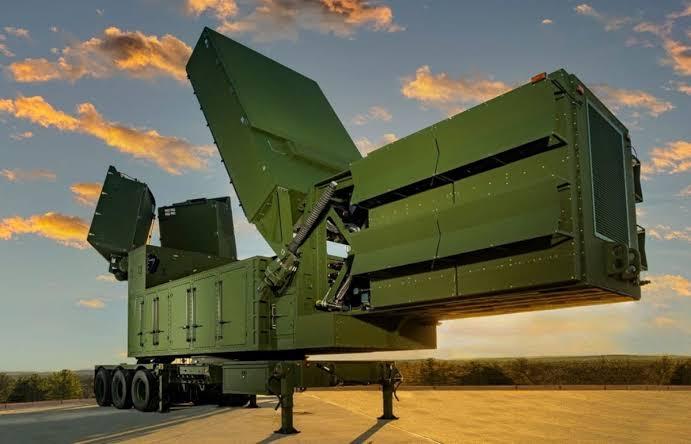
The Lower Tier Air and Missile Defense Sensor (LTAMDS) radar is emerging as a critical component of next-generation integrated air and missile defense systems. Designed to address increasingly complex threats such as ballistic missiles, cruise missiles, hypersonic weapons, aircraft, and unmanned aerial systems (UAS), LTAMDS combines 360-degree surveillance with advanced Active Electronically Scanned Array (AESA) technology.
According to MarkNtel Advisors' LTAMDS Radar industry assessment, the industry was valued at approximately USD 1.09 billion in 2025 and is projected to reach USD 8.78 billion by 2032, growing from USD 2.28 billion in 2026. The report forecasts a 25.20% CAGR during 2026–2032.
360-Degree Surveillance Strengthens Defense Capabilities
One of LTAMDS's defining characteristics is its ability to provide full-sector coverage. Unlike conventional systems that may need to orient toward an anticipated threat direction, LTAMDS uses three antenna arrays to monitor threats from different directions simultaneously.
Raytheon states that the system's primary front array and two rear arrays work together to detect and engage multiple threats from any direction.
This capability is particularly important as modern attacks increasingly involve multiple threat types approaching from different directions.
Advanced AESA Technology Supports Performance
LTAMDS uses Active Electronically Scanned Array technology powered by gallium nitride (GaN). GaN-based architecture can support higher power density and advanced radar performance while enabling sophisticated electronic beam steering.
The technology is designed to improve target detection, tracking, classification, and engagement capabilities across complex air-defense environments. Raytheon identifies LTAMDS as a next-generation AESA radar capable of addressing threats ranging from aircraft and drones to cruise, ballistic, and hypersonic missiles.
Ballistic Missile Defense Remains a Key Application
Ballistic missile defense represents the largest application segment in the MarkNtel Advisors assessment, accounting for 41% of the application segment in 2026.
Ballistic missiles require rapid detection, precise tracking, and reliable fire-control information because of their speed and trajectory. LTAMDS is designed to support the Patriot missile family and expand the battlespace available to interceptors.
The U.S. Army has demonstrated the radar's capabilities through live-fire testing. In February 2025, LTAMDS detected, tracked, and classified a cruise-missile surrogate while integrated with the Integrated Battle Command System (IBCS), with a PAC-2 GEM-T interceptor subsequently destroying the target.
Counter-UAS Operations Create Additional Demand
The increasing use of drones in military conflicts is creating greater requirements for sensors capable of detecting and tracking smaller aerial targets.
LTAMDS is designed to support detection of unmanned aircraft alongside more traditional threats. Its ability to provide simultaneous surveillance across a broad area can help integrated defense architectures respond to coordinated attacks involving different types of aerial systems.
Antenna Arrays Lead Component Demand
Antenna arrays represent the leading component segment, holding approximately 35% of the industry in 2026, according to MarkNtel Advisors.
The importance of antenna arrays is linked to their role in transmitting and receiving radar signals, electronically steering beams, tracking targets, and enabling multi-directional surveillance.
The three-array architecture is therefore central to LTAMDS's full-sector operational concept.
Integration With IBCS Enhances Networked Defense
LTAMDS is designed to operate within the U.S. Army's Integrated Air and Missile Defense architecture and connect with IBCS.
The U.S. Army describes LTAMDS as a multifunctional sensor capable of operating within the IAMD system of systems and supporting protection against ballistic missiles, cruise missiles, UAS, and other aerial threats.
Network integration allows sensor information to contribute to broader engagement decisions rather than functioning as an isolated radar capability.
U.S. Modernization Supports Procurement
Replacing legacy Patriot radar systems is a major factor influencing LTAMDS adoption.
The U.S. Army's FY2025 budget documentation allocated USD 516.6 million for LTAMDS procurement to acquire four Patriot radar replacements, highlighting the system's role in ongoing air-defense modernization.
Modernization programs can create sustained procurement requirements as existing radar infrastructure reaches the limits of its operational capabilities.
International Adoption Expands the Opportunity
LTAMDS is increasingly moving beyond the U.S. domestic defense program. Poland became the first international customer for the system.
In September 2025, RTX announced a USD 1.7 billion U.S. Army contract covering nine LTAMDS radars for the United States and Poland, along with engineering, testing, support, and related requirements.
International adoption can create additional opportunities for production expansion, localization, maintenance, training, and long-term support.
Production Capacity Becomes Important
Growing procurement requirements are encouraging manufacturers to increase production capabilities.
RTX announced a USD 100 million investment in its Portsmouth, Rhode Island facility in June 2026 to expand LTAMDS testing capacity and increase production capabilities for related air-defense components.
Such investments can help manufacturers address increasing delivery requirements while strengthening domestic and international supply chains.
Competitive Landscape
The LTAMDS radar industry is highly consolidated, with major participants identified by MarkNtel Advisors including RTX Corporation (Raytheon), Thales, L3Harris Technologies, Elbit Systems, Northrop Grumman, China Electronics Technology Group Corporation (CETC), China Aerospace Science and Industry Corporation (CASIC), and Almaz-Antey.
Competition is influenced by radar architecture, AESA technology, detection performance, integration capabilities, manufacturing capacity, government contracts, and international defense partnerships.
Conclusion
The LTAMDS radar industry is being shaped by defense modernization, increasingly sophisticated missile and drone threats, demand for 360-degree surveillance, AESA and GaN technology, and growing integration with networked air-defense architectures.
With the industry projected to grow from USD 2.28 billion in 2026 to USD 8.78 billion by 2032 at a 25.20% CAGR, according to MarkNtel Advisors, procurement programs in the United States and allied countries are expected to remain central to industry development.
The combination of full-sector coverage, advanced target tracking, multi-threat engagement capability, and interoperability with existing defense infrastructure positions LTAMDS as an important technology within the modernization of lower-tier air and missile defense systems.

 English
 Arabic
 French
 Spanish
 Portuguese
 Deutsch
 Turkish
 Dutch
Dutch
 Russian
 Romaian
 Portuguese (Brazil)
 Greek
Greek
