

How YOSHINE Pulse Relays Supplier Fits Signal Control in Industrial Networks
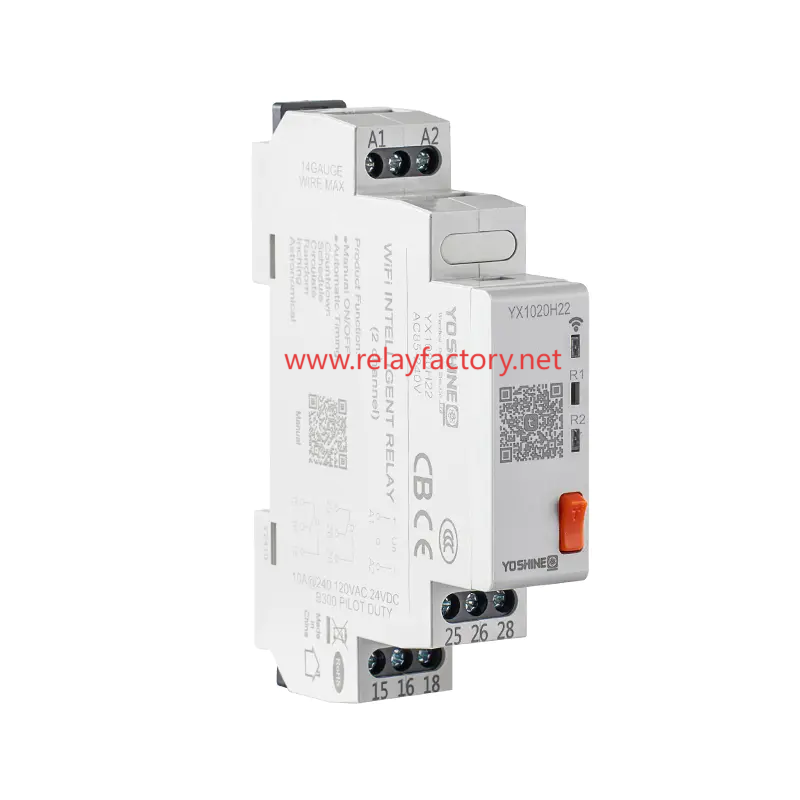
YOSHINE Pulse Relays Supplier shows up in industrial automation conversations mostly when people start talking about signal behavior that actually has to work on the floor, not on paper.
In a real plant, nothing sits still. Machines start, stop, adjust load, then shift again without much warning. Between all that movement, signals carry the instructions that keep things from drifting into chaos.
The interesting part is how short those instructions can be. A quick electrical trigger goes in, something changes, and then it disappears. No noise, no long conversation between devices. Just a clean handoff if everything is tuned right.
That clean handoff is where things usually get judged. Not in lab conditions, but during long shifts where temperature changes, load varies, and wiring has already seen years of use.
When switching behavior stays consistent, operators barely notice it. And that is usually a good sign. If people start noticing the signal layer, something is already off somewhere upstream.
In manufacturing lines, energy distribution setups, and building control environments, these small switching moments stack up. One signal might turn on a motor, another might adjust a valve, another might trigger a safety step. Nothing dramatic on its own, but together they shape the entire flow.
What engineers often look at is repetition. Not once or twice, but hundreds or thousands of cycles. If the response stays steady, the system becomes easier to live with. Less troubleshooting, fewer surprises during peak operation.
Integration is another quiet factor. Many sites are not starting from zero. They are upgrading piece by piece, fitting new parts into old layouts. If a component forces redesign, it usually slows things down more than expected.
That is why signal based switching components tend to get evaluated in a very practical way. Does it fit, does it behave, does it stay predictable when conditions are not ideal.
Over time, distributed control has become more common. Instead of one central point doing everything, smaller units handle local decisions. That makes timing between signals even more important, because coordination is now spread out.
Inside that structure, switching components act like translators between logic and action. Not loud, not visible most of the time, but always part of the chain that keeps motion aligned.
And in the background, what people remember is simple. If it works the same way every time, it becomes easier to build around it, expand it, and keep the system running without constant adjustment.
More system details and application paths can be viewed at https://www.relayfactory.net/product/ where industrial control components are grouped for different automation needs.

 English
 Arabic
 French
 Spanish
 Portuguese
 Deutsch
 Turkish
 Dutch
 Italiano
 Russian
 Portuguese (Brazil)
 Greek
