

Mini Oil Mill: A Practical Guide for Small-Scale Oil Production
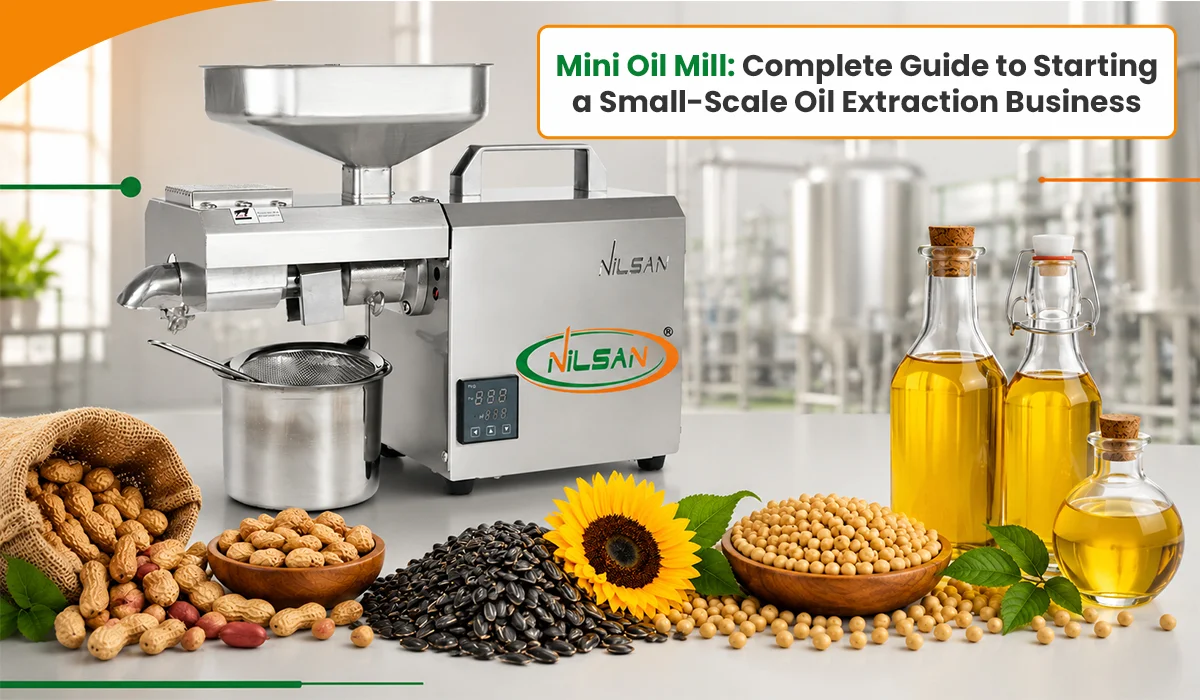
A Mini Oil Mill is a practical solution for farmers, small businesses, food producers, and entrepreneurs who want to produce edible oil on a smaller scale. Unlike large industrial oil-processing setups, a mini oil mill requires less space and can be suitable for businesses starting with moderate production requirements. With the right equipment and proper seed preparation, it can help produce fresh oil from oilseeds such as groundnut, sesame, mustard, sunflower, and other suitable seeds.
For anyone planning to start a small oil production business, understanding how a mini oil mill works, what equipment is required, and what factors should be considered before purchasing one is important.
What Is a Mini Oil Mill?
A Mini Oil Mill is a compact oil extraction setup designed to process oilseeds and separate the oil from the seed material. It generally uses mechanical pressing to extract oil, while the remaining solid material comes out as oil cake.
Compared with large commercial oil mills, mini systems are designed for smaller production requirements. They can be useful for small-scale manufacturers, farmers, local oil sellers, and new entrepreneurs who want to begin oil production without setting up a large industrial facility.
A typical setup may include an oil press or expeller, filtration equipment, and other supporting machinery depending on the production process.
How Does a Mini Oil Mill Work?
The basic working process of a Mini Oil Mill is straightforward. The quality of the final oil depends not only on the machine but also on the preparation of the seeds and the operating conditions.
1. Seed Cleaning
The first step is cleaning the oilseeds. Dust, stones, husks, and other unwanted materials should be removed before pressing. Clean seeds help maintain the hygiene of the production process and reduce unnecessary wear on the machinery.
2. Seed Preparation
Depending on the type of seed and the selected machine, preparation may involve drying, grading, or other steps. Different seeds can behave differently during pressing, so the preparation process should match the type of oil being produced.
3. Oil Extraction
The prepared seeds are fed into the oil press. Mechanical pressure is applied as the seeds move through the pressing mechanism. Oil is separated from the solid material, which is collected as oil cake.
4. Oil Filtration
Freshly extracted oil can contain small seed particles. Filtration helps remove these particles and produces cleaner oil suitable for further handling, storage, or packaging.
5. Storage and Packaging
After filtration, the oil can be stored in suitable containers. Businesses producing oil for customers can then move the filtered oil into their chosen packaging system.
Why Choose a Mini Oil Mill for Small-Scale Production?
A mini oil mill can be useful when production requirements do not justify a large commercial setup. Its compact design can make it easier to install where space is limited.
Compact Production Setup
Small-scale businesses often have limited working space. A compact oil production setup can be easier to accommodate than a large industrial plant.
Suitable for Starting a Business
Entrepreneurs entering the edible oil market may prefer to begin with a smaller production setup. A mini machine can allow them to understand customer demand and production requirements before considering a larger expansion.
Flexible Oilseed Processing
Depending on the machine specifications, different oilseeds may be processed for producing different types of edible oil. Common examples include groundnut, sesame, mustard, and sunflower.
Easier Day-to-Day Operation
A well-designed oil machine can simplify the extraction process and reduce the amount of manual effort required compared with traditional methods.
What Should You Consider Before Buying a Mini Oil Mill?
Choosing an oil mill should be based on actual production requirements rather than simply selecting the smallest or cheapest machine.
Production Capacity
First, determine how much oilseed you expect to process each day. A machine should match your expected workload. Nilsan India, for example, lists mini commercial oil press machines with capacities that depend on the seed being processed.
Type of Oilseed
Different seeds have different characteristics. Before purchasing a machine, check whether it is suitable for the seeds you plan to process regularly.
Available Space
Measure the area where the equipment will be installed. Remember to leave enough room around the machine for operation, cleaning, maintenance, and movement of materials.
Power Requirements
Check the machine's motor power and electrical requirements before installation. The available power supply at your facility should be compatible with the selected machine.
Material and Build Quality
Since oil extraction involves continuous mechanical operation, the construction material and overall build quality are important considerations. Food-contact components should be appropriate for the intended application.
Maintenance and Support
Regular maintenance helps keep an oil machine operating properly. Before purchasing, ask about spare parts, servicing, installation, operator guidance, and after-sales support.
Mini Oil Mill vs. Large Commercial Oil Mill
The main difference between a mini oil mill and a large commercial oil mill is production scale.
A mini setup is generally more appropriate for small businesses, farmers, local producers, and entrepreneurs starting their oil production journey. A large commercial system is designed for businesses that require substantially higher processing volumes and continuous production.
The right choice depends on factors such as daily seed requirements, available space, investment capacity, electricity supply, labour, and expected market demand.
Buying a machine that is significantly larger than your current requirement can result in unnecessary operating costs. On the other hand, choosing a machine that is too small can create production limitations as demand increases.
Applications of a Mini Oil Mill
A mini oil mill can be used in several small-scale oil production environments, including:
- Small edible oil businesses
- Farm-based oil production
- Local oil processing units
- Small food processing businesses
- New oil production ventures
- Direct-to-customer oil businesses
- Small-scale agricultural processing
For businesses that already have access to oilseeds, producing oil locally can also provide an opportunity to add value to agricultural produce rather than selling the raw seeds alone.
How to Get Better Results from Your Oil Mill
Machine selection is only one part of successful oil production. Proper operation also matters.
Start with clean and properly prepared seeds. Follow the manufacturer's operating instructions and avoid overloading the machine. Regularly inspect components that experience wear and keep the equipment clean after use.
It is also important to monitor the quality of the extracted oil. Changes in seed moisture, seed quality, feeding rate, and machine settings can affect the extraction process.
Proper training can help operators understand how to use the equipment efficiently and safely. Nilsan India states that it provides installation, operator training, maintenance guidance, and after-sales support for its oil-machine range.
Is a Mini Oil Mill Suitable for Your Business?
A mini oil mill can be a suitable option if your business requires a relatively small production setup and you want to begin oil extraction without investing in a large-scale plant.
Before making a purchase, calculate your expected daily seed volume, identify the oilseeds you will process, check your available space and electricity supply, and compare the machine's capacity with your business requirements.
The objective should not simply be to buy a smaller machine. It should be to select equipment that fits your present production needs while leaving reasonable scope for future growth.
Conclusion
A Mini Oil Mill provides a practical way to enter small-scale oil production with a compact and manageable setup. From seed cleaning and preparation to pressing, filtration, and storage, each stage contributes to the quality and efficiency of the final process.
For farmers, small businesses, and new entrepreneurs, selecting the right oil machine is an important decision. Consider the required capacity, seed compatibility, power consumption, available space, construction quality, maintenance requirements, and after-sales support before making a purchase.
With proper equipment and a well-planned production process, a mini oil mill can become a useful part of a small-scale edible oil business.

 English
 Arabic
 French
 Spanish
 Portuguese
 Deutsch
 Turkish
 Dutch
Dutch
 Russian
 Romaian
 Portuguese (Brazil)
 Greek
Greek